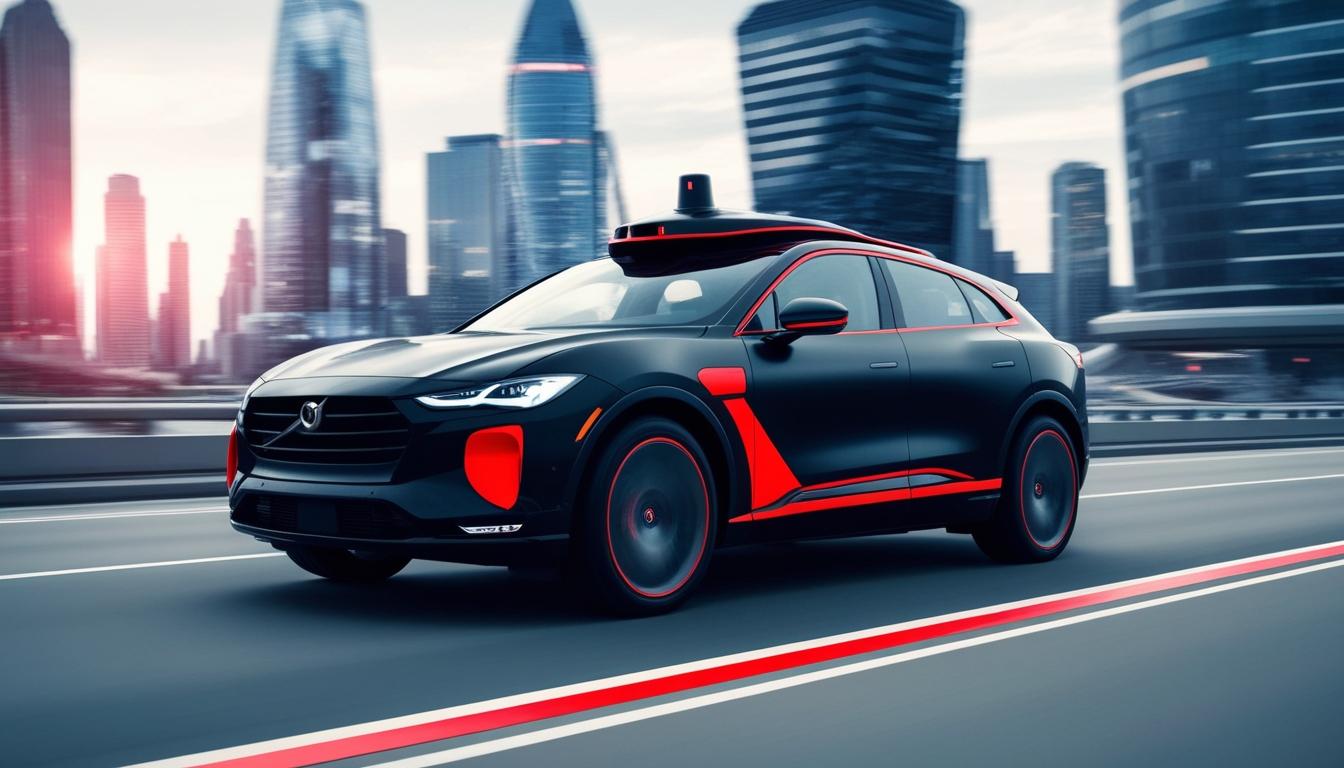
The evolution of self-driving cars has been a slow and steady journey over the past few years, but a potential shift in regulatory policies under the incoming Trump administration could accelerate the pace of development in this sector. Motor insurers may find themselves navigating a complex and changing landscape as a result.
According to the Financial Times, the implications of increasing autonomy in vehicles could dramatically alter the insurance industry. Should drivers become less accountable for accidents, liability might shift from individual drivers to vehicle manufacturers. This transition could restrict traditional insurance roles primarily to coverage against theft and non-driving-related damages.
A forecast from data analysis firm Morningstar suggests that if 60 per cent of cars on the road are fully autonomous by 2044, the landscape of auto insurance could be transformed. The most pessimistic outlook posits that the market could shrink by over half, creating challenges for publicly traded insurers. Under this scenario, companies like Progressive, based in Ohio, could see their fair value estimates decline by up to 26 per cent. The analysis from Morningstar indicates that the auto insurance franchise could all but disappear in the coming decades.
Despite this potential forecast, the current financial health of auto insurers does not exhibit signs of immediate concern. The Financial Times reports that Progressive's forward price/earnings ratio stands at 20, which is notably above its 10-year average. This suggests that investors are viewing the threat of automation as long-term. Even with the most concerning projections from Morningstar, Progressive is still expected to maintain a robust return on equity of 19 per cent over the next decade, slightly lower than its historical average.
In addition, reports indicate that insurers may adapt rather than abandon the market altogether. They propose that even with highly autonomous vehicles entering the market, their expertise could remain relevant, especially as a partnership with car manufacturers. Insurers caution that relying solely on product liability laws might not suffice to efficiently compensate crash victims, as these processes are often seen as slow and complex.
Moreover, should self-driving cars reach a middle ground of partial autonomy rather than complete automation, insurers might experience a beneficial effect. As safety improves, the falling accident rates could bolster insurers' returns until necessary adjustments in pricing occur.
However, the changing dynamics cannot be ignored. The industry is warned to prepare for potential disruption as competition arises from manufacturers like Tesla, who can harness vehicle data for their advantage. As outlined in a prediction by consulting firm McKinsey, conventional personal car insurance premiums are projected to decline by 6 per cent to around $248 billion by 2030. The firm expects that over a quarter of personal auto insurance premiums will be influenced by new developments in distribution, product offerings, pricing, and claims processing.
In conclusion, while current indicators suggest that personal car insurance is not on the verge of extinction, the road ahead is expected to be challenging, requiring adaptation in response to technological advancements in vehicle automation. The insurance industry remains poised for a bumpy ride as it adjusts to the effects of self-driving technology.
Source: Noah Wire Services