The landscape of robotics and automation in the workplace is rapidly evolving, with significant forecasts proposing that 2025 could herald a new era of public-facing robots. Reports from The Wall Street Journal (WSJ) on December 31 highlight a surge in the robotics and drone industry, which has attracted approximately $12.8 billion in venture capital funding by mid-December. This marks an increase from the $11.6 billion garnered throughout the entirety of 2023, indicating strong investor confidence in this sector.
As advancements in generative artificial intelligence (GenAI) continue to progress, many robotic manufacturers are optimistic about integrating this technology into their products. However, they also recognize that the transition to robots effectively interacting with humans may encounter challenges. David Pinn, CEO of Brain Corp, noted in his discussion with the WSJ, “Some things which are very easy for people are very hard for robots.” He highlighted that simple tasks, such as picking up random objects, remain complex hurdles in the field of robotics.
In practical applications, such as those observed at Houston Methodist health system, Chief Innovation Officer Roberta Schwartz has encountered operational limitations. Robots, which are deployed for tasks like checking fire extinguishers and delivering towels, face difficulties with navigation, often becoming confused by elevators or colliding with obstacles. These experiences underscore the necessity for improved dexterity and obstacle navigation in robots that are intended to operate alongside human workers. Generative AI could play a critical role in enhancing these capabilities. “You can train the robot through massive data sets to be able to achieve this kind of dexterity, that until now has only been achievable by our own labor,” Pinn asserted.
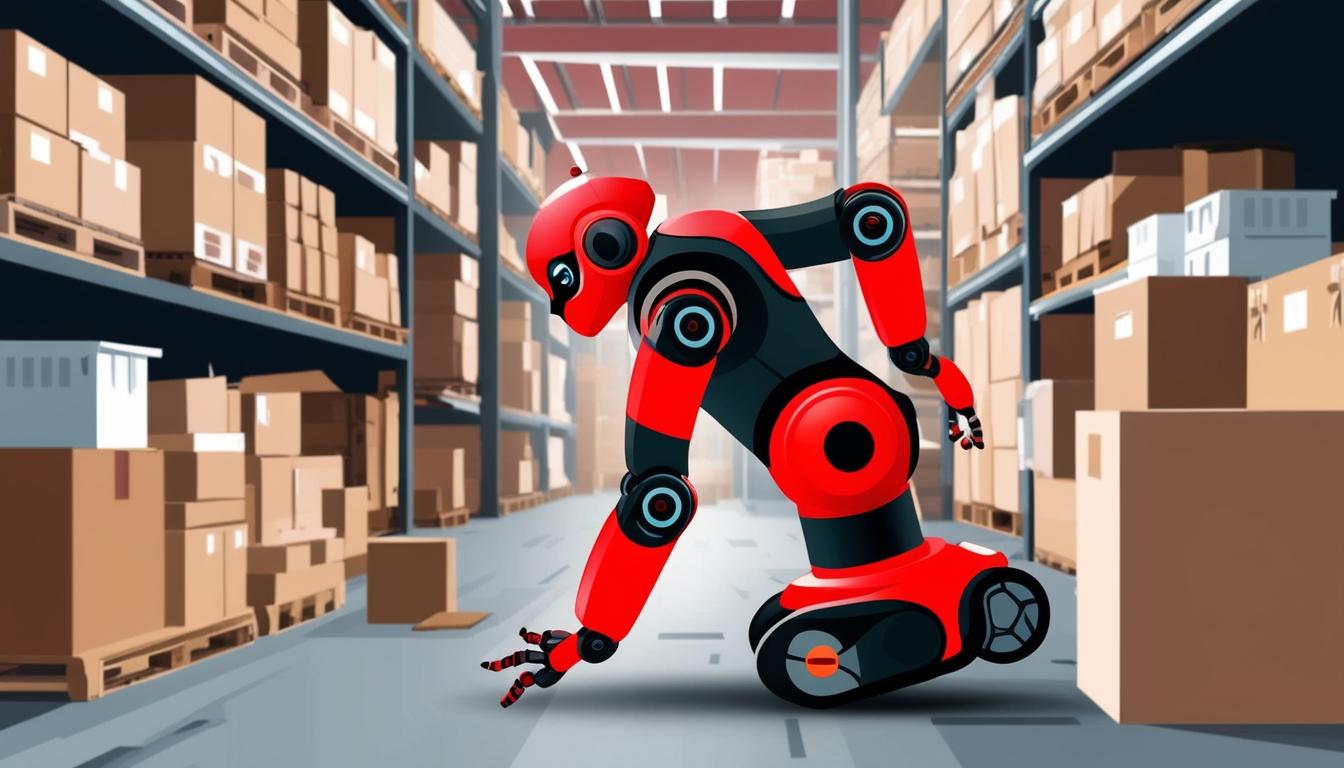
Recent developments in AI technology also present promising advancements for the automation sector. In a recent exploration into AI systems, researchers at MIT unveiled PRoC3S, a novel AI programme designed to assist warehouse robots in managing oddly shaped packages and navigating congested spaces. PRoC3S combines AI language models with computer vision and simulates actions in a virtual environment prior to execution. The system has reportedly achieved 80% accuracy in basic lab tasks such as drawing shapes and sorting blocks. Erik Nieves, CEO and co-founder at Plus One Robotics, discussed the significance of PRoC3S, stating to PYMNTS, “In theory, PRoC3S could reduce a robot’s error rate by vetting its initial LLM-based assumptions against more specific and accurate understandings of the warehouse environment.” He elaborated on the instructional value of the system: “It’s essentially the difference between classroom instruction and a really good field trip.”
As the robotic and automation industries prepare for the anticipated developments ahead, the integration of advanced AI technologies could fundamentally change how businesses utilise robotic systems, potentially leading to refined processes and enhanced operational capabilities in various settings.
Source: Noah Wire Services