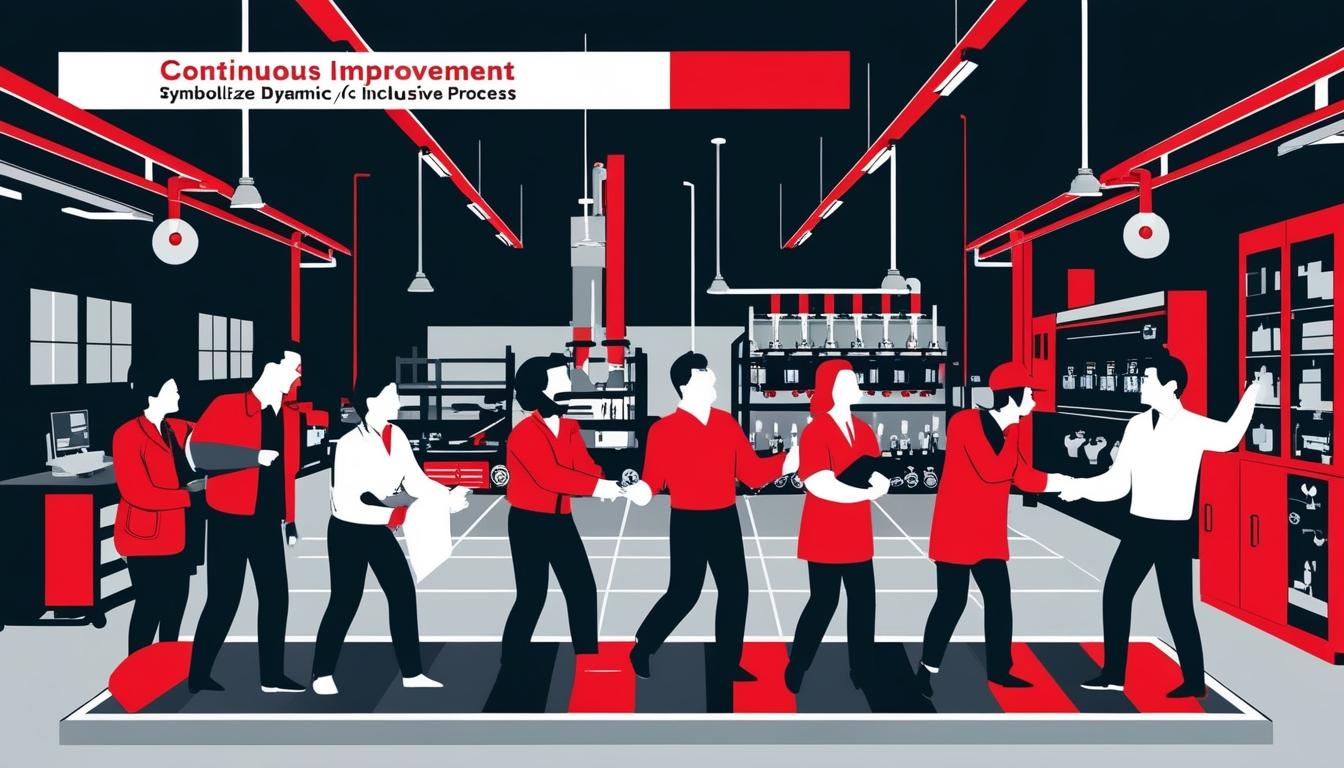
In the ever-evolving landscape of manufacturing, continuous improvement (CI) has emerged as a pivotal focus area for organizations striving to adapt to change and enhance productivity. As businesses navigate challenges such as sustainability demands and digital transformation, the cultivation of a CI culture has become essential for sustained success. This cultural approach not only involves the processes of improvement but emphasizes the active involvement of employees in shaping those changes, leading to a more resilient organisation.
Key figures in the sector have articulated the significance of CI as more than just a series of initiatives; it is fundamentally intertwined with company values. Robert Griggs, a prominent figure in manufacturing, articulates this concept succinctly: “Continuous improvement, for us, is about survival. If you’re not getting better, you’re going backward.” This perspective underscores the necessity of embedding CI into the very DNA of a company, where team members are encouraged to view improvement not as an additional burden but as an integral part of their daily responsibilities.
Jesse Casto, founder of BetterCNC, reflects this sentiment by describing CI as an ongoing evolution rather than a one-time event. Having witnessed resistance to CI efforts early in his career, Casto emphasises the importance of employee buy-in: “Improvement isn’t a series of instructions; it’s a mindset. We work toward it every day by asking ourselves, ‘How can we make this better?’” This approach has allowed employees at BetterCNC to embrace CI as a shared objective, thereby fostering a culture of accountability and collective responsibility.
Establishing a robust CI culture involves several foundational elements, including a commitment to values that resonate with employees, empowering them to shape changes actively. Ashleigh Walters, a leader known for her transformative initiatives, notes that engaging employees in CI discussions can yield significant innovations. By directly asking her team, “What would make your job better?” Walters fostered an environment bursting with ideas and enthusiasm for improvement. This engagement illustrates that when team members are invited to contribute, they transform from passive recipients of change into proactive authors of their work environment.
Moreover, the role of technology in facilitating CI cannot be overstated. Michael Corrales is an advocate for practical tools that enhance efficiency within the workplace. He states, “Our goal is to automate redundant tasks and streamline information,” highlighting how technology can simplify processes and allow employees to focus on quality improvements. By integrating systems that reduce friction in daily operations, organisations can ensure that CI becomes a natural, efficient aspect of the workflow.
Feedback and recognition play equally crucial roles in fostering a CI culture. Willemijn Schneyder has implemented a peer-to-peer recognition system that invigorates employee participation in CI initiatives. “It’s not top-down; everybody can recognize everybody,” she explains, underscoring the importance of mutual respect and collaboration in enhancing employee morale. This continuous feedback loop serves to motivate team members and reinforces the notion that CI is a collective narrative within the workplace.
As industries brace for the future, the insights shared by these leaders indicate a clear trajectory wherein CI will be a strategic imperative. Companies leveraging proactive data analytics are now better positioned to adapt swiftly to changes, addressing potential issues before they escalate. The manufacturing sector is increasingly recognising the alignment of CI with core business strategies essential for maintaining competitive advantage.
In examining comparative CI models, Griggs embodies a customer-centric approach where accountability and service drive improvement efforts. Alternatively, Castro and Walters provide employee-centric models focusing on empowerment and shared ownership of CI. Corrales, on the other hand, introduces a tool-driven model that respects the time and efforts of workers, while Schneyder advocates for a collaborative culture of feedback and recognition.
As leaders like Schneyder envision a future where employees are intrinsic to the change process, the manufacturing landscape is destined for a paradigm shift. She promotes the concept of a “digital apprenticeship,” merging the wisdom of seasoned employees with the innovative skills of newer generations. This vision aligns closely with the industry's future, emphasising agility, collaboration, and perpetual learning.
As businesses continue to adapt to industry trends and challenges, the emphasis on CI as a cultural staple offers a roadmap for resilience and innovation. By embedding continuous improvement deeply within organisational values, companies are not only responding to changes but actively defining the future of manufacturing. In these environments, every employee has the potential to drive meaningful change, positioning themselves as vital contributors to their organisations' success and evolution.
Source: Noah Wire Services