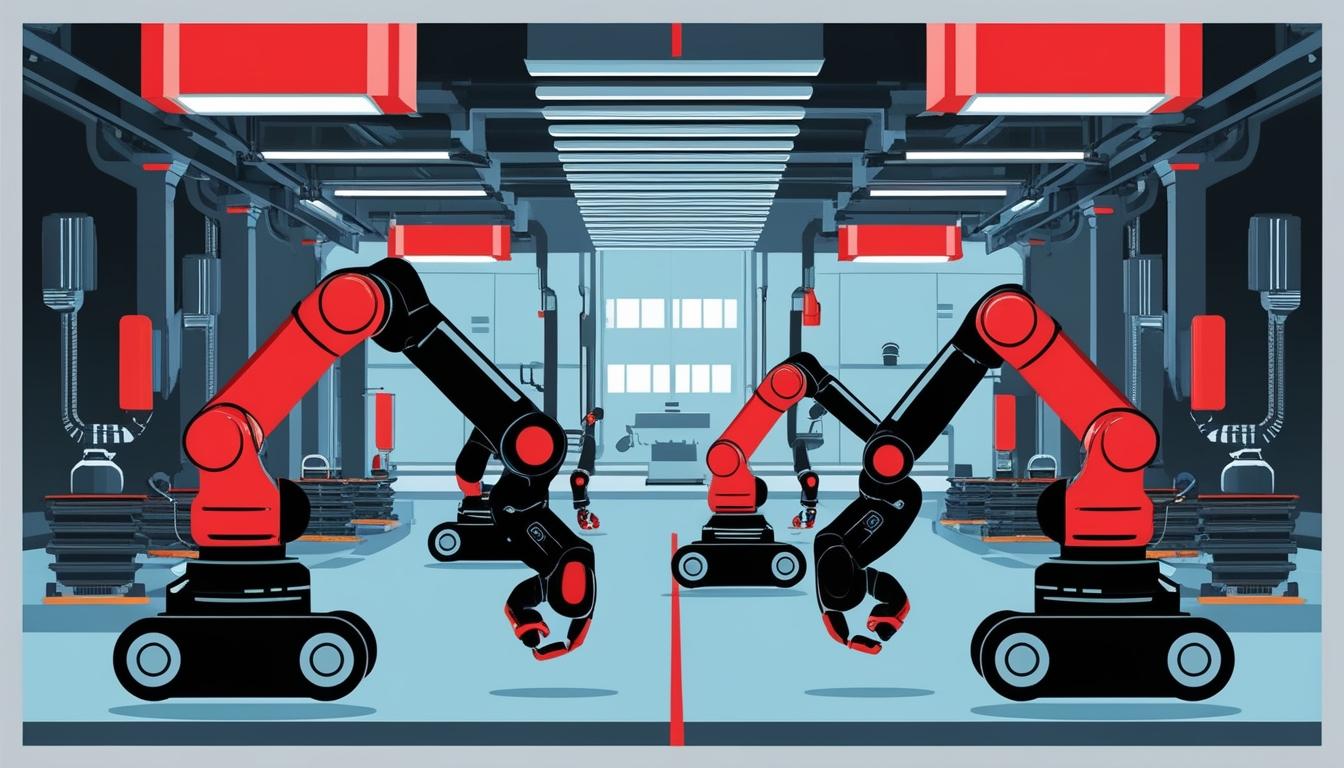
The landscape of business automation is undergoing significant transformation as advanced technologies such as artificial intelligence (AI), robotics, and the Internet of Things (IoT) drive the next generation of manufacturing. A recent analysis indicates that the global factory automation market is expected to grow substantially, with estimates suggesting a rise to over USD 605.06 billion by 2031, reflecting a compound annual growth rate (CAGR) of 8.7% from 2024 to 2031.
Among the primary shifts in this sector are the growing adoption of autonomous mobile robots (AMRs) and collaborative robotic arms, commonly referred to as “cobots.” AMRs, small wheeled robots navigating warehouses autonomously, have gained traction over the past five years, enabling companies to optimise their logistics and assembly processes. Similarly, cobots, designed to work safely alongside human operators, are increasingly deployed in assembly and quality control tasks. The ongoing integration of these technologies has led to the emergence of industrial mobile robots (IMRs), which combine the functionality of both AMRs and robotic arms, expanding their applicability within various industries.
The development of collaborative robots has continually influenced traditional robotic arm manufacturers, prompting companies like Universal Robots and ABB to innovate. According to an article from "Robotics & Automation News," these advancements have made traditional robotic arms more adaptable, incorporating sensors that enhance safety by detecting human presence, thus reducing the risk of accidents.
However, new contenders like humanoid robots are beginning to spark discussions about their potential to revolutionise industries further. These humanoid robots, while still in prototype stages, are being tested for various industrial tasks. The cost of these robots is a crucial factor in their adoption, with current estimates hovering between $15,000 and $25,000 per unit—a significant reduction compared to traditional industrial robotic arms, which can range from $25,000 to $200,000. While humanoids present a fascinating development, industry experts remain cautious about their immediate impact, citing that robotic arms are likely to maintain their dominance in manufacturing due to their established reliability and cost-effective performance.
Complementing these trends, the advancement of digital twin technologies reflects a shift towards data-driven decision making in smart factories. Digital twins serve as virtual replicas of physical assets, enabling manufacturers to simulate operations, identify inefficiencies, and predict maintenance needs. Integrating predictive maintenance powered by AI further enhances operational efficiency by analysing data to forecast potential equipment failures before they occur.
Simultaneously, edge computing is emerging as a vital architecture within smart manufacturing, facilitating real-time data processing closer to the source. This approach minimises latency issues and bolsters security, allowing for immediate responses to changing operational demands.
The emphasis on sustainability within smart factories is also gaining prominence. Manufacturers are increasingly deploying automation technologies that prioritise energy efficiency and waste reduction. Initiatives such as material recycling and energy management systems underscore a commitment to environmentally conscious practices in manufacturing.
As businesses continue to adapt to these unfolding trends, the collaborative nature of manufacturing environments is likely to evolve, presenting both challenges and opportunities. The drive toward a more interconnected, automated ecosystem indicates a significant shift in how industries operate, reshaping business practices in the living landscape of manufacturing. Companies are urged to remain agile in response to these changes, leveraging innovative technologies to maintain competitiveness in a rapidly evolving market.
Source: Noah Wire Services