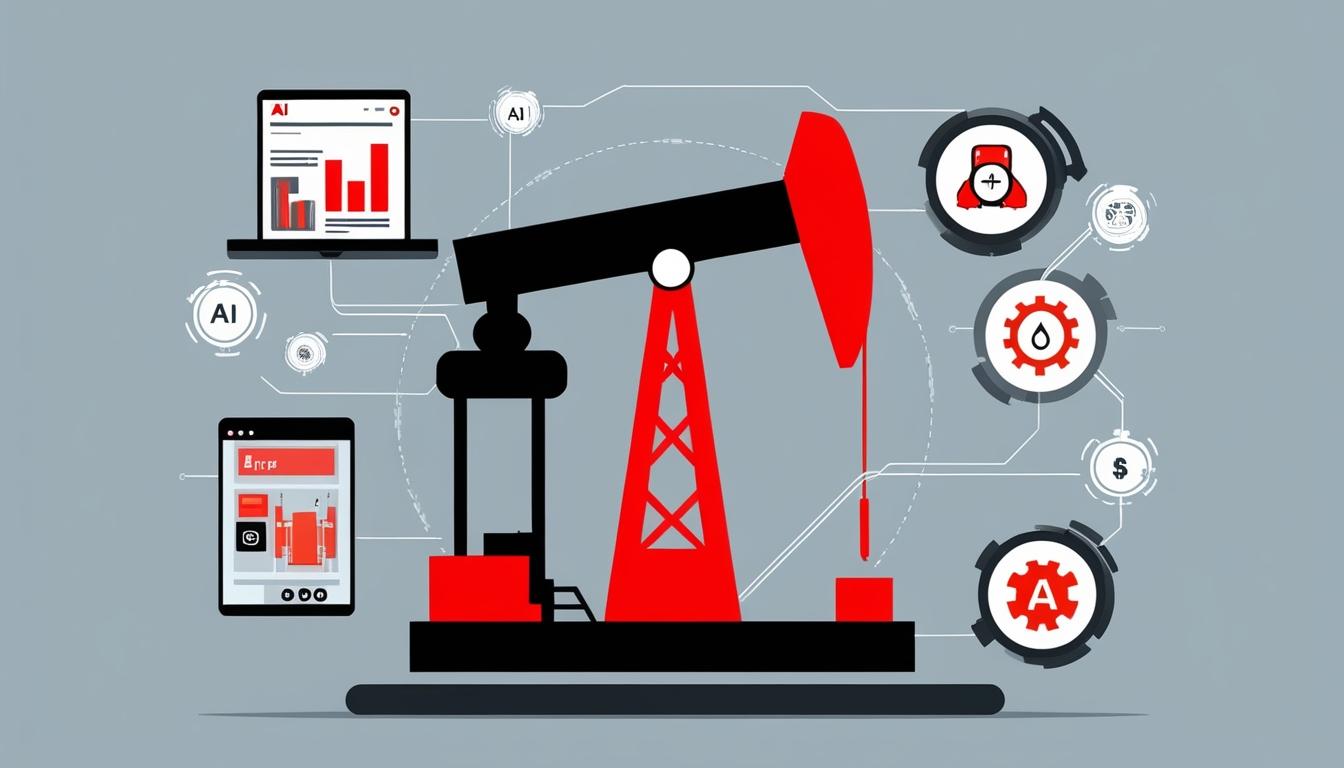
The upstream oil and gas industry is witnessing a transformative wave driven by the burgeoning fields of artificial intelligence (AI) and machine learning (ML), which promise enhanced operational efficiency through increased digitalisation and automation. This exciting evolution, as noted by Hart Energy, offers opportunities for significant performance improvements, yet the road to these advancements is riddled with challenges including inconsistencies in technology adoption and integration.
Currently, the industry is encountering varied stages of technology implementation. While some companies are pioneering the integration of AI and ML into their daily operations, others are still at the preliminary stages of experimentation. The leap from traditional mechanical thinking towards digital solutions necessitates a fundamental shift in mindset, reminiscent of the marked transition experienced in the 1990s when the foundation for predictive maintenance was laid through the analysis of sensor data.
Despite the promising capabilities of advanced technologies, a recent industry survey highlighted confusion surrounding the definition of "digitalisation," which hampers productive discussions on its application. In an effort to clarify, Baker Hughes emphasised the distinct functionalities of AI and ML. AI systems are designed to replicate tasks that traditionally depend on human intelligence, such as pattern recognition and decision-making, while ML provides a data-driven approach to recognising patterns used in tasks like process optimisation and equipment wear prediction.
Automation remains a critical driver of change as it promotes consistent outcomes and bridges the skills gap created by an aging workforce within the oil and gas sector. By allowing less experienced teams to perform with heightened proficiency and enabling veteran workers to focus on more complex tasks, automation proves advantageous in multiple operational aspects. Additionally, it assists in mobilising smaller onsite crews, leading to reduced emissions and enhanced safety measures.
Nevertheless, while automation technologies have gained traction in downstream operations, their deployment in upstream practices has been cautious. Concerns about their applicability within complex and diverse operational environments accompany the challenges of ensuring safety and reliability through potentially uncertain input data.
With discipline and successful outcomes from pilot programmes, there is growing confidence in the capabilities of automated processes across various energy sectors. The gradual acceptance is evidenced by increasing automation in discrete tasks, as companies oversee the emergence of intelligent tools capable of producing actionable insights from real-time data.
The integration and application of digital twins—detailed digital replicas of physical objects or operations—are becoming increasingly common in efforts to enhance well planning and drilling operations. These models allow for optimal well designs by running simulations based on the best available data, significantly reducing unforeseen risks and optimising project efficiency.
Key players like Corva, a Houston-based firm, exemplify this innovative shift by developing platforms that provide comprehensive management of drilling processes through over 100 applications for real-time optimisation. The move towards holistic operational management underscores the multi-faceted benefits of enhanced data collection, predictive modelling, and analytics in automating processes from drilling to production.
As the industry progresses into advanced realms such as prescriptive modelling—which performs real-time operational adjustments without human intervention—proof of reliability is critical before widespread acceptance can occur. Highlighting this evolution, Baker Hughes showcases its i-Trak drilling automation service, which leverages AI for well placement, reflecting substantial accuracy improvements and cost-effectiveness.
The need for coordinated automation solutions in production processes remains crucial, given the complexities and unique challenges that arise across different fields and operations. Recent investments in data management and efficient systems are paving the way for better orchestration of disparate elements in oil and gas ecosystems, marrying hardware with improved analytics capabilities.
On the horizon, the convergence of generative AI, advanced reasoning, and extensive data integration heralds an era of greater efficiency and production reliability. Industry groups are already strategising on standardisation measures to ensure cohesive operations across automated systems, signalling that a future dominated by streamlined, autonomous oilfield operations is fast approaching.
As the industry ventures further into the realms of AI and automation, the path is set for a profound realignment of practices, shaping a new landscape for operational excellence and enhanced environmental stewardship in oil and gas production.
Source: Noah Wire Services