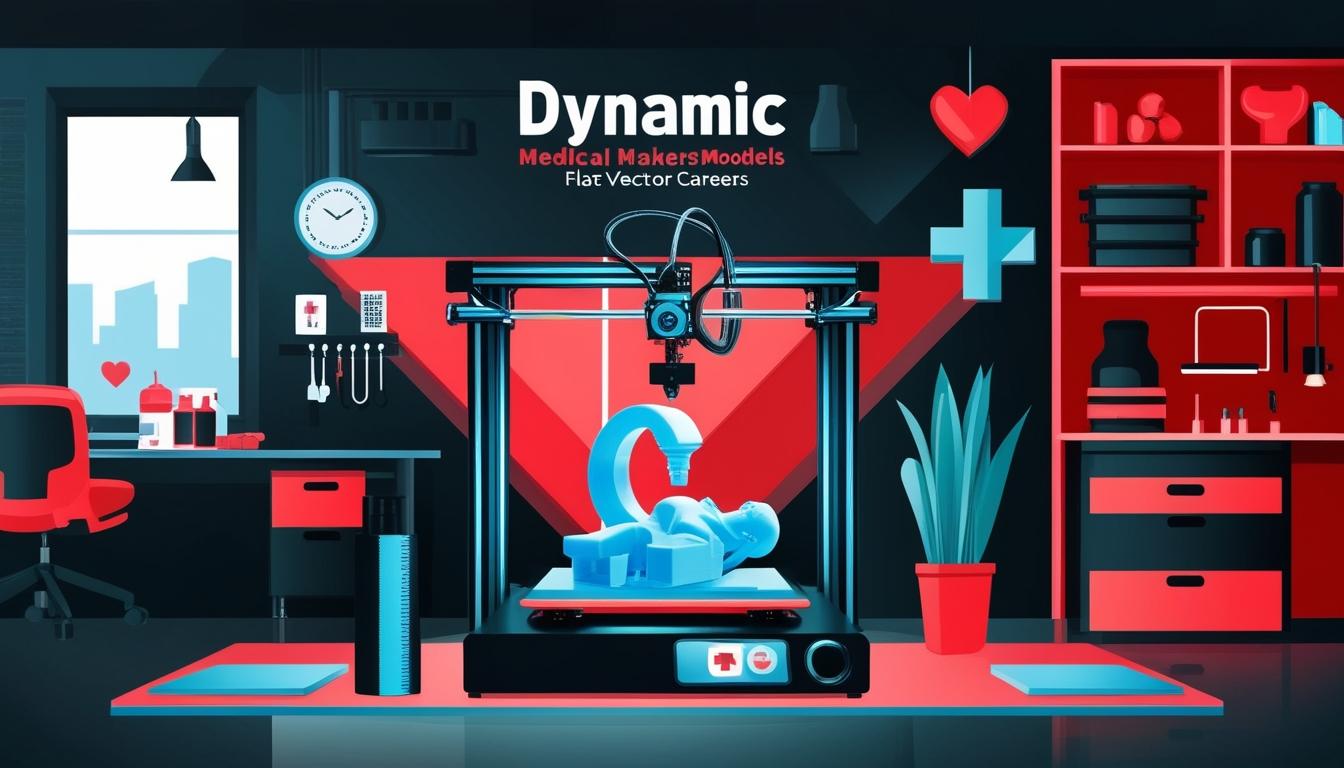
Amidst the evolving landscape of educational technology, the phenomenon of makerspaces and 3D printing in schools has garnered considerable attention, especially in light of the COVID-19 pandemic. This period has catalysed a significant expansion in school makerspaces, allowing students to engage with hands-on projects that could inspire careers they might not have previously considered.
Makerspaces provide an innovative environment for students, encouraging creativity and exploration in various subjects. The employment of 3D printing in educational settings is particularly diverse; its application ranges from aiding in mathematics and science lessons to complementing art and geography studies. However, the current use of 3D printers often leans towards motivational rewards, where students produce small trinkets as incentives to complete standard lesson plans.
There is an emerging conversation about repurposing these technologies to address critical shortages in highly demanded fields, notably in the medical sector. The query arises: how can educational institutions harness 3D printing not merely for extrinsic rewards but to foster a sustained pipeline of talent for these vital careers?
Integrating virtual reality (VR) into the educational sphere presents promising opportunities for establishing real-world connections. While VR has often been dismissed for its simplistic graphics, advancements are reshaping its potential in education. Companies such as syGlass are pioneering the application of VR in a medical context, allowing students to interact with real medical scans in real-time. This integration delves deep into comprehension, enables students to engage with medical data from patients seen that very day, and vividly illustrates how their learning could translate into real-world impact.
This innovative approach to learning is particularly relevant in the medical field. School curricula are evolving to incorporate experiences that predict the future requirements of healthcare professionals. Students are now afforded the opportunity to print 3D models of complex medical scans and use VR to study them in detail. Such resources prepare students for future educational paths in medicine, facilitating hands-on experience without the need for formal certification or licensure at the high school level.
Furthermore, the increasing application of VR in medical settings enhances the training of future healthcare professionals. Surgeons are currently employing VR environments to simulate complex operations through interaction with 3D models, which can then be printed for tactile reference during procedures. This educational model is poised to produce graduates who are more adept and prepared for the medical challenges they will face.
Critics argue that traditional classroom setups, which often consist of rows of desks and a teacher at the front, fail to stimulate essential qualities such as empathy and creativity among students. As educators contemplate the integration of technology in learning environments, there is a strong emphasis on ensuring that tech tools are used meaningfully, transcending their roles as mere replacements for paper and pencil.
Emerging technologies such as VR not only have the potential to reshape career exploration but also serve to enhance the depth of medical training. They position students to engage with current medical practices rather than outdated textbook information. By immersing students in real-world scenarios, such as diagnosing issues in ultrasound images or identifying early signs of disease, these technologies aim to motivate and inspire the next generation of medical professionals.
In summary, the current innovations in educational technology, particularly through the strategic use of 3D printing and VR, may be pivotal in transforming not just how students learn, but also in shaping a competent workforce prepared to meet the demands of the healthcare sector for years to come.
Source: Noah Wire Services