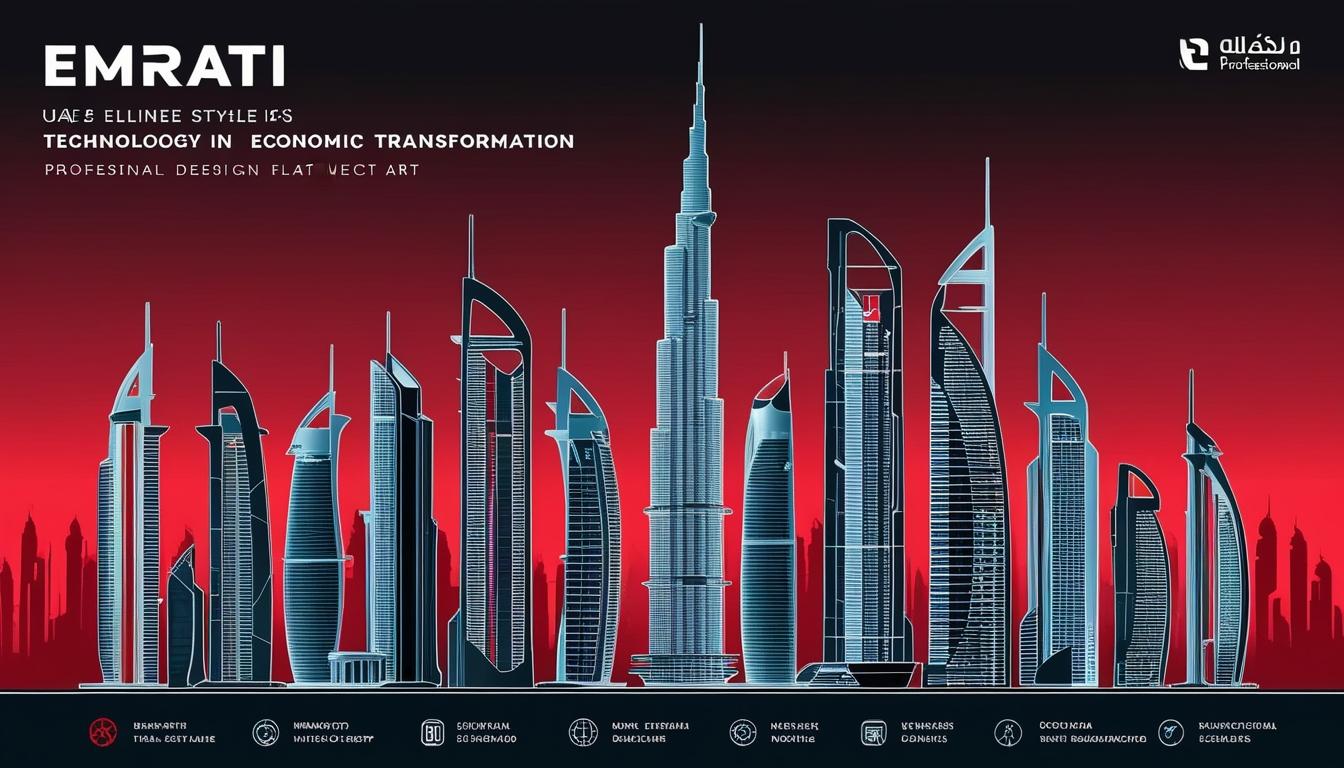
The United Arab Emirates (UAE) is distinguishing itself as a leader in the global landscape of artificial intelligence (AI), making substantial investments and reforms aimed at fostering a robust technological future. As the Emirati government navigates the complexities of rapid economic transformation, this oil-rich Gulf nation is leveraging AI not just as a technological tool but as a strategic vehicle towards economic diversification and reduced oil dependency.
The UAE's commitment to AI is underscored by significant financial investment, with substantial resources allocated for the development of advanced AI models, applications, and necessary infrastructure. The leadership views AI as essential to securing long-term prosperity, aiming to establish the nation as a pioneering force in the AI sector globally.
Transformative measures within the UAE include sweeping regulatory reforms in immigration, business operations, and tax legislation. Such changes have fostered an inviting atmosphere for a diverse array of talent from across the globe, attracting entrepreneurs, engineers, and innovative minds in the tech industry. The result is an increasingly vibrant ecosystem that supports the rapid advancement of AI.
Ranked consistently high on ease of doing business indices, the UAE presents a favourable climate for investors, featuring streamlined company registration processes, attractive tax incentives, and minimal bureaucratic interference. These conditions have drawn the attention of both multinational corporations and ambitious startups.
One of the significant changes facilitating this environment has been the relaxation of visa regulations, alongside policies allowing complete foreign ownership of businesses. Furthermore, progressive cultural reforms, such as permitting cohabitation of unmarried couples and allowing the consumption of alcohol by non-Muslim residents, have substantially boosted the UAE's attractiveness as a destination for expatriates and global talent.
As AI increasingly permeates various sectors within the UAE, it is not merely a concept in the background; it is actively shaping industries including energy, healthcare, transportation, and finance. A highlight of this initiative is Falcon, an open-source large language model developed by a state-funded institute that has reportedly outperformed several of its Silicon Valley counterparts, marking a significant achievement in the realm of artificial intelligence.
Moreover, companies like Dubai-based LEAP71 are harnessing AI through innovative approaches to design and manufacture rocket engines using 3D printing technology, further exemplifying the UAE's dedication to incorporating AI within advanced manufacturing and aerospace sectors.
The driving force behind this transformation has been the strategic vision provided by the UAE's leadership. Omar al Olama, appointed as the world's first Minister of AI in 2017, has played a crucial role in steering the country towards its goal of becoming a global leader in AI by 2031. Under his guidance, the UAE has notably ascended to the fifth position in Stanford’s Global AI Index, surpassing established countries such as Germany and Japan.
By examining the UAE's advancements in AI, other nations may glean valuable lessons in future-proofing their economies. The Emirati model showcases the efficacy of prioritising economic frameworks over geopolitical concerns, highlighting key strategies such as the importance of immigration policies that attract top talent, the implementation of proactive reforms for an inclusive environment, and strategic investments dedicated to AI development.
The ongoing journey of the UAE positions it as a compelling model on the international stage, illustrating how nations can effectively employ technological advancements to foster economic growth and societal innovation. As AI continues to evolve and influence various sectors worldwide, the UAE's proactive strategies highlight its role as a significant player in the unfolding story of global technological progress.
Source: Noah Wire Services