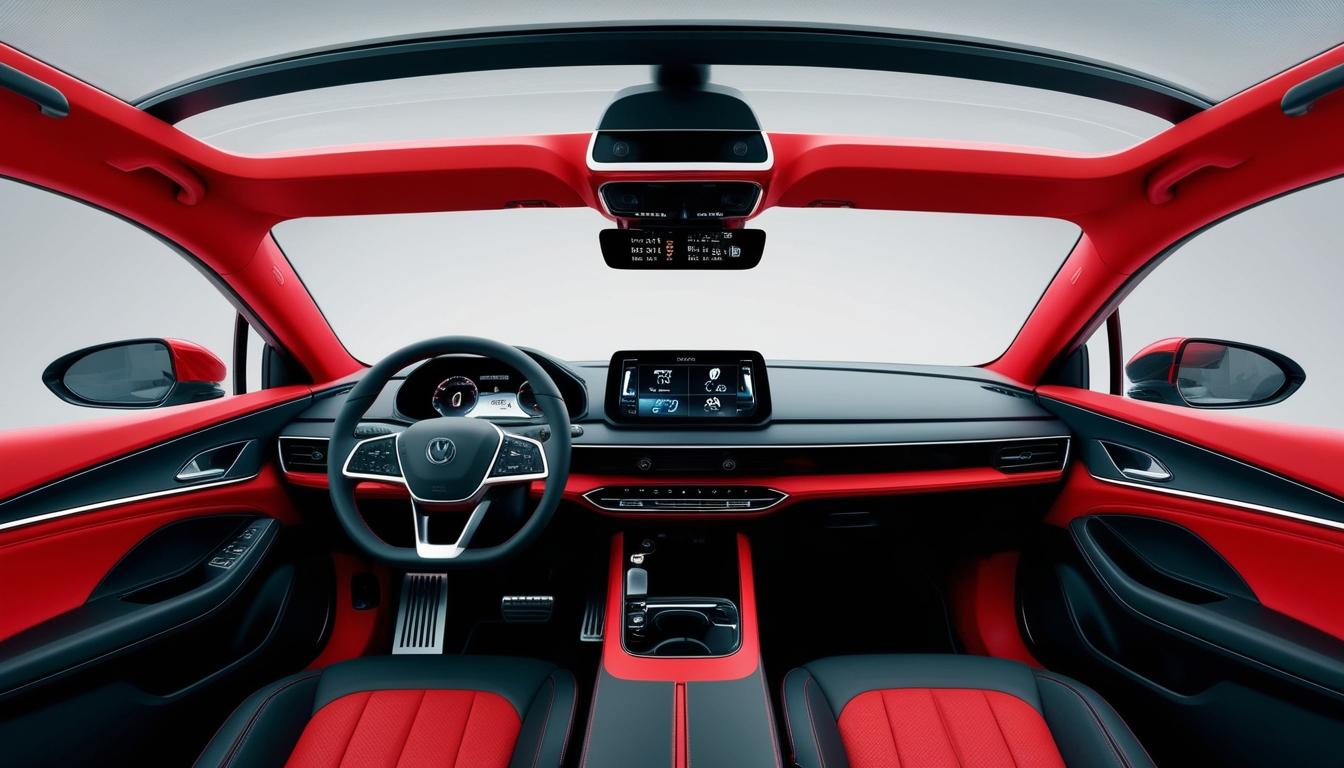
The automotive industry is witnessing a significant transformation as augmented reality (AR) technology becomes increasingly integrated into vehicles. Major manufacturers such as Audi, Mercedes-Benz, and BMW are at the forefront of this innovation, developing advanced displays that enhance drivers’ and passengers’ experiences by merging the digital and physical worlds.
AR overlays digital information onto a user’s real-world view, which differs from virtual reality (VR) that immerses users entirely in a virtual setting. This technology has begun to revolutionise the way drivers receive information, with applications ranging from navigation aids to entertainment systems now built into vehicles.
Luxury car manufacturers have been leading the charge; Audi's E-Tron sport utility vehicle, now branded as the Q8 E-Tron, previously included graphical overlays to guide drivers at intersections. Similarly, Mercedes-Benz introduced AR features in the C-Class sedan. The latest innovations continue this trend, with the Audi Q6 E-Tron offering an optional augmented reality head-up display (HUD) that projects information directly into a driver’s line of sight. This new HUD showcases not just vital driving data, but also animated notifications, such as speed limit changes, seamlessly blending the driver’s environment with digital cues.
Audi's spokesperson noted, “Due to the high image distance from the driver, the eyes do not need to refocus between the real environment and the head-up display (HUD) image. This is the biggest advantage of a HUD compared to a dashboard display.” The forward tilt of the projected image, they emphasised, enhances the AR experience by aligning with the natural focus of the human eye, allowing drivers to better absorb information without losing attention on the road.
Entertainment features are also evolving, as Audi indicated that drivers could engage in games using the HUD while parked. Continued advancements in AR technology may expand these options further.
BMW is set to unveil new models that incorporate extensive display capabilities across the entire width of the windscreen, which will be showcased at CES 2025. This system aims to create a large, cohesive display that offers new design opportunities for vehicle interiors. As Frank Weber, a BMW board member, stated, “The windscreen becomes a single large display with our new BMW Panoramic Vision, opening up completely new possibilities for the design of our vehicles.”
Mercedes-Benz has also been enhancing its offerings, launching an AR HUD in its S-Class that features eye-tracking technology to maintain information within the driver’s field of view. Such advancements promise to improve safety by reducing distractions while providing an intuitive navigation experience. A spokesperson for the company remarked, “An augmented reality heads-up windshield (AR HUD) provides enhanced safety by projecting critical information directly onto the windshield.”
Looking ahead, Mercedes is exploring the potential of AR glasses to further augment the driving experience. The company envisions a "Bring Your Own Device" (BYOD) model, whereby customers would use their personal AR equipment for tailored experiences. This initiative may include immersive interactions for prospective buyers through a mixed reality configurator, linking real-time game engines with AR capabilities.
Audi is equally considering mixed and augmented reality glasses, as illustrated through their Activesphere concept vehicle. The design allows for both driver and passenger engagement in a virtual environment while maintaining focus on the road. An Audi spokesperson explained, “For the time being, we feel the augmented reality HUD is the best solution for drivers today as a way of safely being engaged in the driving process whilst still providing the added benefit of additional driving information.”
As these technologies evolve, the integration of augmented reality into automotive design is set to redefine user experiences within vehicles, providing smarter, more engaging, and ultimately safer ways for drivers and passengers to interact with their environments.
Source: Noah Wire Services