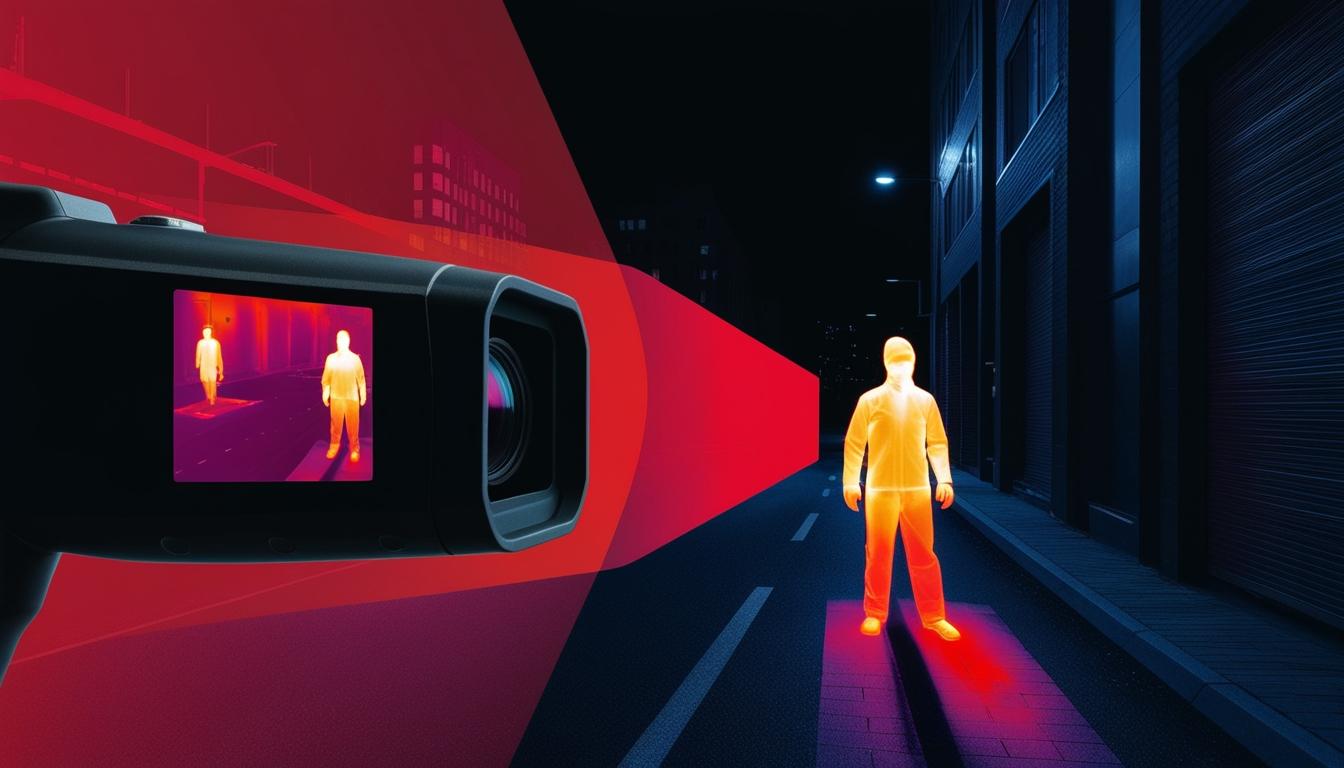
The pursuit of enhanced road safety is advancing with urgency as the deadline for new pedestrian automatic emergency braking (PAEB) standards approaches in 2029. Teledyne FLIR, in collaboration with VSI Labs, is at the forefront of integrating innovative thermal imaging technology to meet these crucial safety requirements, particularly focusing on night-time visibility.
Recent evaluations held at the American Center for Mobility (ACM) in Michigan demonstrated the effectiveness of this technology in automakers' efforts to comply with the Federal Motor Vehicle Safety Standard (FMVSS) No. 127. This regulation requires that, by September 2029, all passenger vehicles and light trucks with a weight of up to 10,000 pounds be equipped with PAEB systems capable of detecting pedestrians across varying lighting conditions. Notably, a substantial percentage of pedestrian fatalities—77.7% in 2022—occur during night-time, underlining the significance of advancing safety measures.
The National Highway Traffic Safety Administration (NHTSA) has indicated that adherence to these benchmarks is achievable. Current state-of-the-art systems utilizing radar and visible cameras, however, often face challenges performing effectively in dim environments.
In comprehensive testing led by VSI Labs, a Ford Fusion Hybrid fitted with a thermal-fused PAEB system was compared against three commercial off-the-shelf (COTS) vehicles designed for 2024. Results from these trials indicated that during daytime assessments, both the thermal-fused and conventional systems exhibited excellent performance. However, during night-time testing, the advantage of thermal imaging became evident, as the thermal-fused system excelled while all three COTS vehicles failed at least two scenarios, exposing the limitations of their reliance on radar and visible imaging alone.
A vital aspect of these tests included the use of thermally active pedestrian mannequins (PTMs) that replicated human heat signatures, significantly challenging the PAEB systems and reinforcing the importance of thermal imaging technology in pedestrian detection.
Thermal cameras provided numerous advantages over traditional sensor technology. They enhance detection range, seeing further than standard headlights, and perform efficiently in darkness, glare, smoke, and fog conditions—an area where other systems may struggle. According to Mike Walters, Vice President of Product Management at Teledyne FLIR, “Thermal cameras offer a cost-effective solution for OEMs aiming to meet FMVSS No. 127 standards. With their ability to see through challenging conditions, they provide advanced warning and improve braking distances.”
Phil Magney, founder of VSI Labs, noted, “All three COTS vehicles failed at least two nighttime tests, highlighting the uphill battle current PAEB systems face in achieving FMVSS No. 127 compliance.” He emphasised the necessity of integrating thermal cameras into automotive safety designs, as real-world conditions present even greater hurdles. His insights reflect a wider industry consensus that, although current systems perform adequately in daylight, they do not meet safety needs during night-time or low-visibility scenarios.
The trend of rising pedestrian fatalities, particularly at night, adds urgency to these developments. The statistics reveal a worrying reality: the combination of increased vehicular speeds, challenging visibility, and unreliable sensor performance creates critical risks for pedestrian safety. The integration of thermal imaging technology promises to diminish these risks and improve the reliability of PAEB systems in all lighting situations.
The trials executed by VSI Labs took place on the 10th and 11th of September 2024 at ACM's advanced testing facilities. The evaluation employed heated adult pedestrian mannequins developed by 4activeSystems to realistically simulate human thermal signatures. This controlled setting permitted detailed analysis, resulting in actionable insights for automakers now facing the pressing requirement to comply with upcoming safety regulations.
Teledyne FLIR’s long-standing expertise in intelligent sensing solutions positions them as key players in this automotive technology transition, and their commitment to innovation continues to shape the landscape of vehicle safety. Meanwhile, VSI Labs, established in 2014, has emerged as a leader in supplying insights on advanced safety and automation technologies. Their partnership with Teledyne FLIR signifies a productive melding of sophisticated research and engineering expertise.
As the 2029 compliance deadline for FMVSS No. 127 looms, the adoption of thermal imaging systems is shifting from a desirable feature to an essential element of automotive safety. By utilising this technology effectively, manufacturers can mitigate existing limitations, ultimately contributing to fewer pedestrian fatalities and enhancing the safety and reliability of the driving experience for all.
Source: Noah Wire Services