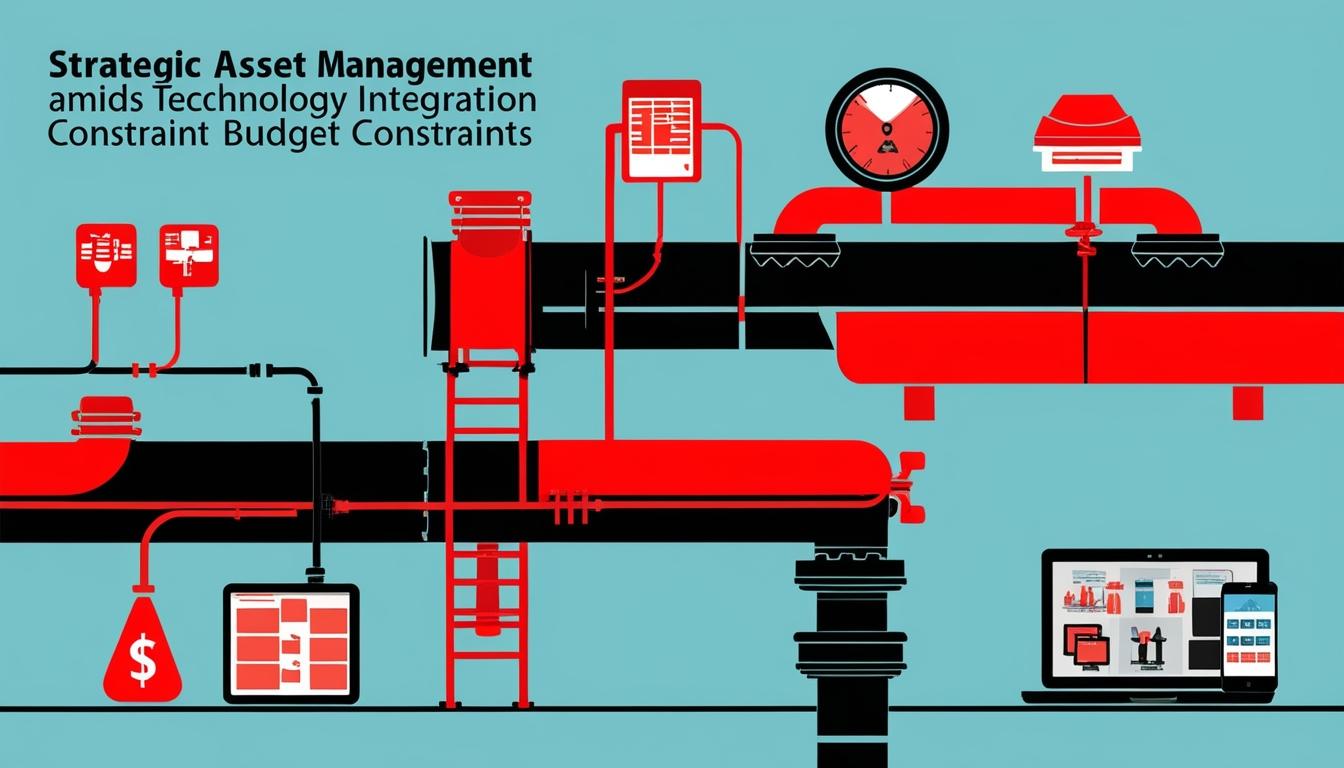
Jessica Rauf-Thomas, head of operational asset management at EMCOR UK, has addressed the pressing issue of ageing infrastructure within the water industry, emphasising the importance of strategic asset management to mitigate risks associated with this growing challenge. Speaking to the Water Industry Journal, Rauf-Thomas highlighted the widespread difficulties faced by water utility companies in managing aging infrastructure, especially under the constraints of limited budgets.
Many organisations in the sector are grappling with the challenge of determining which assets need replacement and when. Rauf-Thomas explained that a comprehensive asset management strategy, grounded in lifecycle and criticality principles, can offer multiple advantages. These benefits include improved budget and cost planning, increased service reliability, enhanced performance, and heightened operational efficiency.
Rauf-Thomas outlined a distinction between asset management and maintenance. Asset management encompasses a robust plan that details the entire lifecycle of an asset, from acquisition to disposal, supported by rich data analytics and insights. In contrast, maintenance schedules focus on the ongoing operational management and upkeep of assets, thus addressing safety and reliability concerns. When water companies do not keep accurate and centralised records, especially if they rely on disparate spreadsheets or multiple systems, they risk losing track of the condition of their numerous assets.
To counteract this risk, Rauf-Thomas suggests that a well-defined maintenance schedule should be created, facilitating a reliable overview of assets while keeping records updated and systematically collating data. This proactive approach helps to design optimised maintenance schedules that enhance both asset performance and reliability.
Technological advancements play a significant role in modern asset management practices. Rauf-Thomas noted that the integration of innovative technologies—such as sensors, GPS, the Internet of Things (IoT), and artificial intelligence (AI)—can support the effective management of operationally essential assets. These technologies can also streamline the process of establishing comprehensive asset management plans, allowing for more rapid control over asset conditions.
However, one of the challenges in incorporating these technologies is ensuring that all systems are aligned to form a singular source of truth, as disparate data streams can complicate the management process. The goal is to establish robust data and decision-making capabilities that enhance both asset management and maintenance strategies tailored to individual organisational needs.
Looking forward, Rauf-Thomas asserts that adopting a proactive and forward-thinking approach to asset management will position water companies to better respond to both anticipated and unforeseen changes, including emerging government policies and regulatory requirements. By equipping themselves with intelligent data and insights, firms can prepare for future challenges while also capitalising on new opportunities.
As the water industry faces uncertainty, strategic asset management rooted in comprehensive data analysis promises to offer a pathway for organisations to enhance resilience and navigate the complexities of evolving operational landscapes.
Source: Noah Wire Services