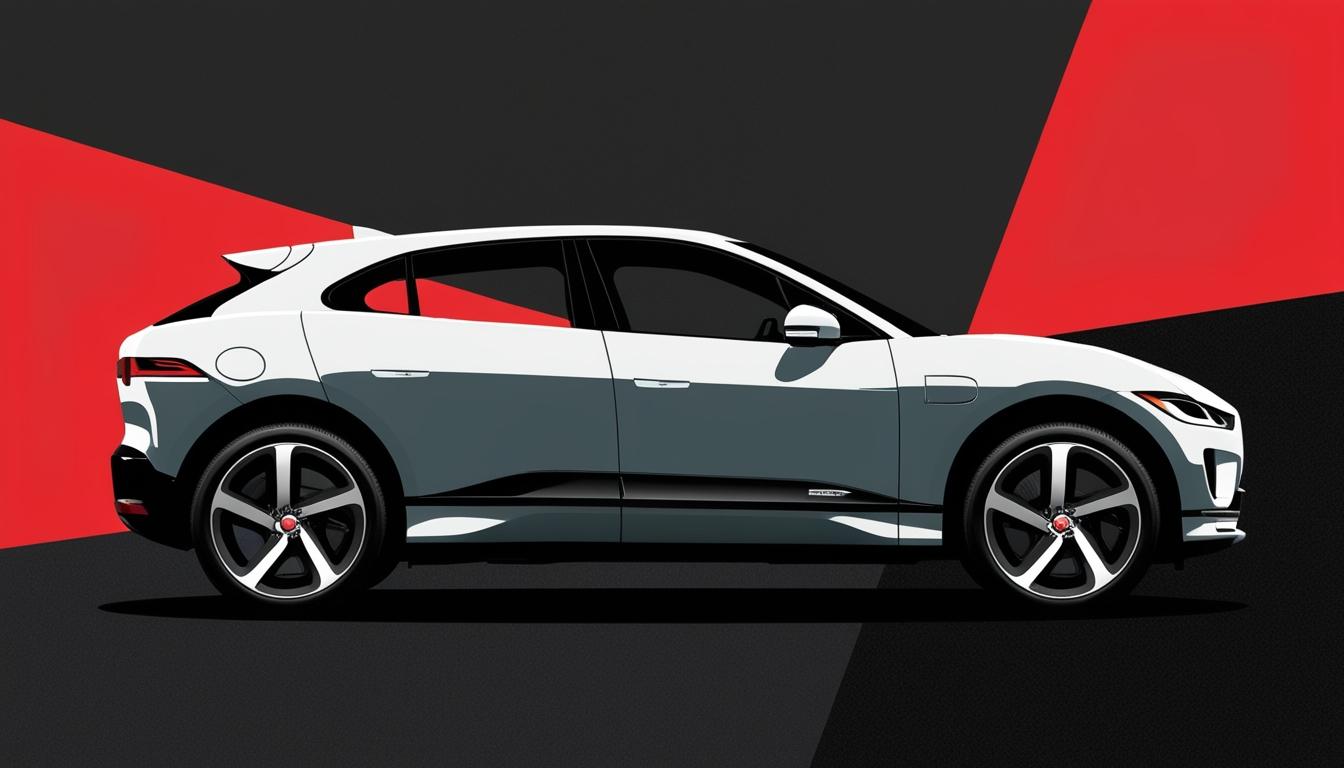
Jaguar's recent branding initiative, dubbed "copy nothing," has sparked a mix of intrigue and bewilderment within automotive circles. The campaign, which debuted late last year, included a striking advertisement devoid of traditional car imagery, featuring only models in a stark presentation. Jaguar's assertion that this is “the future” has left the industry considering the implications of such radical shifts in branding and product direction. The new focus marks a significant pivot for Jaguar, which is part of the Indian-owned Tata Motors Ltd., as it strives to establish itself in the competitive high-end electric vehicle (EV) market.
The announcement of Jaguar’s Type 00 concept vehicle in Miami came just as the automotive landscape began to shift dramatically. News broke of major leadership changes in companies like Stellantis NV and Nissan Motor Co., reflecting the tumultuous state of the global auto industry. In recent months, Volkswagen AG faced controversy regarding plans to close plants in Germany, while Ford Motor Co. has grappled with ongoing adjustments to its EV strategy. Additionally, General Motors Co. ended the year on a low note, incurring a $5 billion write-down related to its operations in China and exiting specific ventures in the automated driving sector.
A dual challenge looms over traditional automakers: the meteoric rise of Chinese auto manufacturers and the pressing need for electrification. With capacities that allow for the production of over 50 million vehicles annually, China has positioned itself as a formidable player on the global stage. The country’s production capacity exceeds domestic demand, fuelling an export surge that saw its auto exports surpass those of Japan last year. China's dominance in the electric vehicle market is pronounced, with the nation accounting for two-thirds of global EV sales, a staggering figure that showcases its growing influence in what is considered the future of the automotive industry.
The protectionist actions taken by major powers, including the United States, further complicate the landscape for legacy automakers. With a strategic sector under threat from low-cost competition, the U.S. has already implemented barriers against Chinese EV imports. The incoming administration under President-elect Donald Trump is expected to bolster these measures. Meanwhile, Europe, which has more intricate trade relationships with China, has also begun to raise tariffs on Chinese-manufactured EVs.
Despite these protective strategies, industry analysts note that they may only serve as temporary solutions. Kevin Tynan, head of research at the Presidio Group, reported that the U.S. automotive market can't sustain volume growth as the average transaction price of vehicles has surged to nearly $50,000, coupled with existing excess capacity in U.S. auto plants. These factors have resulted in a challenging economic environment, especially for U.S. manufacturers – with plant utilization rates struggling to rise beyond 75% for nearly five consecutive years.
The ramifications of China’s robust manufacturing capabilities extend to the architecture of vehicles themselves, particularly with the transition to electric motors and batteries whose components are increasingly standardized. The commoditisation of these essential elements threatens the traditional value proposition associated with internal combustion engines, prompting companies to rethink their branding and product offerings. The emergence of new players in the automotive market, such as smartphone manufacturer Xiaomi Corp., which recently unveiled an electric SUV, underscores the need for legacy brands to innovate radically.
Jaguar's strategy of differentiating itself with high-priced electric models highlights the changing dynamics in consumer preferences and market positioning. In this climate of heightened competition and ambiguity, Nissan is currently negotiating a potential merger with Honda due to financial challenges exacerbated by competition from Chinese manufacturers. Stellantis, with its diverse portfolio, is also in a position that may necessitate restructuring, especially as the market dynamics shift beneath their feet.
Ultimately, the challenges faced by traditional automotive companies have begun to reshape the industry landscape. With ongoing conversations around mergers, capacity constraints, and the broader implications of a shifting global trade environment, it is evident that the drive towards electrification is not just about technology but also about the survival of established brands in an increasingly competitive field. The future of the automotive industry is unfolding, influencing not only the businesses involved but the consumers who rely on them.
Source: Noah Wire Services