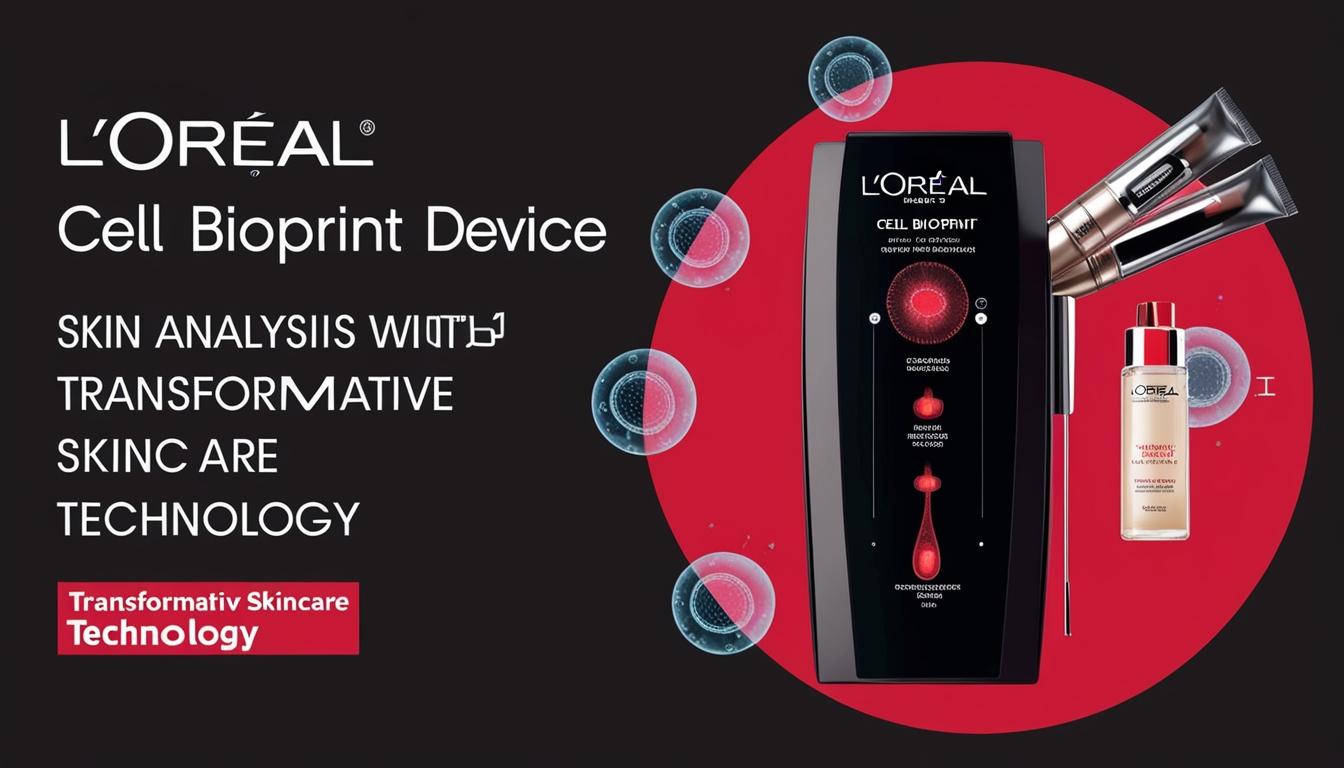
L’Oréal introduced its groundbreaking Cell Bioprint device at the CES tech showcase in Las Vegas on Monday, marking a significant advancement in skin care technology. The device aims to personalise skin care recommendations by assessing individual skin concerns not just in the present, but with a forward-looking approach that anticipates future issues.
Guive Balooch, the global managing director of augmented beauty and open innovation at L’Oréal, elaborated on the motivation behind this innovation. “We want to give people an idea of how to correct the trajectory of their skin health, and not just reactively address what has already happened,” he stated in an interview. The Cell Bioprint is set to pilot with a L’Oréal brand in Asia later this year, following five years of development in collaboration with South Korean start-up NanoEnTek, renowned for its biochemical skin diagnostic solutions.
Unlike existing skin analysis tools, such as L’Oréal’s own Skin Genius, the Cell Bioprint distinguishes itself by focusing on the biological makeup of the skin rather than merely providing a snapshot of its current condition through imaging. “Those give you a snapshot of where your skin is today, but what people really want to know is their biology — and how understanding it can help them right now to improve their skin health in the future,” Balooch explained.
The operation of the Cell Bioprint involves measuring specific proteins present in the skin, which have varying implications for skin conditions that consumers may experience in the future. It calculates one’s biological skin age and assesses the effectiveness of various active ingredients, including retinol. Balooch noted, “There are certain proteins, or what we call biomarkers, which if present in high levels, dispose you to a greater likelihood of having wrinkles, fine lines, or dark spots.”
The device provides a personalised skin care plan that can be determined within a five-minute consultation. The process entails placing a strip of facial tape on a cheek, which is then immersed in a protein-isolating buffer solution before being analysed by the Cell Bioprint cartridge. Balooch highlighted that currently, the Cell Bioprint can detect nearly 20 different proteins commonly associated with skin concerns.
“This tech aims to solve a real problem,” Balooch asserted, referencing L’Oréal's history of launching innovations that enhance user experience. He pointed out that previous successful launches, such as the Colorsonic at-home hair colouring tool and Hapta, which supports individuals with limited mobility, serve as a foundation for the Cell Bioprint's introduction.
In addressing the widespread consumer frustrations with skincare solutions, Balooch remarked, “We’re finding that nine out of 10 women are frustrated with their skin care solutions, and part of that stems from the crowdedness and confusion of the market.” The introduction of the Cell Bioprint is aimed at reducing this frustration by leveraging biological insights and sophisticated technology to provide clearer, more effective recommendations to consumers.
Source: Noah Wire Services