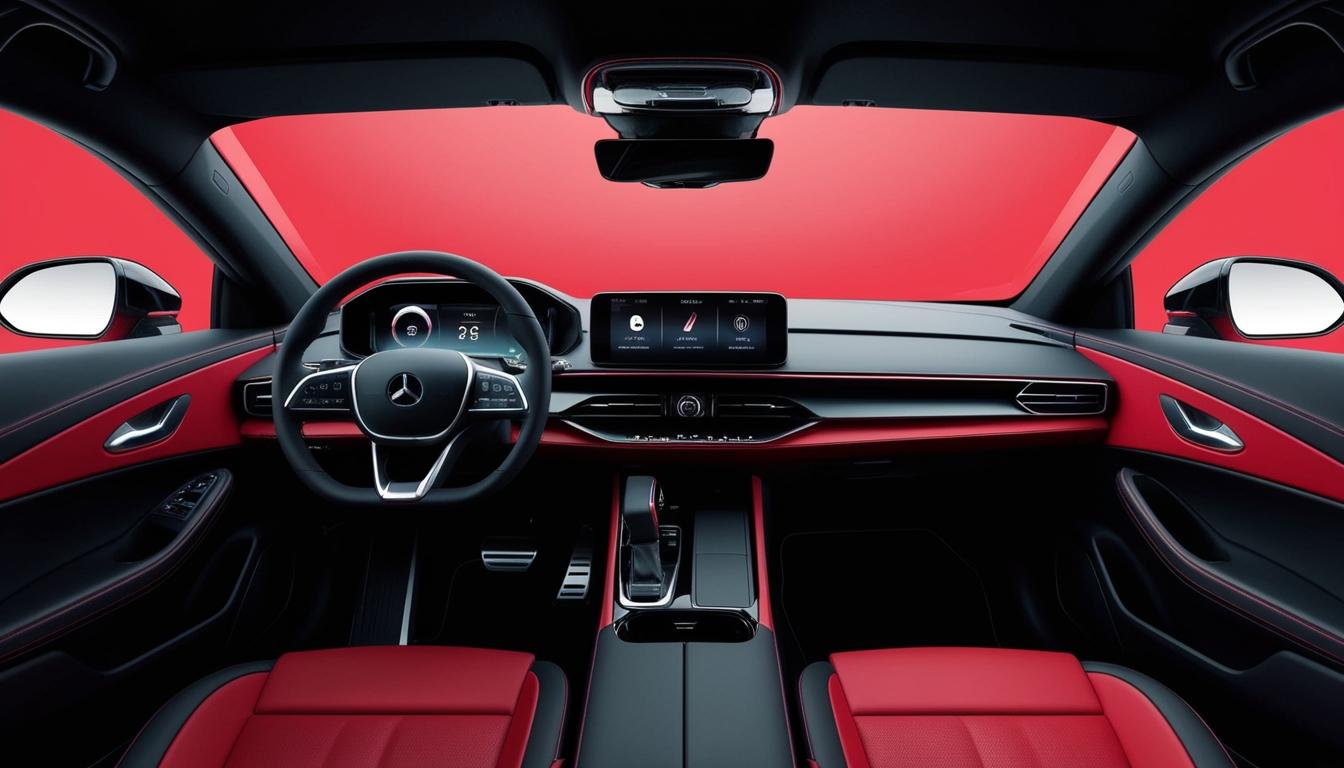
In recent developments within the automotive and technology sectors, two notable partnerships are poised to reshape the landscape of artificial intelligence and automation in vehicles. Cerence Inc. has strengthened its collaboration with NVIDIA, aiming to advance its family of language models, particularly in automotive applications. Meanwhile, speculation surrounds a potential alliance between Tesla and Google, which could lead to significant innovations in autonomous vehicle technology.
Cerence Inc. is enhancing its CaLLM family of language models through an intensified partnership with NVIDIA. The collaboration primarily focuses on elevating both the cloud-based Cerence Automotive Large Language Model and the smaller embedded CaLLM Edge. By leveraging NVIDIA AI Enterprise, Cerence is set to improve its AI applications for the automotive sector. NVIDIA's DRIVE AGX Orin platform, which incorporates a sophisticated mix of hardware and software, provides a critical foundation for these advancements.
The partnership aims to achieve an amalgamation of expertise encompassing user experience, hardware, and software design, which is crucial for developing effective in-car conversational interfaces. By working closely with NVIDIA engineers, Cerence has expedited its timeline for rolling out generative AI solutions tailored to automotive needs. Noteworthy tools from NVIDIA, such as TensorRT-LLM and NeMo, have been instrumental in enhancing Cerence's responsiveness to automotive requirements.
Significant strides have also been made in optimising in-vehicle performance through the deployment of NVIDIA's powerful computing frameworks. Cerence's adaptation of NVIDIA NeMo Guardrails specifically for automotive purposes ensures that vehicle AI systems can adeptly manage more complex interactions with users. The innovative architecture within CaLLM Edge is expected to set new standards for intelligent conversational assistants in vehicles, giving rise to user experiences that anticipate driver needs with minimal input.
Meanwhile, the tech world is abuzz with speculation regarding a potential collaboration between Tesla and Google. According to insiders, this partnership could integrate Google's advanced AI capabilities into Tesla's renowned Autopilot system, thereby enhancing the reliability and safety of autonomous driving technologies. Google's extensive experience in machine learning could significantly refine real-time decision-making processes and optimise routing for Tesla vehicles.
In addition to automotive enhancements, the collaboration could explore integrating Google’s AI-driven services, including Google Assistant, into Tesla's vehicular architecture. This would facilitate seamless voice controls not only for vehicle functions but also for other smart devices, transforming Tesla cars into multifunctional hubs of connectivity.
However, the integration of such sophisticated technologies raises substantial concerns regarding cybersecurity. Both Tesla and Google are equipped with robust infrastructure to counteract digital threats, making it imperative for any potential partnership to address security as a top priority. Developing secure systems to protect vehicles from cyber threats will be critical in ensuring user safety and confidence in autonomous technologies.
While neither Tesla nor Google has officially confirmed their partnership, industry analysts believe that such a collaboration could set new benchmarks in both the automotive and tech industries. As consumer demand for integrated technology solutions escalates, the alignment of Tesla and Google's innovative capabilities may not only accelerate the acceptance of autonomous vehicles but also ignite a wave of competition across the industry.
In summary, the collaborations between Cerence and NVIDIA, alongside the potential partnership between Tesla and Google, highlight a transformative era in automotive AI. These advancements underscore the pressing evolution towards smarter, more interconnected vehicles, offering significant implications for how consumers interact with technology while driving.
Source: Noah Wire Services