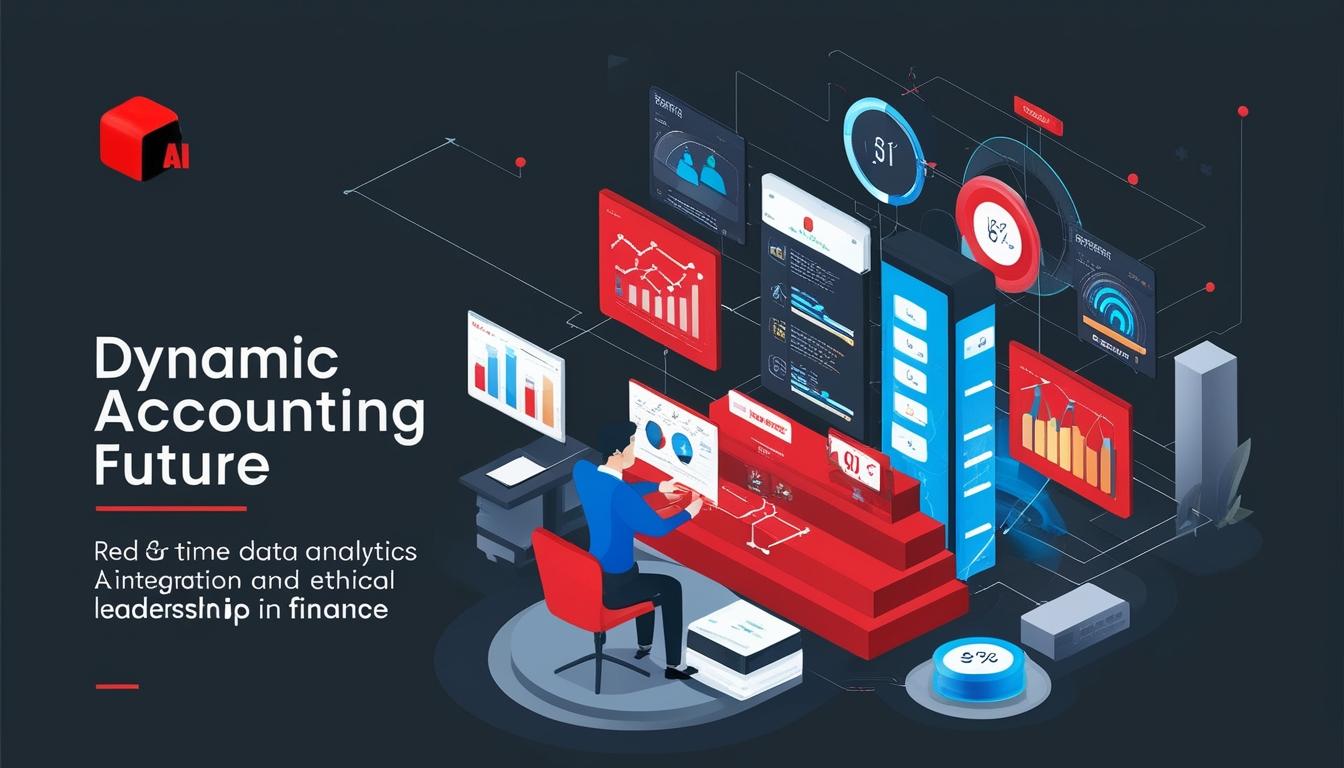
Sage has recently revealed its ambitious vision for the future of accounting, informed by a comprehensive study conducted by Forrester Consulting, which surveyed over 2,300 finance leaders within small and medium-sized businesses (SMBs). The findings, unveiled by Aaron Harris, Chief Technology Officer at Sage, detail forecasts for how artificial intelligence (AI) could fundamentally alter the accounting landscape by the year 2030.
According to the study, AI is set to introduce significant advancements such as real-time insights, enhanced risk management techniques, and improved strategic decision-making capabilities. This transformation marks a departure from traditional accounting methods, which tended to offer only a snapshot of financial health at a given time. Instead, Sage asserts that we are entering an era characterised by continuous accounting, continuous assurance, and continuous insights, which will lead to substantial gains in operational efficiency, regulatory compliance, risk management practices, and the accuracy of financial forecasts.
Forrester Consulting has outlined five key predictions regarding the future of AI integration within the accounting function of SMBs:
Ethical AI Leadership: By 2030, it is anticipated that 80% of SMEs will have implemented comprehensive AI ethics policies. Ethical AI adoption will not be merely a compliance issue; businesses are expected to take a leadership role in ensuring ethical AI practices.
Overhaul of Risk Management: The report posits that over 90% of SMEs will utilise AI for ongoing monitoring and anomaly detection, potentially diminishing financial errors and fraud rates by more than 95%. This represents a significant evolution in risk management approaches.
End of the Monthly Close: Real-time data is set to replace traditional monthly financial closings, with 75% of SMEs projected to transition to dynamic, continuous accounting practices that rely on effective continuous assurance.
Integration of Real-Time Data in Financial Decisions: More than 70% of SMEs are likely to incorporate real-time data into their financial decision-making processes, which will help them foster growth and innovation in an increasingly competitive environment.
Creation of New Roles for Accountants: As AI automates routine accounting tasks, accountants will be able to redirect their focus towards strategic analyses and the provision of valuable business insights. This shift is expected to foster new opportunities for accountants to engage in business strategy and innovation.
While AI will play a crucial role in monitoring business activities and identifying risks and opportunities in real time, it is emphasised that human oversight and decision-making will remain vital. The integration of AI is anticipated to enhance complex accounting tasks, with an increasing focus on ethical standards and professional judgement that uphold the trust that the finance profession embodies.
In conclusion, Sage’s vision, supported by these predictions, highlights a proactive and collaborative approach to navigate the challenges posed by AI integration. Sage is dedicated to assisting small businesses in capitalising on the opportunities presented by AI technologies, paving the way for a more innovative and efficient future in the accounting industry.
Source: Noah Wire Services