The release of OpenAI’s ChatGPT on November 30, 2022, ignited a significant uproar among tech executives. While many portrayed this as apprehension regarding the reliability of generative AI, deeper financial motivations underpinned their concerns. Key players in the tech industry, including Google, Meta, Microsoft, and Amazon, recognised that they were not adequately prepared to invest in the infrastructure necessary to compete effectively in a landscape dictated by rapid technological advances and fierce competition.
A spotlight was placed on the escalating costs associated with generative AI, as top-tier GPUs, extensive data centre infrastructure, and round-the-clock energy access became essential. In response to inquiries about the panic, ChatGPT itself referenced the financial readiness for AI infrastructure as the leading factor for the industry’s reaction. This concern was echoed by Google's Gemini, which also acknowledged that the development and management costs of AI models can be significant.
Falling into this paradigm shift were new AI offerings introduced by major corporations. Microsoft released its Copilot tool, while Meta followed suit with its Meta AI initiative. Analysts maintain that tech companies are faced with an urgent need to adapt to this technological evolution or risk falling behind, with BOK Financial’s Matt Stephani stating, “Winners and losers are going to be decided.” It is increasingly clear that firms must invest substantial resources, with some estimates for data centre expenditures reaching $100 billion for construction, necessitating extraordinary power supplies of up to 5 gigawatts.
The implications of this AI revolution extend beyond the tech sector to impact utilities and natural gas forecasts profoundly. Maeghan Rouch of Bain & Company highlighted how the generative AI boom caught utilities off guard just as demand increased due to manufacturing repatriation, changing industrial policies, and the growth of electric vehicles. Coincidentally, Eric Peters, CEO of Coinbase Asset Management, remarked that power consumption related to AI applications has baffled many entrepreneurs, with demands skyrocketing exponentially.
Credit-analysis firms, such as S&P Global Ratings, described this technological upheaval as the Fourth Industrial Revolution, aligning it with prior historical shifts marked by mechanization, electrification, and digitization. The increased processing power required by Nvidia’s newer chips only amplifies this demand, as they consume considerable amounts of power just for AI model training, reinforcing a trend depicted by Evercore ISI energy analyst James West regarding the urgent need for onsite or alternative power solutions.
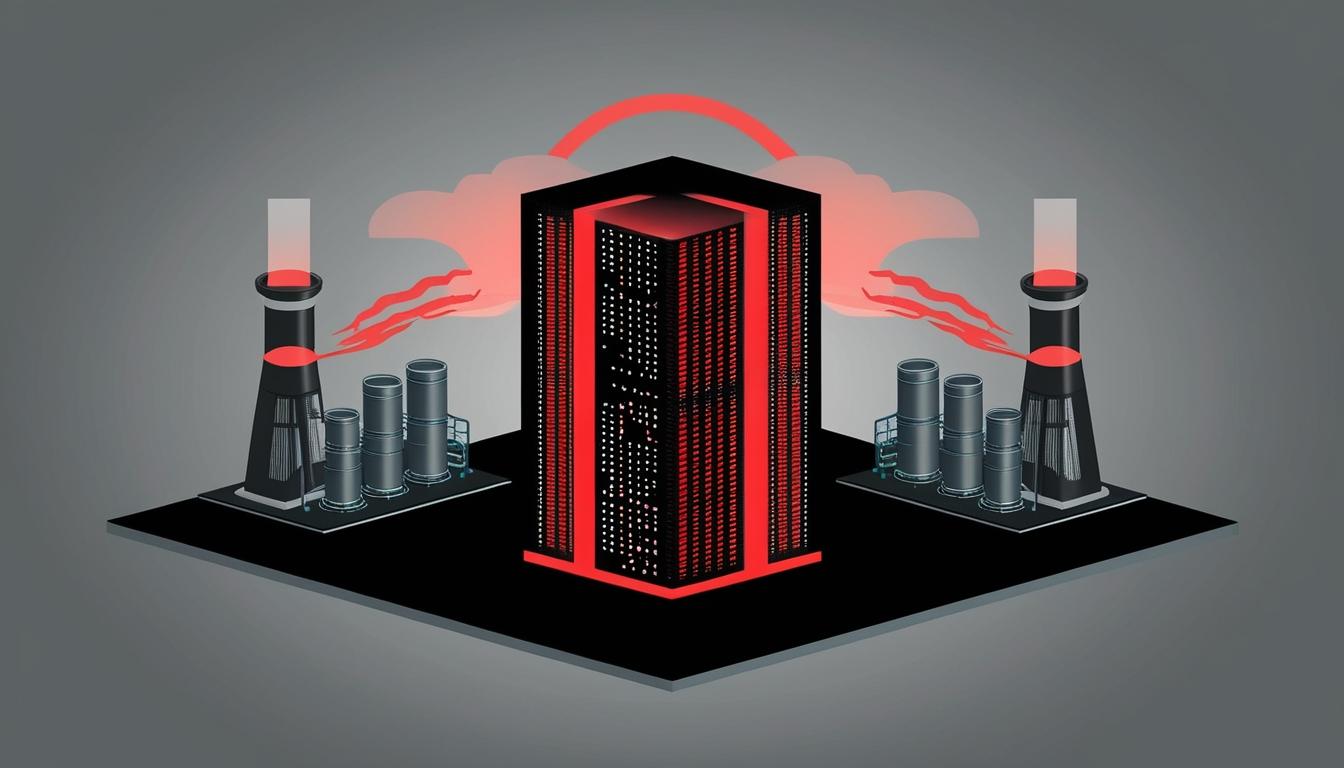
As data centre demands intensify, developers are now targeting areas outside established concentration zones like the West Coast, Arizona, and Virginia to secure reliable and cost-effective power sources. The energy consumption of data centres has reached a staggering scale; serving a single gigawatt data centre requires the equivalent power from four natural gas plants or half of a nuclear power plant. In fact, projections suggest that global data centre power needs could surpass $2 trillion over the next decade.
In the U.S., the Energy Policy Research Foundation reported that by early November, there were 2,602 operational data centres, with additional significant power requirements announced for those under construction and in planning. Key regions such as Virginia are positioned to see exponential growth in demand, prompting utility companies to project remarkable increases in commercial power consumption. S&P Global Ratings forecasts an additional 50 gigawatts of demand by 2030, supported chiefly by natural gas, which is expected to account for a substantial portion of the required power generation.
As the country anticipates a fundamental shift in energy consumption patterns, the potential shift towards natural gas as a primary energy source has gained support from major producers. Conversations among gas companies highlight their readiness to meet this burgeoning demand. Coterra Energy's CEO, Tom Jorden, echoed sentiments shared by many in the industry, stating that natural gas remains the only viable solution to meet the expected power needs.
Meanwhile, technological advancements in the nuclear sector, such as Microsoft’s agreement to revive the Three Mile Island nuclear plant to support data centres, suggest a blended approach to future energy supply solutions. However, analysts caution that while such projects are substantial, they will not adequately cover the gap left by the rapid growth in air conditioning and computing demands spurred by AI.
The forecasts and discussions taking place within the energy sector exemplify the growing recognition of the interconnected relationship between AI technology and energy requirements. By 2030, natural gas demand could increase significantly—up to 18 billion cubic feet per day—largely driven by the ongoing buildout of data centres. The staggering statistics characterise a landscape where energy provision must evolve seamlessly alongside technological advancements, marking a significant turning point in both fields.
Source: Noah Wire Services