The automotive industry is on the brink of a substantial transformation that promises to redefine mobility and resilience amid evolving economic and technological landscapes. According to Technowize Magazine, the sector is witnessing a convergence of multiple dynamics, indicating a future characterised by innovation and sustainability.
As the automotive realm reaches a pivotal juncture, the industry appears poised to recover robustly from previous economic challenges and continues to thrive into 2035. Historically, the industry has maintained a close correlation with real GDP growth, particularly regarding light vehicle sales. Patterns of recovery, often illustrated by a V or U curve, suggest that the automotive sector is capable of bouncing back within two years post-recession, with current trends indicating significant upward trajectories driven by increased vehicle replacement rates. Notably, the average age of cars in developed nations has reached unprecedented levels, which is expected to trigger substantial replacement cycles.
Looking ahead, key milestones are projected, with global vehicle sales expected to exceed 100 million by 2028 and the total number of vehicles in operation projected to reach 2 billion by 2030. These benchmarks mark not merely an incremental growth but rather a significant paradigm shift in the automotive landscape.
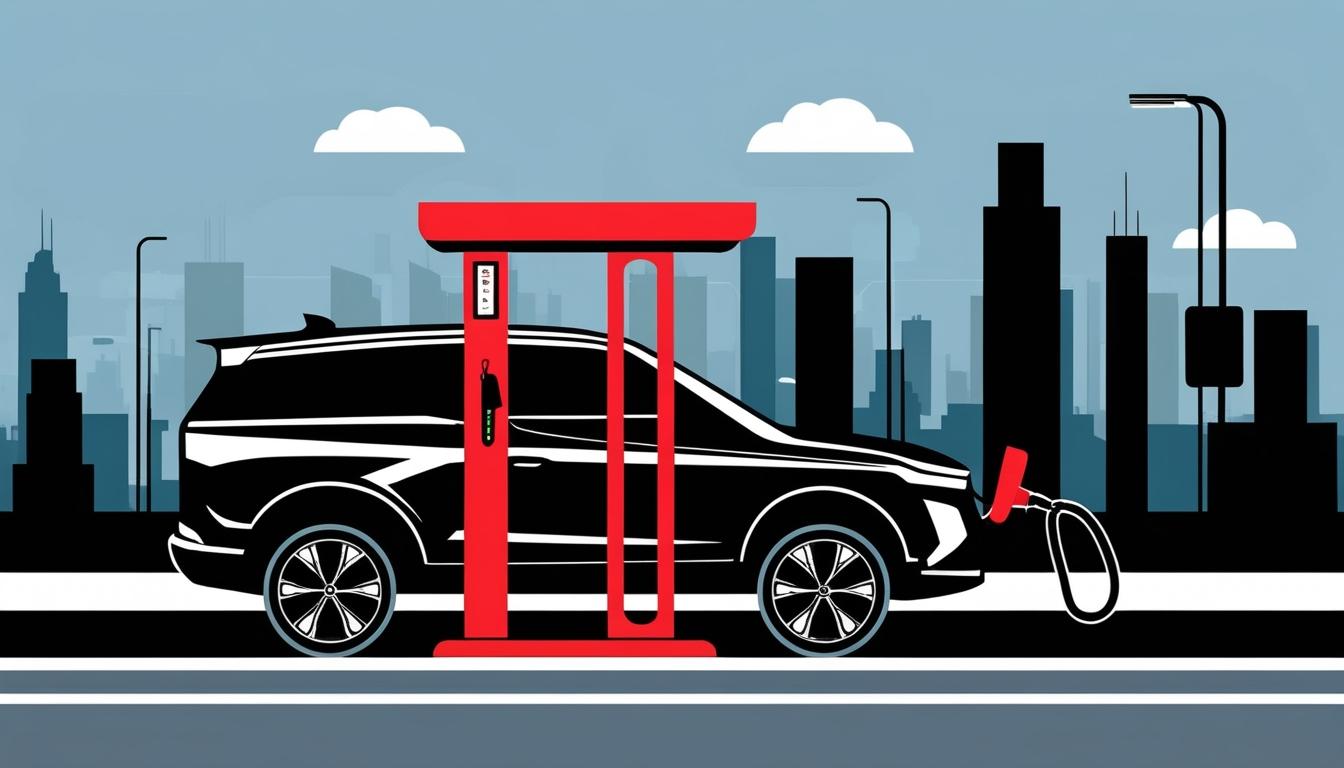
A significant contributor to this transformation is the rise of electric vehicles (EVs). Although EV growth rates may face short-term challenges, they are anticipated to surpass internal combustion engine vehicles by 2036, largely driven by advancements in battery technology. Innovations such as solid-state batteries, decreasing battery costs below $80 per kWh, and improved battery life cycles are contributing to this shift. This transition is further supported by growing environmental awareness, as both consumers and government entities increasingly prioritise eco-friendly alternatives.
Emerging markets like India and Indonesia are set to play a crucial role in this evolution. India’s automotive industry is experiencing robust growth, significantly impacting the global market, while other emerging nations such as Mexico, the Philippines, and Turkey are expected to become key players between 2030 and 2035. This growth is being fuelled by a burgeoning middle class and advancements in consumer preferences, particularly among the Gen Z demographic, who are inclined towards innovative and sustainable solutions.
On the manufacturing side, a consolidation of electric vehicle platforms is expected over the next several years, with Original Equipment Manufacturers (OEMs) aiming to streamline costs and production processes. For instance, Volkswagen plans to utilise over 20 models per platform by 2030, resulting in more flexible production that accommodates a variety of vehicle types, including hatchbacks, sedans, and SUVs.
The shift towards modularity and the implementation of micro-factories will facilitate greater production efficiency and customisation capabilities. Referring to these transforming manufacturing approaches, Technowize highlights a move from the traditional increment of Kaizen to the more radical innovation concept of Kakushin, addressing modern demands for agility and sustainability.
Connected technology, bolstered by advancements in 5G and satellite communication, is another frontier; the market for these technologies is forecasted to leap from USD 0.8 billion in 2023 to an astonishing USD 568 billion by 2035. The incorporation of smart technologies will create a seamless connection between vehicles and urban infrastructure, developing an automated lifestyle that fosters improved convenience and security. Future vehicles are predicted to come equipped with over 300 connected features, marking a significant leap towards intelligent mobility.
While the dream of fully autonomous vehicles remains on the horizon, significant progress is being made in Advanced Driver Assistance Systems (ADAS). The anticipated trajectory indicates that commercial vehicles will transition into more advanced levels of autonomous driving more quickly compared to passenger cars, with Level 4 autonomy expected to emerge primarily by 2030.
As the automotive industry adapts, emerging trends will further facilitate its evolution. OEMs are likely to diversify offerings to include multi-cycle vehicle sales and services, integrating energy and connectivity models, while Chinese manufacturers are anticipated to lead in both electric vehicle production and autonomous vehicle technologies. Additionally, advancements in battery longevity and efficiency are expected to further enhance the value proposition of electric vehicles as they develop in response to a rapidly changing market landscape.
This snapshot of the automotive industry illustrates a significant shift from familiar operational norms towards a more connected, innovative, and sustainable ecosystem. The path forward is marked by both challenges and unprecedented opportunities, which will fundamentally alter the way society engages with mobility.
Source: Noah Wire Services