Blockchain technology has undergone significant evolution, influencing various sectors from finance to digital art, as it seeks to fulfil the aspirations of a decentralised internet, known as Web3. Despite its advancements, a notable obstacle remains: blockchain interoperability. For Web3 to witness widespread acceptance, it is essential that different blockchain networks can communicate effectively, enabling seamless transitions for users and developers across various platforms.
The concept of blockchain interoperability refers to the capability of disparate blockchain networks to share data, transact, and interact with one another. Currently, many networks function independently, creating silos that complicate the movement of assets and the execution of smart contracts. This lack of compatibility hinders the full utility of blockchain technology, akin to the difficulties faced when attempting to send an email from one email service to another without the ability to connect.
The fragmented nature of blockchain ecosystems has posed significant challenges, particularly within emerging domains such as decentralised finance (DeFi), non-fungible tokens (NFTs), and online gaming. For instance, in the DeFi space, assets are often isolated within singular chains, preventing opportunities for decentralised exchanges to accumulate resources for optimising returns for users. Similarly, artists and collectors operating on a single blockchain, like Ethereum, often find it cumbersome to engage with different blockchain communities, such as those on Solana or TON. Cross-chain gaming projects are likewise hampered by the inability of players to transfer assets seamlessly, stifling user engagement and the overall scalability of gaming economies.
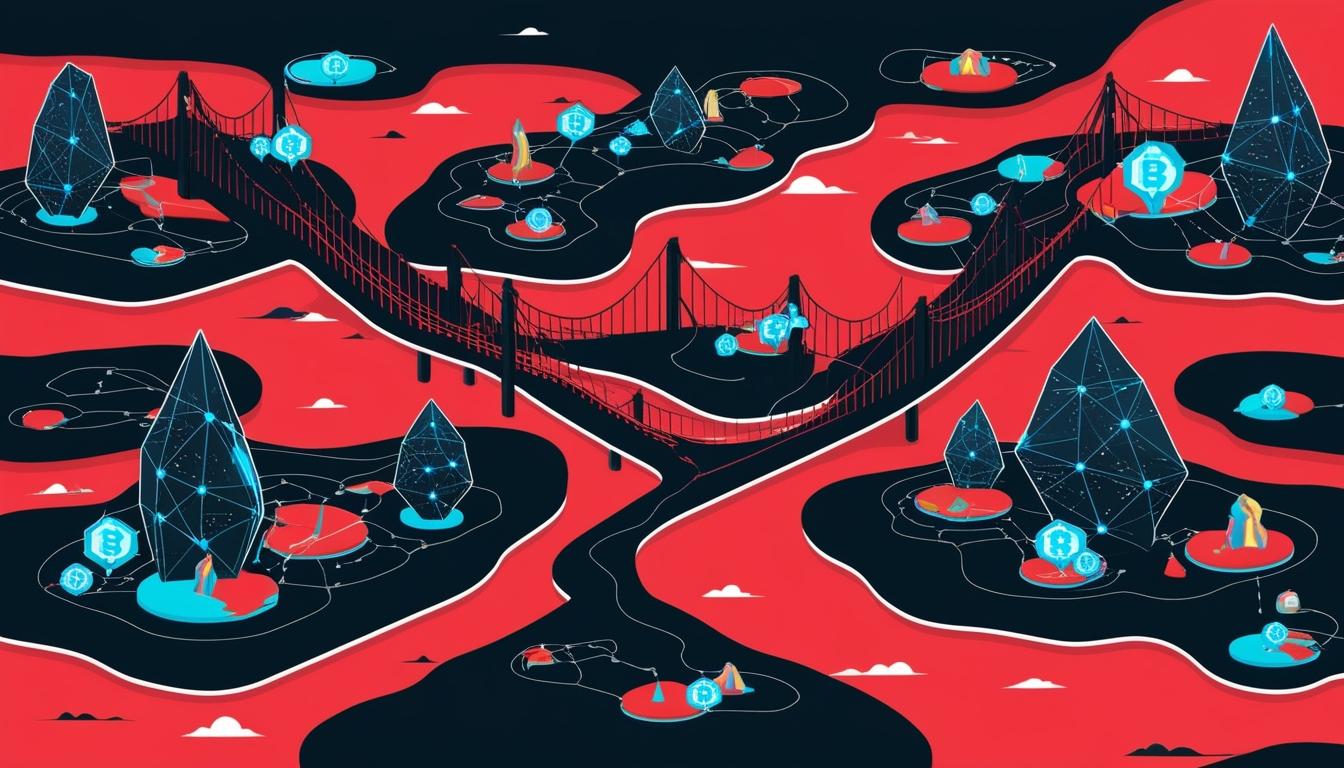
Addressing the interoperability challenge requires a multifaceted approach. To conceptualise this, one can imagine blockchain networks as islands in close proximity, yet physically disconnected. Overcoming this isolation necessitates the construction of bridges and pathways between these islands, which can be mirrored in creating interoperability solutions tailored to specific types of assets or data. Such solutions must consistently be decentralised, secure, and capable of delivering real-time data, alongside being accessible for developers.
A critical starting point for improving blockchain interoperability lies in Remote Procedure Calls (RPCs). These serve as a means for developers to access timely data from across a multitude of blockchain networks. The emergence of data networks such as dRPC is pivotal in this arena, facilitating developers' connections to diverse blockchains without the burden of managing separate integrations, thus reducing development overhead and speeding up market readiness. Constantine Zaitcev, CEO of dRPC, remarked, “developers can easily access data from multiple blockchains without the hassle of managing different nodes."
Although RPCs aid developers significantly, they do not address all interoperability challenges, particularly concerning liquidity. The solution for siloed liquidity comes from dedicated liquidity layers, enabling newer layer twos (L2s) and decentralised exchanges (DEXs) to access deeper resources than they could produce independently. Entities such as Orderly Network and Orbs are crucial in driving this initiative, providing liquidity where necessary on demand.
The ramifications of enhancing interoperability will be substantial throughout the entirety of the Web3 landscape. In the DeFi sector, unified liquidity pools are projected to allow decentralised exchanges to present more favourable trading conditions, decreased slippage, and lower transaction costs. The evolution of cross-chain lending and borrowing could entice a broader spectrum of users and institutional investors.
For the NFT sphere, greater interoperability would benefit artists and collectors significantly, permitting the minting, trading, and showcasing of works across multiple platforms, thereby unlocking various creative and economic opportunities. The advent of interoperable NFT marketplaces promises to accommodate a wide range of tokens irrespective of their originating chains.
In gaming and the metaverse, players would be afforded seamless transitions with their assets, avatars, and achievements, revolutionising metaverse economies and nurturing more profound engagement within communities.
The overall infrastructure supporting Web3 has seen notable improvements in recent years, fostering innovation and investment. However, blockchain interoperability has emerged as the linchpin essential for realising its full potential. As various projects increasingly adopt omnichain RPC and liquidity solutions, the vision of a cohesive network of blockchains comes within reach, promoting the essential promise of open access and opportunity within the blockchain domain. With the requisite technology already in place, the responsibility now rests on developers to integrate these solutions into their applications, contributing to the evolution of powerful decentralised applications (dapps) free from structural constraints.
Source: Noah Wire Services