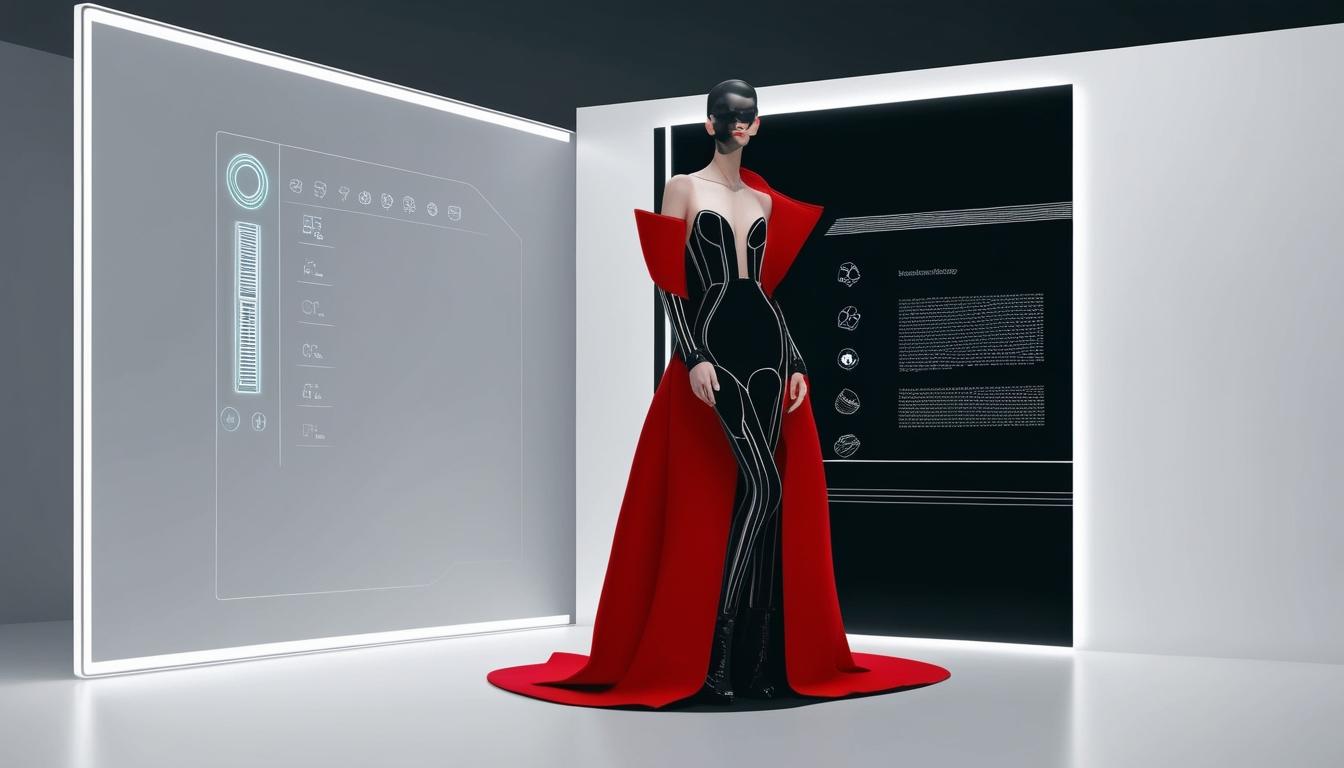
The fashion industry is undergoing a significant transformation as artificial intelligence (AI) emerges as a powerful force reshaping both aesthetic and economic aspects of the business. This revolution is not just about style; it extends to how brands approach advertising and operations in the luxury sector. A new breed of virtual influencers and digital models is leading the charge, compelling established practices and strategies to evolve in this high-stakes arena.
Among the most notable digital personalities is Lil Miquela, a virtual influencer who has gained massive traction on Instagram, collaborating with high-profile luxury brands such as Prada and Chanel. Speaking to Luxury Boutique Magazine, the creators behind Lil Miquela highlighted the allure of digital influencers to marketing departments, stating that she never gets sick, doesn't have 'bad days', and incurs minimal production costs compared to traditional campaigns. This allows brands to bypass logistical challenges, making collaborations efficient and cost-effective.
In this invigorated landscape, Shudu—a digital creation by photographer Cameron-James Wilson—has also made waves as the first digital supermodel. With her physically ideal appearance, she has attracted the attention of luxury brands such as Balmain and Fenty Beauty. Wilson's commentary underscores the economic advantages of using digital models: “Shudu works anytime, anywhere—she is eternally young and does not require entire teams of producers, stylists and hairdressers.” By utilizing digital avatars, companies can drastically reduce costs associated with conventional fashion photography.
Not limited to Western markets, AI-driven influencers are making significant inroads in Brazil and Japan. Lu do Magalu serves as a virtual ambassador for Magazine Luiza, the largest online retailer in Brazil, seamlessly marrying the characteristics of an influencer with digital precision. In Japan, the virtual model Imma, known for her striking pink bob, has captured the imagination of fashion enthusiasts while partnering with renowned brands like Dior and Burberry. Both Lu and Imma illustrate how AI can be harnessed to create localised campaigns while conserving resources.
The implications of AI in photography are equally profound. Traditional fashion photography is facing a paradigm shift as brands increasingly opt for digital shoots that do away with many conventional production expenses—high costs associated with studios, lighting, and extensive crews can now be avoided. Renowned photographer Nick Knight is pioneering this approach, experimenting with AI-generated avatars for a Gucci campaign. While AI-generated images offer brands flexibility and precision, Knight acknowledges that human creativity and emotion remain irreplaceable in conveying the true essence of fashion.
Additionally, the rise of digital styling through AI enables brands to develop finely-tuned campaigns without reliance on expensive styling teams. An example includes Ralph & Russo's venture into AI with a digitally-created Haute Couture collection that was showcased as a live visualisation. Such innovations can significantly reduce costs, especially for projects requiring rapid turnaround and budget optimisation.
However, concerns regarding authenticity persist. Digital influencers may appear perfect, but their existence is meticulously orchestrated by creative teams, contrasting sharply with the genuine experiences presented by traditional influencers. As the market evolves, a hybrid approach integrating both digital and human influencers is emerging as a notable trend, exemplified by Prada’s campaign featuring Lil Miquela alongside real influencers, enhancing audience engagement.
Economic benefits for luxury brands leveraging AI are considerable; these technologies facilitate quicker, more effective campaigns while allowing for comprehensive control over brand imagery. As competition intensifies, brands are increasingly turning to AI as a strategic tool for budget optimisation and tactical execution.
Despite the seductive allure of AI, the fashion industry grapples with ethical considerations. The European Union has moved to ensure transparency by mandating labels for AI-generated content, enabling consumers to make informed choices regarding their engagement with such campaigns. In a sector where authenticity is paramount, brands must navigate the delicate balance of leveraging AI while upholding trust.
Looking ahead, the fashion landscape is poised for further evolution. As digital models and influencers become more entrenched, the role of human creativity and emotional engagement will remain indispensable. It is this blend of man and technology that fuels the industry's narrative, shaping a future where AI continues to unlock new possibilities without wholly replacing the human touch, vital to storytelling and connection within fashion.
Source: Noah Wire Services