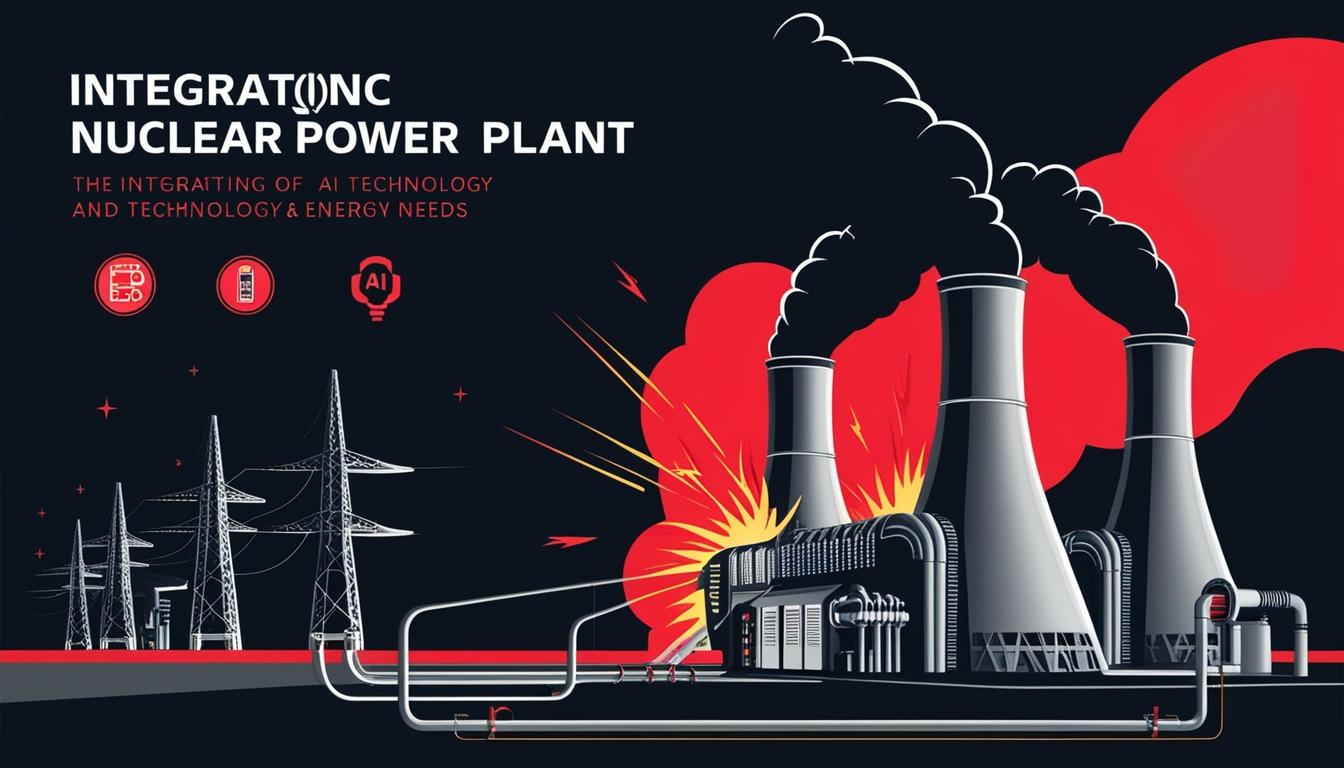
In early 2023, the field of Artificial Intelligence (AI) rapidly transformed both industry practices and financial markets, drawing significant investor interest towards companies engaged in AI-related technologies. This surge is attributed to advances in processing capabilities and data management, especially in AI chip manufacturing, cloud computing, and software applications that leverage AI capabilities.
However, the increasing reliance on AI may present a future challenge regarding energy consumption. According to projections from Wells Fargo, electricity usage driven by AI technology could see a dramatic rise, escalating from 8 terawatt-hours in 2024 to an estimated 652 terawatt-hours by 2030. Amid this emerging demand, nuclear energy is being positioned as a potential solution due to its efficiency and minimal emissions, particularly as traditional fossil fuels face increasing scrutiny and renewable resources often prove unreliable in meeting base-load energy demands.
These anticipated energy requirements linked to AI may further enhance investor interest in companies invested in nuclear power. The investment landscape is now highlighting three notable companies in this sector. Cameco Corporation (NYSE: CCJ), a Canadian firm, plays a pivotal role in uranium production, accounting for approximately 18% of global uranium supplies and possessing controlling stakes in uranium mines located in Canada, the United States, and Kazakhstan. With technology firms and nations increasingly looking to nuclear power as a viable solution to meet burgeoning energy demands, Cameco's long-term growth prospects appear strong. For instance, Meta Platforms has outlined plans to harness nuclear energy to operate its AI data centres beginning in the early 2030s.
The momentum behind nuclear energy is also evidenced by data from the International Atomic Energy Agency, which reports that there are currently 63 nuclear reactors under construction. Demand for nuclear energy is projected to increase significantly, potentially growing up to 2.5 times its existing capacity by 2050. Additionally, geopolitical complexities, such as recent bans on uranium imports from Russia, are likely to benefit Western uranium producers like Cameco.
Cameco’s recovery over the past two years is noteworthy, with analysts predicting its revenues could reach $2.3 billion by 2025, assuming ongoing support for nuclear initiatives from governments and industry stakeholders.
For those investors seeking diversification beyond a pure nuclear focus, Southern Company (NYSE: SO) emerges as a significant player in the energy sector. Ranked among the largest energy companies in the United States, Southern Company provides essential utility services—serving over 9 million customers across electricity, gas, and natural gas utilities. The company benefits from a diversified energy production portfolio that includes gas, coal, nuclear, and renewable sources, ensuring a reliable revenue stream amidst society's continuing demand for energy.
As AI technology is poised to reshape business landscapes, the intertwined issues of energy consumption and sustainable power sources, particularly nuclear energy, are becoming increasingly essential to both economic growth and environmental considerations. As this narrative develops, the future of energy production in line with AI's burgeoning demands remains a key focal point for stakeholders across the industry.
Source: Noah Wire Services