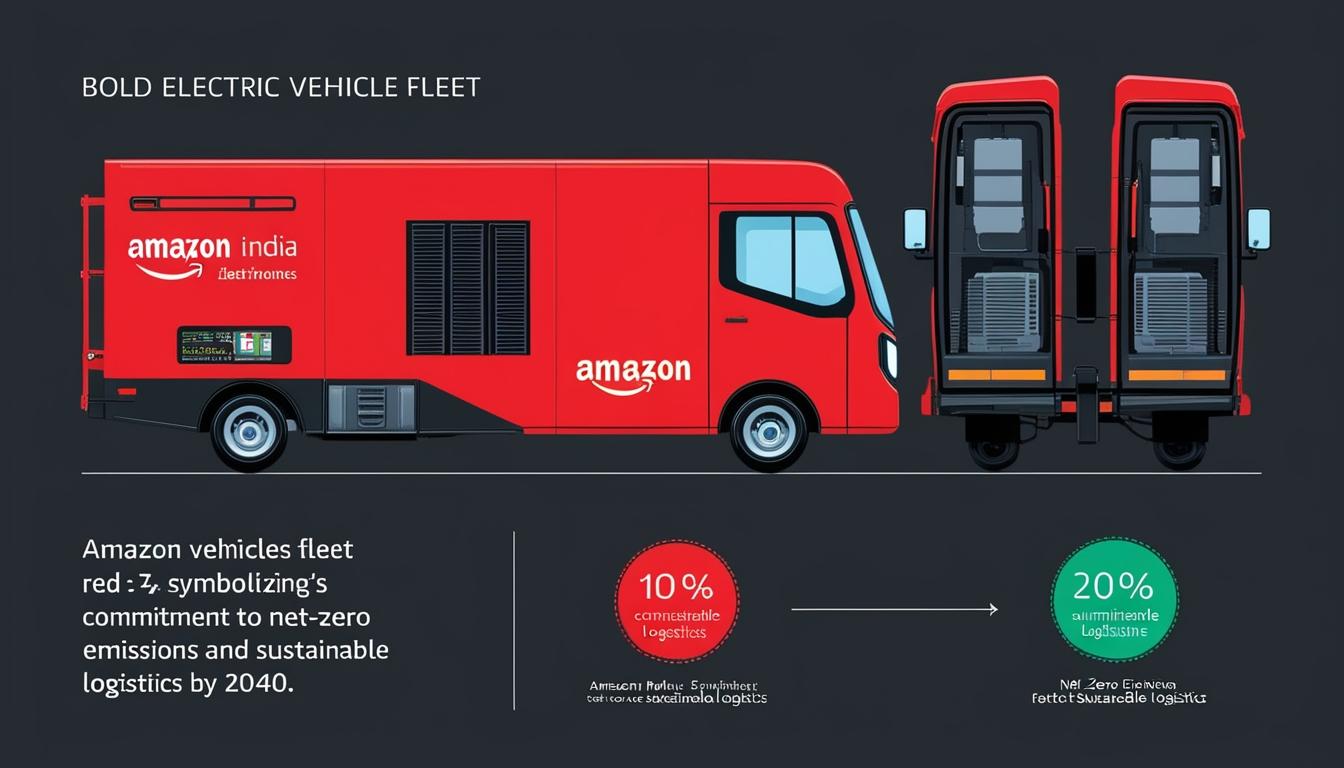
Amazon India is taking decisive steps towards redefining sustainability in its operations, with a firm commitment to achieve net-zero carbon emissions by the year 2040. This initiative aligns with the company's broader climate ambitions under the Climate Pledge, a global commitment which seeks to address climate change through innovative partnerships and strategic environmental stewardship.
The journey began with what Abhinav Singh, Vice President of Operations at Amazon India, termed a "bold vision". Speaking to Mobility Outlook, Singh articulated that, “At Amazon, we believe in being firm on the vision, even if the details evolve. This clarity drove us to reimagine every aspect of our business to achieve net-zero carbon emissions.”
One of the pivotal focuses in this sustainability drive has been on addressing transportation, which represents a significant contributor to carbon emissions. In 2020, Amazon India set an ambitious target of deploying 10,000 electric vehicles (EVs) throughout its network. The initiative involved collaborations with notable automotive manufacturers such as Tata Motors, Ashok Leyland, and Mahindra, as well as emerging startups like Kinetic Green and Euler Motors. By co-developing EV solutions specifically for e-commerce logistics, Amazon achieved this target a year ahead of schedule. The latest inclusion in Amazon’s green fleet is a 32-foot electric vehicle that marks the company’s entry into the electrification of larger intercity transport formats.
In an effort to enhance its logistics operations, Amazon has forged a significant partnership with Indian Railways. Initially, the company utilised passenger trains to transport parcels, but it has since become the first e-commerce entity to collaborate on the Dedicated Freight Corridor. The shift to rail transport—known for its lower carbon intensity compared to traditional diesel trucking—has enabled Amazon to reduce both logistics costs and its overall environmental footprint, as highlighted by Singh.
These efforts align with India's infrastructural ambitions, such as the PM Gati Shakti scheme, which aims to develop multimodal logistics hubs. Singh emphasised that this cooperation with Indian Railways is a testament to Amazon’s commitment to sustainable logistics solutions which not only benefit the company but also foster advancements in the broader industry.
In addition to tackling carbon emissions, Amazon India has recognised the pressing issue of water scarcity in the region. The company has pledged to achieve water positivity in its direct operations by 2027, which entails enhancing water efficiency and restoring critical water bodies. Current projects include revitalising large lakes situated near Bangalore and Hyderabad. Singh pointed out that, given that only 4% of the world’s freshwater resources are available to support 18% of the global populace, these initiatives could substantially benefit local communities while setting a benchmark for corporate water stewardship.
Furthermore, Amazon is setting its sights on renewable energy, having achieved 100% renewable energy sourcing for its operations in India by 2024, which is seven years ahead of the target set globally. This achievement includes the establishment of large-scale wind and solar projects, as well as comprehensive rooftop solar installations across its warehouses and delivery stations. The company's $2 billion Climate Pledge Fund has allocated $1 million specifically for reforestation initiatives in India’s Western Ghats, alongside exploring investments in renewable energy startups worldwide.
Collaboration is a cornerstone of Amazon’s strategy, particularly evident in its initiatives to develop EV charging infrastructure in partnership with Mahindra Logistics and other signatories of the Climate Pledge. The company is also pioneering various fuels, including renewable diesel, cryogenic fuels, and green hydrogen, to address the challenges faced in hard-to-abate sectors like long-haul trucking. Notably, a 30-foot electric truck is currently under development as part of its pilot projects to scale innovative logistics solutions.
To ensure the success of its electric fleet, Amazon is facilitating long-term viability for its delivery associates and logistics partners through tailored financing and lifecycle management programmes. Singh explained, “For a four-wheel EV, operating costs are about 30% lower than diesel vehicles, but the savings only materialise with consistent utilisation. Our role is to ensure that business opportunities keep these vehicles operational, making the investment worthwhile for our partners.”
The multifaceted approach adopted by Amazon toward sustainability encompasses various dimensions, ranging from logistics innovations and renewable energy projects to achieving water positivity and extensive reforestation efforts. By implementing long-term, scalable solutions that seamlessly integrate into local ecosystems, Amazon is advancing its net-zero carbon vision whilst also contributing significantly to India’s sustainability objectives. Through these initiatives, the company aims to demonstrate that business growth and sustainability can coexist, continuing to inspire others within the industry.
Source: Noah Wire Services