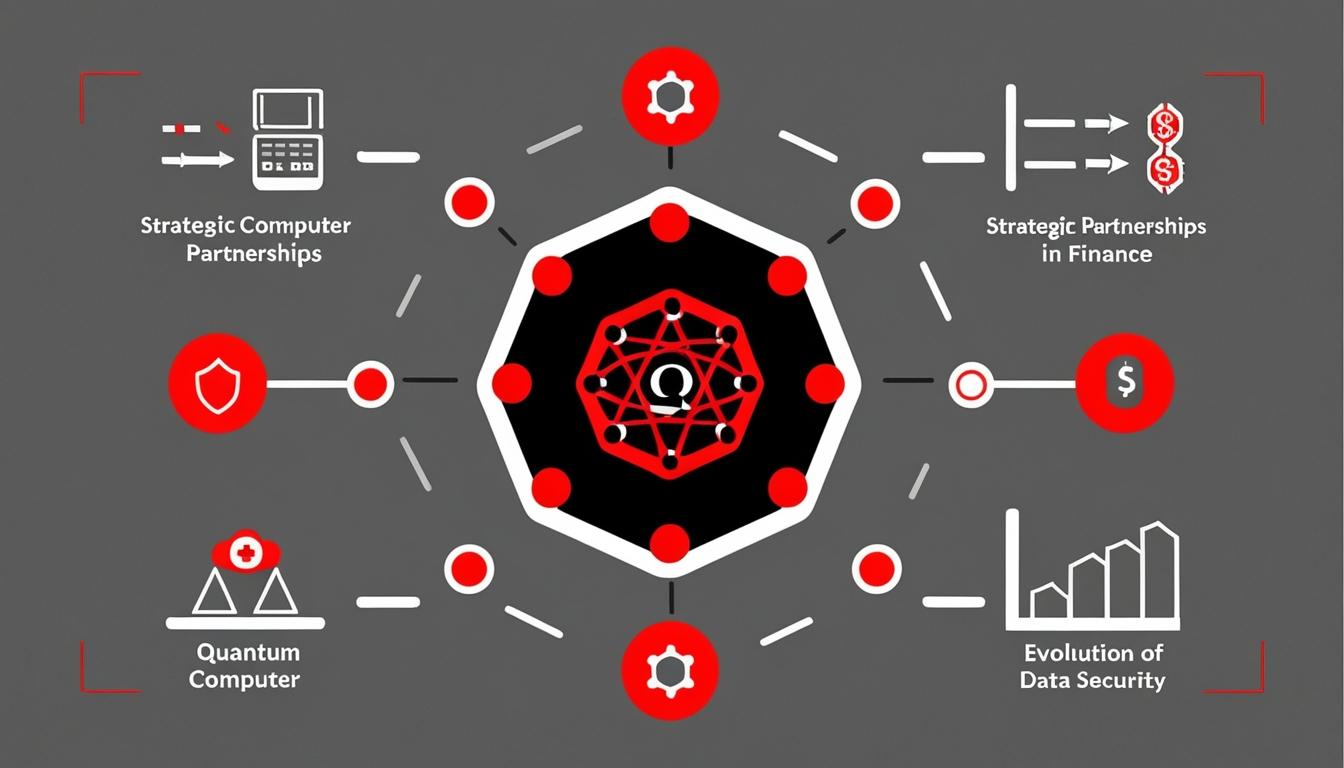
Business leaders are navigating an evolving landscape as quantum computing emerges as a significant technological frontier. The development of quantum computing presents both opportunities and challenges that require careful consideration, particularly within the finance sector. In light of this progression, companies are exploring innovative collaboration methods to harness the potential of quantum technology without incurring the full costs associated with in-house development.
Denise Ruffner, an expert in the field, has advocated for strategic partnerships as a pragmatic solution for organisations looking to tap into quantum computing. Speaking to TechBullion, Ruffner highlighted the impracticalities many businesses face in building comprehensive in-house quantum teams. "Many banks and financial institutions have large research teams dedicated to quantum computing," she noted, "but there are also a number of banks and research institutions that feel the industry is in its infancy and they don’t want to make the investment as of yet."
The timeline for widespread quantum implementation remains uncertain, which complicates investment decisions for financial institutions. As organisations weigh their options, Ruffner suggests that rather than assembling extensive teams, they should consider partnerships with specialist providers. “One strategy when you don’t want to hire a team, is to partner with a provider,” she stated, underscoring how this approach allows firms to manage risk while gaining valuable experience.
A pivotal driver behind the interest in quantum computing is its implications for data security. Ruffner explained that advancements in quantum technology could revolutionise existing encryption methods, potentially rendering current standards obsolete. With this in mind, the National Institute of Standards and Technology has begun establishing new, forward-looking security protocols. However, transitioning to these advanced security measures is both complex and costly. "To change your data security is quite a significant undertaking," Ruffner remarked, highlighting the need for organisations to engage in thoughtful and strategic planning ahead of implementation.
Organisations can explore various facets of quantum computing through partnerships, focusing on three primary areas: trading optimisation and risk profiling, security implementation, and risk management enhancement. For instance, financial firms might initiate projects aimed at refining their operations, or collaborate on pilot programmes to test quantum security products. As Rufner pointed out, "An insurance company might want to better understand potential risks about weather or about any number of topics, and they would like to put those into their algorithms so they can better ensure that their offerings take this into consideration.”
Some financial institutions have begun their journey into quantum computing by forming small, internally-focused teams composed of individuals with physics expertise. “A number of financial institutions have started their journey in quantum by assembling a small team inside the company with a physics background, not even hiring new people and getting them trained on quantum," Ruffner noted. This modest approach has yielded various results; while some firms opted to expand their efforts and establish dedicated teams, others chose to remain observant, keeping informed about technological advancements.
Ruffner promotes a gradual approach to quantum computing integration. She suggested organisations start with training a select group of individuals, enabling them to act as internal advocates and interface effectively with external partners. Emphasising collaboration, she articulated that "these problems are best solved with the help of a partner who does full-time research into this and has experts on staff."
By engaging in strategic partnerships, organisations can begin to explore the promising, yet intricate world of quantum computing while balancing their investments and risk exposure. This measured approach not only allows them to stay competitive in a rapidly evolving landscape but also helps them navigate the complexities of emerging technologies.
Source: Noah Wire Services