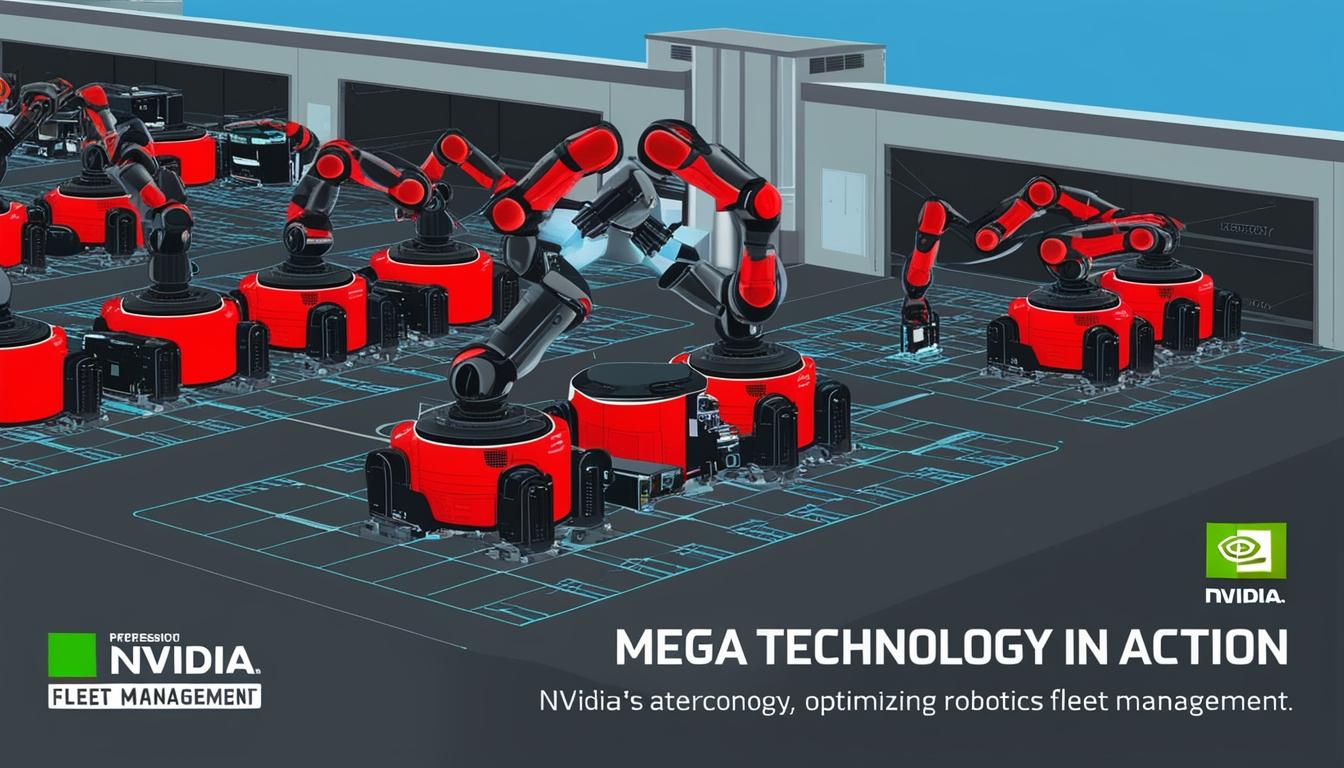
Nvidia has announced a significant expansion into the field of robotics software with the introduction of Mega, an Omniverse Blueprint specifically designed to optimise robotic fleet management at scale. This development was unveiled during the Consumer Electronics Show (CES) on Monday and targets the warehouse industry, which has witnessed substantial adoption of robotic solutions during the COVID-19 pandemic. However, it is notable that many warehouses still exhibit a lack of extensive automation.
As the industry evolves, companies such as Locus Robotics have made considerable advancements in implementing fleets of autonomous mobile robots (AMRs). Nevertheless, experts believe that the future of warehouse automation will not hinge on a single company's solution, but rather on the creation of an interconnected ecosystem. This ecosystem will facilitate various forms of robotics—ranging from AMRs and robotic arms to autonomous forklifts and potentially humanoid robots—working together seamlessly to achieve operational goals.
Nvidia's Mega is poised to address a key challenge in this science: efficient and robot-agnostic fleet management, a goal many in the field consider paramount. According to Nvidia, “Mega offers enterprises a reference architecture of Nvidia accelerated computing, AI, Nvidia Isaac and Nvidia Omniverse technologies to develop and test digital twins for testing AI-powered robot brains that drive robots, video analytics AI agents, equipment and more for handling enormous complexity and scale.” This framework introduces software-defined capabilities to physical environments, thereby enabling ongoing development, testing, optimisation, and deployment of robotic systems.
By utilising Mega, users can create digital twins—virtual representations of physical systems—that allow for the simulation and analysis of optimal routes and workflows for robotic operations. In a notable development, the German supply chain firm Kion Group has become the first company to officially adopt the Mega platform for its operational workflows, signifying a potential shift in how robotic systems might be managed within large-scale facilities.
With these advancements, Nvidia is positioning itself as a leader in the ever-evolving landscape of AI and robotics, where the integration of various technologies is expected to shape the future of business practices in numerous industries.
Source: Noah Wire Services