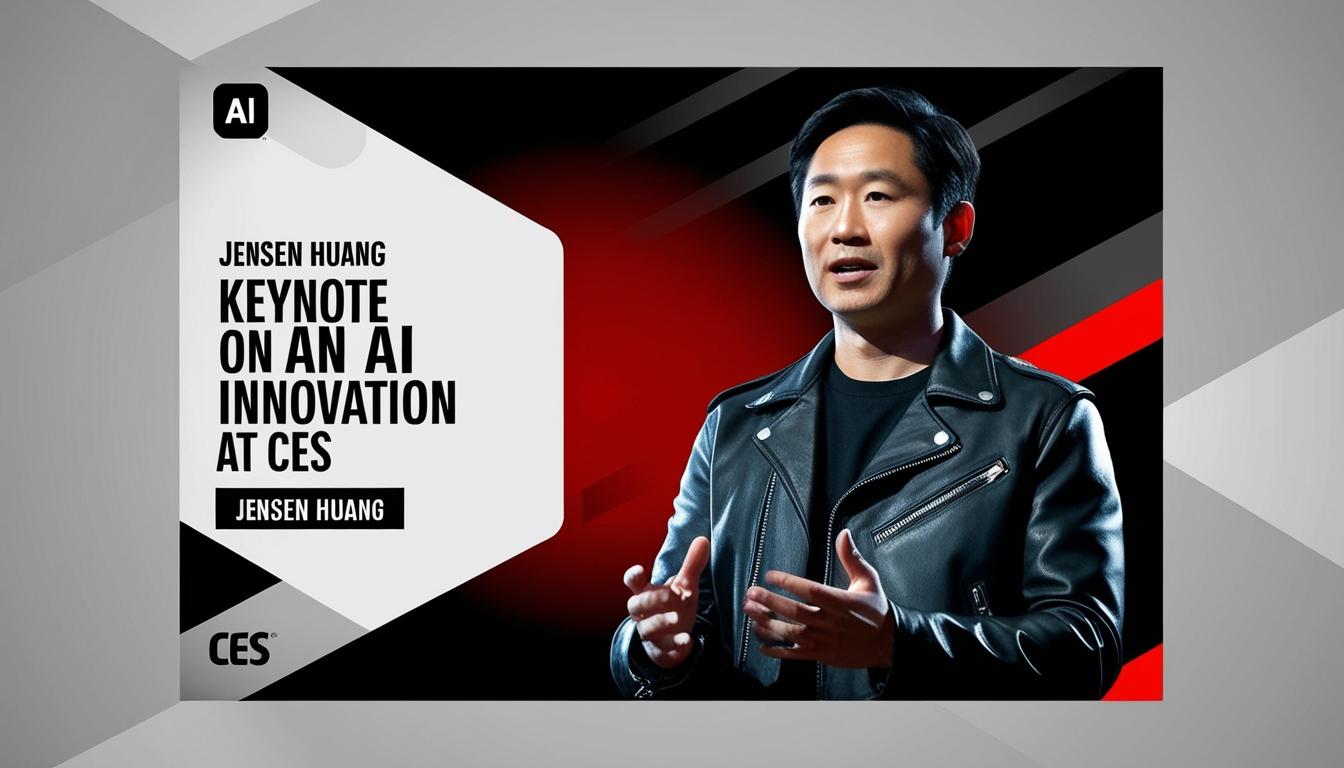
During the opening keynote of CES on Monday night, tech giant Nvidia made significant announcements related to artificial intelligence, under the dynamic leadership of founder and CEO Jensen Huang. Known for his distinctive black leather jacket, Huang's presence in Las Vegas marked an event where he unveiled new initiatives aimed at transforming the landscape of media and automation.
Nvidia, which Huang established in 1993, has risen to a staggering $3.5 trillion market capitalisation, becoming pivotal in various sectors, especially within Hollywood. The company's innovations, particularly in visual effects and animation, have garnered widespread reliance from major technology firms such as Amazon, Google, Meta, Microsoft, and Tesla. Huang's influence as a key figure in the tech industry is indisputable, particularly during the ongoing AI boom.
During the keynote, Richard Kerris, the Vice President and General Manager of Media and Entertainment for Nvidia, detailed a new system called Media 2. In a blog post associated with the keynote, he described Media 2 as “the latest AI-powered initiative transforming content creation, streaming and live media experiences.” This new platform aims to leverage artificial intelligence to generate more personalised and impactful content, adapting to individual viewer preferences.
Kerris also highlighted the collaboration with numerous partners, ranging from imaging firms such as Shutterstock and Getty Images to telecommunications company Verizon. He noted that Comcast’s Sky is currently testing Nvidia's services, suggesting that the integration of these technologies could enhance customer interactivity and accessibility on a global scale. This includes innovative features like using voice commands to request summaries during live sporting events and accessing contextual information in real-time.
In addition to the Media 2 system, Nvidia introduced a new chip and desktop computer, along with the Cosmos platform. This setup is designed to foster the development of physical AI systems, such as robots and autonomous vehicles, through simulated modelling of real-world conditions.
Huang also spotlighted the potential of autonomous vehicles during the keynote, stating, “The revolution has arrived. I predict that this will likely be the first multi-trillion-dollar robotics industry.” His remarks underscore a robust expectations within the tech community regarding the imminent growth and deployment of AI-related technologies across various business practices.
Overall, Nvidia's announcements at CES reflect a substantial commitment to innovation in AI automation, poised to influence a diverse range of industries and consumer experiences significantly.
Source: Noah Wire Services