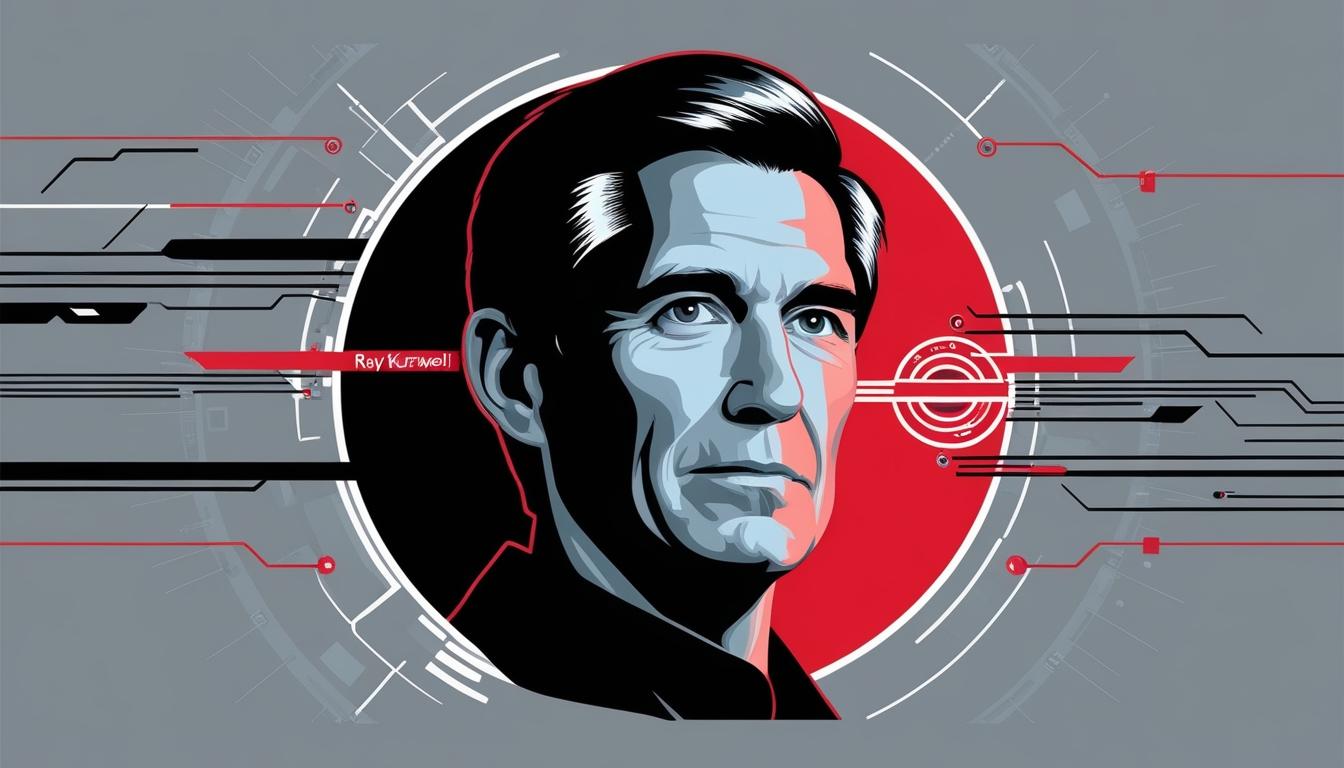
Renowned futurist Ray Kurzweil has made bold predictions about the trajectory of artificial intelligence (AI) and its anticipated impact on human capacity and longevity. Speaking to Nikkei Asia, Kurzweil suggested that the integration of AI with the human brain could lead to significant enhancements in intelligence, the curing of most diseases, and potentially extend human life expectancy to 500 years. He expressed optimism that by 2032, AI may enable humans to halt the ageing process altogether.
Kurzweil, an influential figure credited with pioneering technologies such as optical character recognition (OCR) and speech synthesis, first introduced the concept of the "singularity" around the year 2000. This notion encompassed the idea that AI would surpass human intelligence and evolve at an exponential rate, with Kurzweil projecting this seminal moment to occur in 2045. This initial proclamation sparked intense debate among scientists and experts regarding the feasibility and implications of such advancements.
In his recent interview, Kurzweil further elaborated on his predictions, asserting that AI's capacity to self-generate more advanced AI, once connected to the human brain, could lead to a remarkable increase in human intellect—potentially by a factor of a million. He stated that human intelligence could transcend its natural limitations through continuous expansion via cloud connectivity.
Despite initial skepticism surrounding his earlier claims, especially the notion that AI would exceed human intelligence by 2029—a viewpoint considered overly optimistic by many researchers, including subsequent Nobel laureates—Kurzweil now believes this timeline may actually be conservative.
He posited that the most profound effects of AI's evolution would manifest within the medical field, where he foresees revolutionary advancements in health and disease treatment. AI has already accelerated breakthroughs in medical science, such as identifying protein structures that could aid in therapeutic interventions, which Kurzweil claims will fundamentally enhance humanity's ability to maintain health.
Kurzweil's audacious forecasts extend to the potential eradication of most human diseases and the cessation of ageing. “Currently, each year is akin to diminishing one year of life,” he explained, “but with advancements in AI-driven medical technology, each year we might actually add to our lifespan instead of depleting it.” By his estimates, by approximately 2032, individuals could effectively manage to reclaim one year of youth for every year lived, thus achieving a state where ageing is substantially halted.
Drawing from his personal perspective at the age of 76, Kurzweil is keenly aware of the upcoming developments in AI and its capabilities, holding anticipation to witness how these innovations could reshape human civilisation in an increasingly fragmented world. He remains steadfast in his belief that the synergistic relationship between humans and AI will yield a better future, asserting, “The merger of human and AI capabilities will provide us with superior outcomes than mere reliance on humanity alone.”
Source: Noah Wire Services