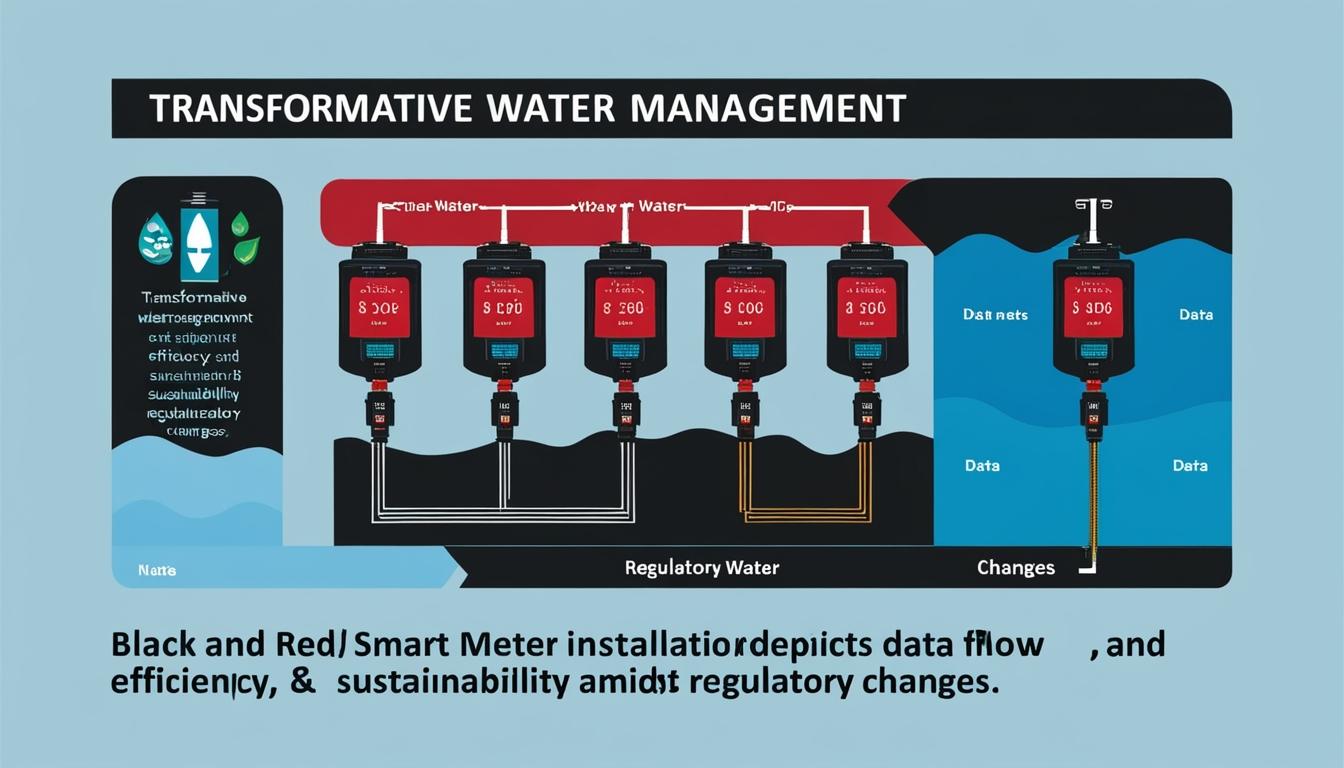
The UK water industry is undergoing a significant transformation, characterised by demands for urgent improvements in clean, waste, and environmental operations, paired with the necessity for heightened accountability within a shifting regulatory framework. As companies prepare for the forthcoming year, industry experts are making key predictions about the direction of the sector, particularly focused on advancements in data management, incentive structures, and real-time data analysis that will likely define the landscape in 2025.
One of the primary shifts anticipated is the prioritisation of data and performance metrics as critical success indicators. Over the next twelve months, achieving optimal meter read performance will be vital for water companies to satisfy the regulatory expectations set by Ofwat, the industry’s economic regulator. Companies that maintain a high rate of daily meter reads stand to benefit from reduced financial penalties and enhanced opportunities for reinvestment into crucial areas such as leakage reduction and water consumption management. To achieve this, a streamlined approach to meter installations is encouraged, with experts advocating for a street-by-street rollout strategy that promises greater operational efficiency.
The industry is also likely to see a heated debate regarding changes to financial incentives and penalties. Currently, the deployment of smart metering technology is tied to two Operational Delivery Incentives (ODIs) focused on leakage and per capita consumption (PCC). However, the structuring of Price Control Deliverables (PCDs) associated with these projects raises questions about the potential for dual penalties impacting water companies. According to expert analysis, if a water company invests in the necessary infrastructure yet fails to deploy functional smart meters due to complicated regulations, this may result in significant financial repercussions, including the requirement to refund customers. As they approach 2025, water providers are expected to engage in ongoing discussions about the necessary adjustments to the current PCD and ODI frameworks to facilitate effective compliance.
Furthermore, there is growing advocacy for a mandated rollout of smart metering, particularly in water-stressed regions of the South and East, which could streamline efforts for widespread implementation. Arqiva has articulated that deploying smart meters en masse is far more efficient, allowing installation teams to focus on specific geographic areas and optimise resource allocation. As the discourse around regulatory compliance evolves, it becomes increasingly important to address the disparities in meter installations that arise from compliance complexities.
The industry is also on the brink of enhanced data analysis capabilities. Traditionally, water companies receive only two readings from each meter annually; however, with improved smart metering technology, they might soon be able to access up to 24 reads per day. This increase will not only offer invaluable insights into real-time leakage detection and water usage patterns but will also necessitate advanced data interpretation skills. As managers move towards a proactive model of data utilisation, there is an expectation that the focus will pivot from reactive leak alarms to continuous flow data analytics for better efficiency and management of water scarcity.
Customer engagement will emerge as a foundational element for water companies as they adapt to manage data responsibly and transparently. Successful companies will be those that effectively integrate their data management with their Chief Technology Officer (CTO) and IT frameworks to produce measurable benefits for both their customers and the environment.
As the UK water industry progresses into this pivotal phase, the companies that prioritise capturing accurate data, collaborate with managed service providers for effective rollouts, and leverage the influx of real-time insights will likely lead the way towards sustainable advancements in operational performance. The transformation underway promises to bring about substantial change, necessitating an industry-wide recalibration of practices and strategies in response to an increasingly data-driven landscape.
Source: Noah Wire Services