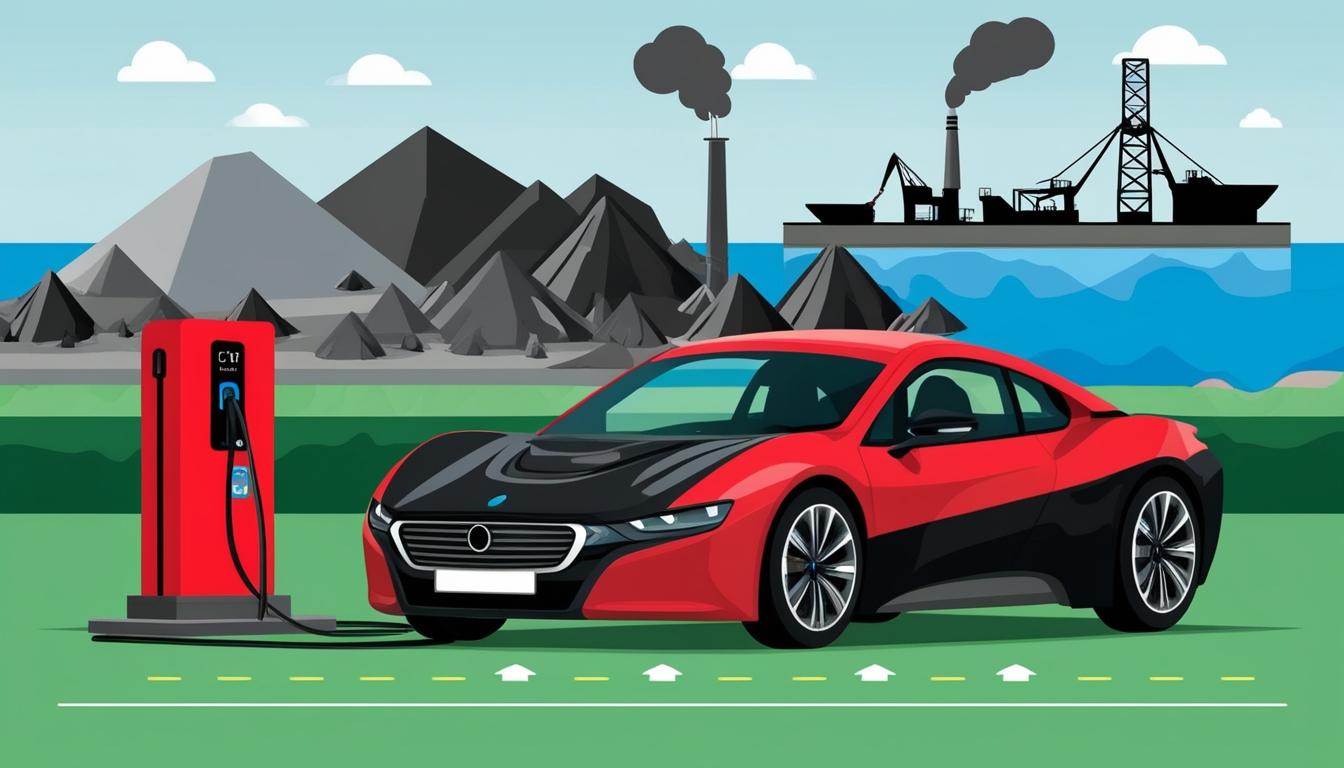
The demand for battery raw materials is anticipated to significantly exceed supply, particularly by the year 2030, as highlighted in a recent report by strategy and management consulting firm McKinsey titled ‘Toward security in sustainable battery raw material supply’. This report reflects a rapidly evolving landscape driven by the increasing reliance on batteries, particularly by the automotive and energy sectors.
The accelerating demand for battery electric vehicles (BEVs) is central to this anticipated shift. McKinsey forecasts that global demand for passenger cars in the BEV category will soar six-fold from 2021 to 2030, with annual unit sales projected to rise to around 28 million from 4.5 million. “For producers of battery cells and raw materials, ensuring a reliable and ample supply of sustainable and affordable materials will be crucial,” stated a McKinsey representative, emphasising the competitive pressure amid the ongoing rollout of BEVs.
In the current landscape, battery manufacturers are already consuming more than 80% of all lithium mined. This usage is expected to rise to 95% within the next seven years, as the industry increasingly adopts direct lithium extraction technology, known for being a cost-effective method unlocking previously uneconomic lithium deposits. As the industry leans heavily towards lithium-rich battery technologies, McKinsey asserts the necessity for substantial increases in lithium mining to fulfil 2030 demand.
The push towards a net-zero economy will require vast quantities of raw materials to support the development of low-carbon technologies. McKinsey notes that a significant proportion of battery emissions—approximately 40%—is attributable to the mining and refining processes of upstream raw materials.
As the industry undertakes efforts to cut down emissions from highly polluting materials, the focus has intensified on optimising the supply chain. Currently, materials such as nickel and aluminium are improving their emissions profiles, with estimates suggesting that emissions from lithium could diminish by 50%, while nickel and aluminium may see reductions of 50% and 70%, respectively. However, the relative emissions intensity of smaller materials like manganese may increase as larger materials achieve decarbonisation.
In terms of strategic objectives, McKinsey identifies potential for leading battery producers to drastically cut emissions across the value chain. By 2030, they could potentially reduce emissions to less than 24 kilograms of CO2 equivalent per kilowatt-hour, with even further reductions expected by 2040. Some of the more ambitious manufacturers envision achieving a target of just 10 kg CO2e/kWh as early as 2030.
Despite these long-term growth projections, the industry faces immediate challenges. The year 2024 has already proven tough for battery material producers, primarily due to a slowdown in economic growth and resultant price pressures, especially affecting materials such as nickel and lithium. The ongoing reliance on a concentrated supply of raw materials poses additional risks. Key countries like Indonesia, Argentina, Bolivia, and Chile have been identified as critical sources for nickel and lithium, while cobalt is predominantly sourced from the Democratic Republic of the Congo (DRC).
The report from McKinsey highlights that the EU, for instance, imports significant proportions of its cobalt and lithium from foreign sources, with 68% of its cobalt coming from the DRC alone. Such dependency has raised concerns, particularly in light of recent trade restrictions imposed by exporting nations, which have heightened the urgency for supply chain resilience in response to disruptions experienced over recent years.
Furthermore, insights from McKinsey suggest that recycled materials are set to contribute to the battery manufacturing supply by up to 50% by 2040, driven by increasing availability and regulatory support for recycling initiatives.
In conclusion, while the battery production industry is poised for significant expansion, the accompanying challenges related to raw material supply and environmental impacts require robust collaboration across the sector. McKinsey’s report underscores the necessity for battery cell and original equipment manufacturers (OEMs) to work closely with material producers in order to achieve low-carbon battery production and align with broader net-zero objectives.
Source: Noah Wire Services