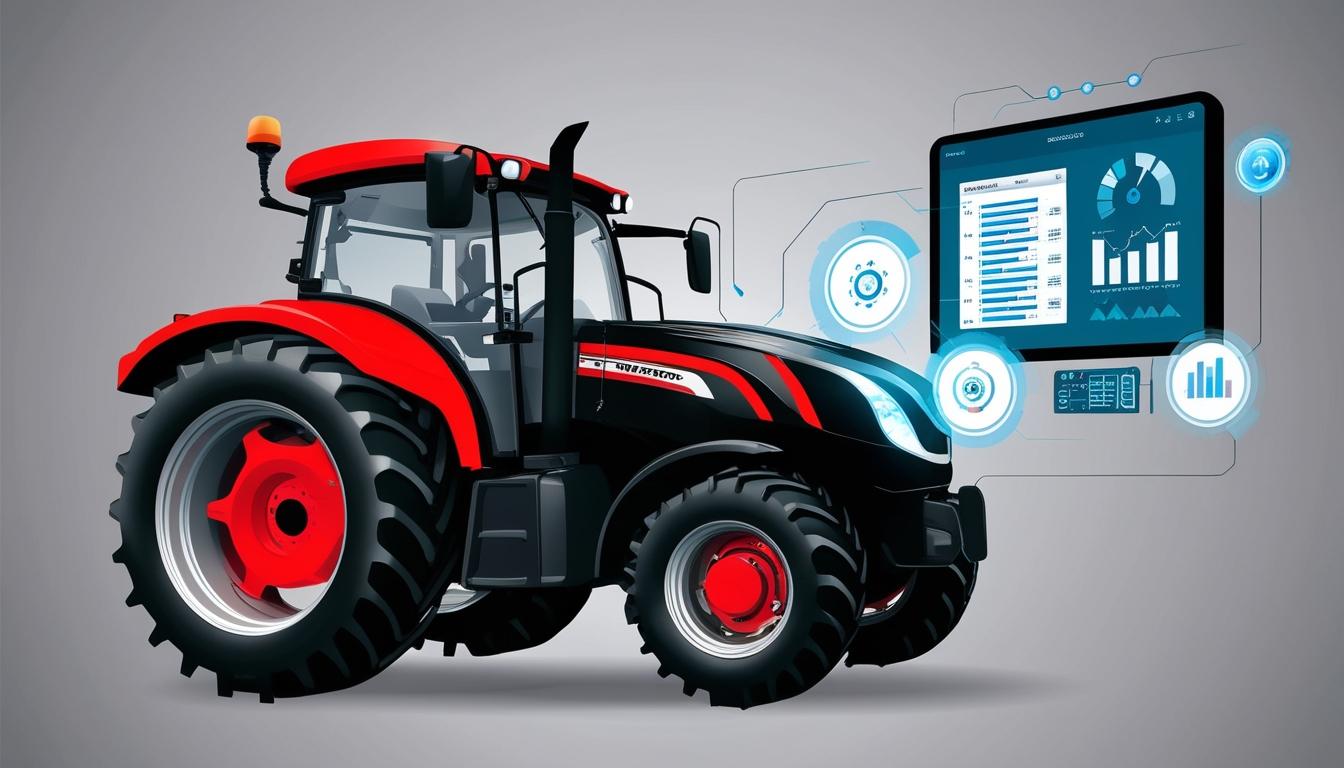
In a landscape where rising farm production costs challenge operational sustainability, many farmers are turning to advanced technologies to optimise their machinery's performance. Recent insights from No-Till Farmer indicate that a growing number of farm managers are adopting a systematic approach to enhance the efficiency of their tractor fleets through data collection and machine monitoring.
Farm production costs have surged, prompting operators to explore strategies that conserve resources. The report highlights the potential benefits of utilising Modular Telematics Gateways (MTG) and Farm Management Systems (FMS). By integrating these technologies, farmers can track a range of performance metrics and gain valuable insights to inform their operational decisions. The MTG serves as a connection point that links tractors to web-based FMS platforms, such as the John Deere Operations Center™, which provides comprehensive data analytics.
To set up their tractors for connectivity, farm managers can follow a straightforward series of steps, beginning with downloading the John Deere Operations Center mobile app or accessing it via the web. After creating an account, managers can navigate to the 'My Equipment' section, input the tractor's serial number, and subscribe to the JDLink connectivity service for continuous data updates. This connectivity allows for real-time monitoring of critical operational details, such as fuel consumption and engine performance.
Once the systems are in place, managers can leverage various reports to identify trends and performance metrics. Among the key reports highlighted are the Engine Hours report, which tracks the time the engine is operational, the Utilisation report that breaks down how much time is spent working in the field versus idle or transport, and the Fuel Consumption report that monitors individual tractor fuel usage. These tools not only provide insight into the tractor's operational efficiency but also enable managers to implement preventative maintenance and budget more effectively.
For instance, the Fuel Consumption report allows managers to correlate engine hours with overall fuel utilisation, identifying potential areas for cost-saving improvements. In addition, the Engine Speed report enables operators to fine-tune the operational RPMs according to field conditions, thereby maximising fuel efficiency.
Monitoring the Engine Load Factor further allows managers to assess how well their tractors handle various workloads, ultimately optimizing productivity and reducing unnecessary wear on equipment. As operators conduct their tasks, data-driven insights from these reports highlight opportunities for process enhancements that can lead to cost reductions.
The report emphasises the importance of technology usage, where farm managers can evaluate how precision agriculture tools are being utilised within their equipment. This analysis can reveal opportunities for improved operational efficiencies and cost savings.
The transformation in modern agriculture practices, particularly with respect to equipment management, is underscored by the need for farmers to remain competitive. As the No-Till Farmer article suggests, partnering with equipment experts can assist managers in interpreting reports and trends within their data, paving the way for informed decisions that align with industry advances.
Overall, the integration of intelligent machinery and data analytics stands at the forefront of a paradigm shift in agricultural management. As tractors and their associated technologies evolve, farm managers are poised to embrace new methodologies that not only enhance productivity but also secure their operational viability in an increasingly challenging economic climate.
Source: Noah Wire Services