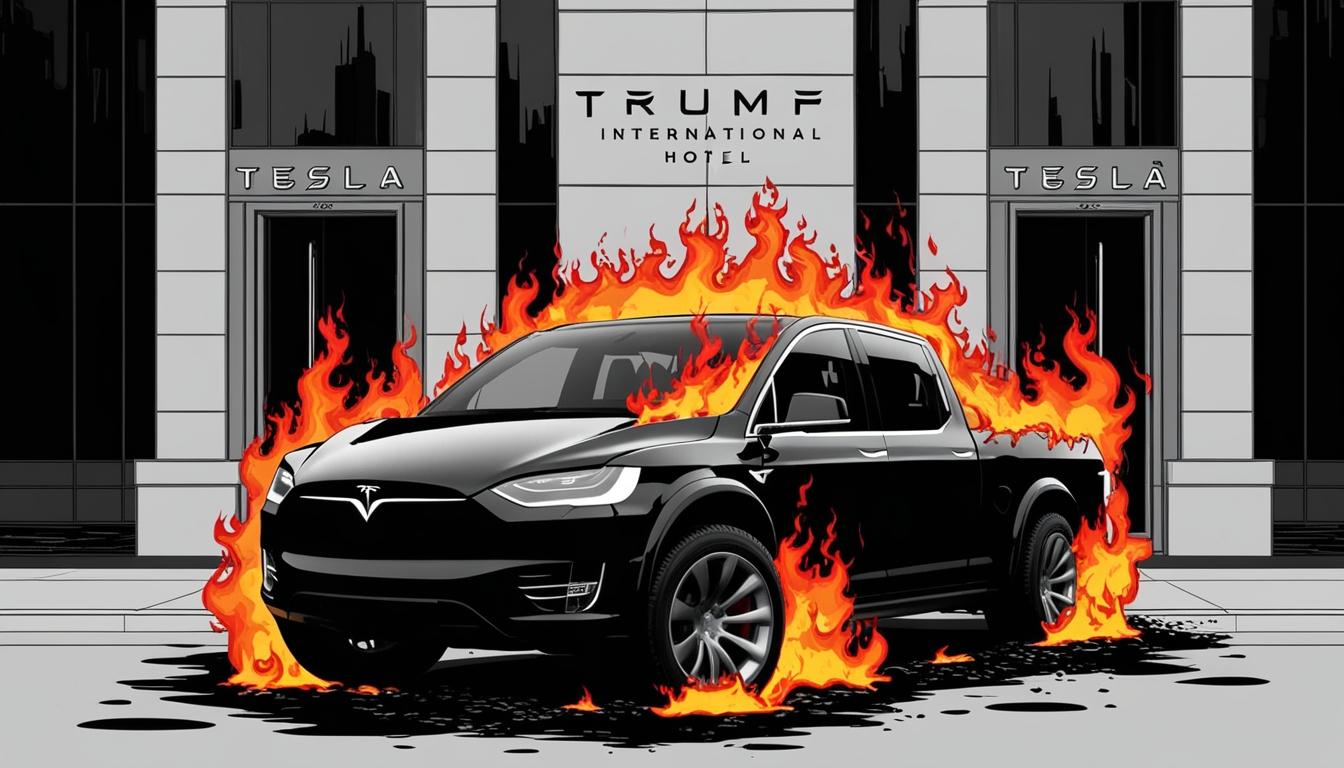
Las Vegas police have disclosed new insights into the case of Matthew Livelsberger, the 37-year-old Army Green Beret who detonated a Tesla Cybertruck outside the Trump International Hotel on New Year’s Day. The investigation revealed that Livelsberger utilised generative AI, specifically ChatGPT, to assist in planning the attack, according to police statements made during a press conference on Tuesday.
Livelsberger’s actions culminated in a tragic outcome, as he fatally shot himself shortly after the explosion. Investigators have clarified that he did not intend to harm anyone else during the incident. Evidence from Livelsberger’s digital searches indicated that he sought information regarding explosive targets, the velocities of specific ammunition types, and the legality of fireworks in Arizona, among other topics.
Kevin McMahill, sheriff of the Las Vegas Metropolitan Police Department, remarked on the implications of this incident, stating, “This is the first incident that I’m aware of on U.S. soil where ChatGPT is utilised to help an individual build a particular device. It’s a concerning moment.” This sentiment reflects the significant role that generative AI tools could play in future unlawful activities. The Las Vegas police are reportedly sharing findings with other law enforcement agencies to assess broader security implications.
OpenAI, the company responsible for the development of ChatGPT, responded to the incident, underscoring its commitment to ensuring that its tools are used responsibly. An emailed statement from the company clarified that the tool is designed to discourage harmful or illegal activity and that in this case, it provided information that was already publicly available online.
During the detailed briefing, officials revealed that Livelsberger had filled his Cybertruck with 60 pounds of pyrotechnic material and poured racing-grade fuel into it before arriving in Las Vegas. The circumstances of the explosion remain uncertain, with authorities suggesting that the flash seen from the vehicle was likely from the firearm he used on himself, leading to the subsequent ignition of the fuel vapours.
A six-page document related to the case has yet to be released as it may contain classified material, and investigators are also examining data from Livelsberger's laptop, mobile phone, and smartwatch. Notably, Livelsberger maintained a “surveillance” log, documenting his belief that he was being tracked by law enforcement despite having no previous criminal record.
The journal entries reveal Livelsberger's thought process leading up to the event, including his concerns about being deemed a terrorist and fears that his actions might be misinterpreted as an attack on others. Initially considering the Grand Canyon’s glass skywalk as a potential location for his act, he ultimately proceeded to the Trump hotel.
Eyewitness accounts and video footage captured a flash preceding the explosion, followed by fire erupting from the vehicle. Although the explosion caused minor injuries to seven bystanders, there was negligible damage to the hotel itself, with authorities stating that Livelsberger acted independently.
Livelsberger’s writings touched on a variety of political and social grievances, reflecting his views on domestic and international issues, such as the war in Ukraine. He expressed a belief that the United States was “terminally ill and headed toward collapse.” However, officials clarified that he bore no ill will towards President-elect Donald Trump, instead suggesting a need for national unity around him and Tesla CEO Elon Musk.
Source: Noah Wire Services