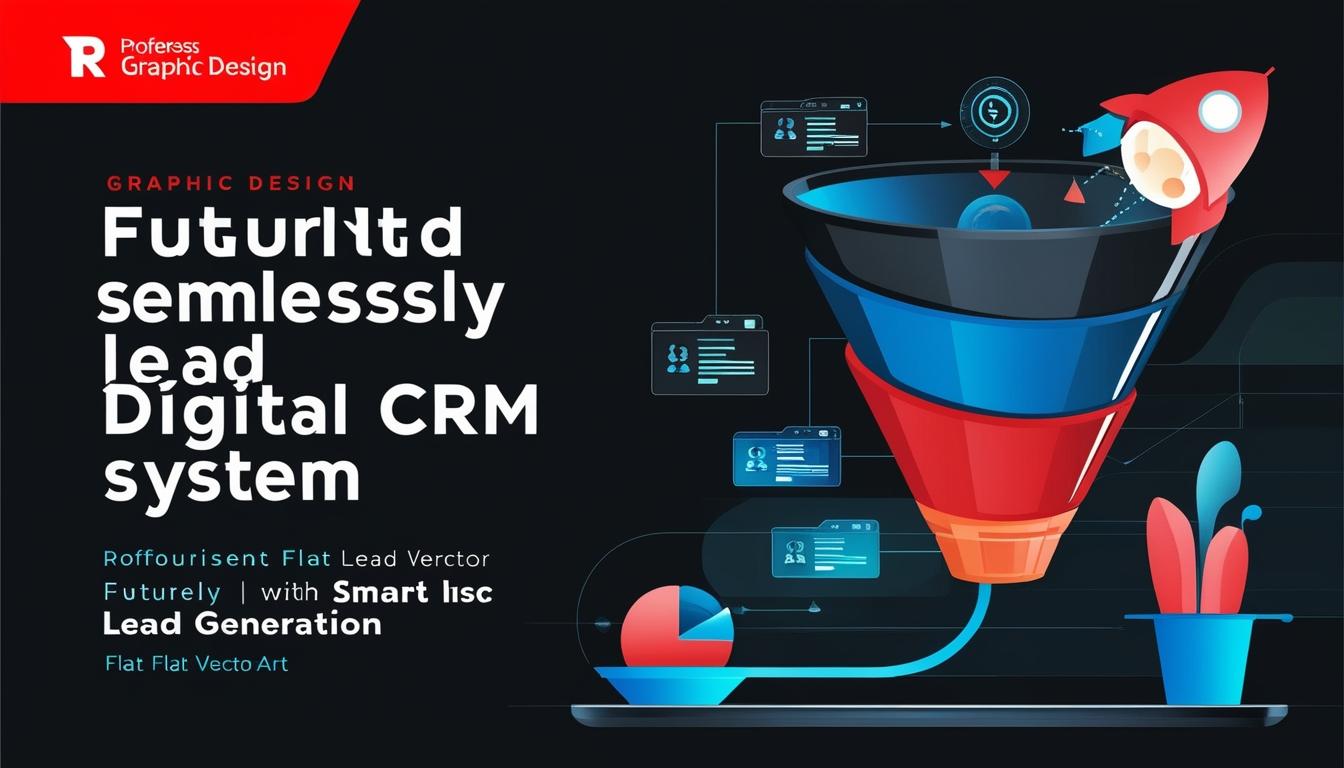
In the rapidly evolving landscape of modern business, companies are increasingly turning to sales lead automation as a pivotal strategy to maintain a competitive edge. By streamlining the process of lead generation and management through technology, businesses can enhance the efficiency of their sales teams. The South Florida Caribbean News is reporting that smart lead generation has now emerged as a vital method for organisations to not only capture potential clients but also to nurture and convert these leads into paying customers.
Sales lead automation is characterised by the use of software and other technologies to automate various aspects of lead generation and management. This technology allows for the automatic capturing, tracking, and nurturing of leads throughout the sales funnel, minimising the need for manual intervention. The automation tools facilitate a streamlined lead management process, significantly enhancing productivity while ensuring that potential clients do not go unnoticed.
The process of sales lead automation initiates with the identification of potential leads, a task accomplished via various means such as web forms, emails, or direct customer interactions. Once identified, the automation systems are capable of classifying and tracking these leads, allowing for timely follow-up actions which may include sending automated emails, scheduling calls, or sending reminders to the sales team. Successful automation is fundamentally reliant on its integration with essential tools, such as customer relationship management (CRM) software and email marketing platforms, to ensure effective lead nurturing.
Smart lead generation builds upon traditional lead generation tactics, infusing intelligence into the approach. By utilising data and insights, organisations can pinpoint the right prospects, moving away from less targeted methods like cold calling or mass emails. The application of data analytics allows businesses to decipher patterns and customer behaviours, signalling when a prospective client may be prepared to make a purchase. This predictive capability enables sales teams to engage leads with personalised messaging at precisely the right moment.
The convergence of sales lead automation and smart lead generation provides a plethora of benefits to organisations. Among these advantages is a significant increase in operational efficiency, as automation alleviates the burden of manually managing leads. This leads to heightened productivity, permitting sales teams to focus exclusively on high-value tasks, such as closing sales, without overwhelming workloads.
Moreover, the integration of smart lead generation techniques ensures the acquisition of more qualified leads. The use of data-driven methods guarantees that the leads businesses attract are well-suited to their offerings, thereby enhancing the quality of the sales pipeline. Additionally, sales lead automation facilitates improved nurturing of leads. Companies are able to design automated workflows that engage potential customers through personalised follow-ups, reminders, and emails, maintaining an ongoing connection and increasing the likelihood of conversion.
Another noted benefit is the scalability that sales lead automation affords businesses. As an organisation grows, its need to manage an increasing volume of leads can be accommodated without the necessity of additional resources. Automation tools can expand alongside business growth, reaching larger audiences while preserving personalisation in interactions.
For businesses seeking to incorporate sales lead automation and smart lead generation into their operations, a structured implementation approach is advised. The initial step is to clearly define lead generation goals, which could range from increasing the quantity of leads to refining lead quality or streamlining sales processes.
Selecting appropriate automation tools is the subsequent step, necessitating the consideration of seamless integration with existing CRM systems and other sales-related software. Popular tools available on the market include HubSpot, Salesforce, and Marketo, which provide comprehensive lead automation capabilities.
Audience segmentation plays a crucial role in the process, permitting businesses to tailor their campaigns to specific groups based on factors such as demographics and purchase history. Following segmentation, companies should devise automated workflows, encompassing automated emails and follow-up reminders, ensuring that each step resonates with the lead's previous interactions.
The final step involves monitoring and optimising lead generation efforts. Continuous evaluation of campaign performance, analysing metrics such as email open rates and conversion rates, allows businesses to refine their approaches and enhance the effectiveness of their sales strategies.
In conclusion, the integration of sales lead automation and smart lead generation is reshaping how companies approach lead acquisition and nurturing. By leveraging technology and data-driven insights, businesses can enhance their overall efficiency, lead quality, and scalability. As the business environment continues to evolve, these strategies are becoming essential for maintaining competitive advantage and driving growth, irrespective of an organisation's size.
Source: Noah Wire Services