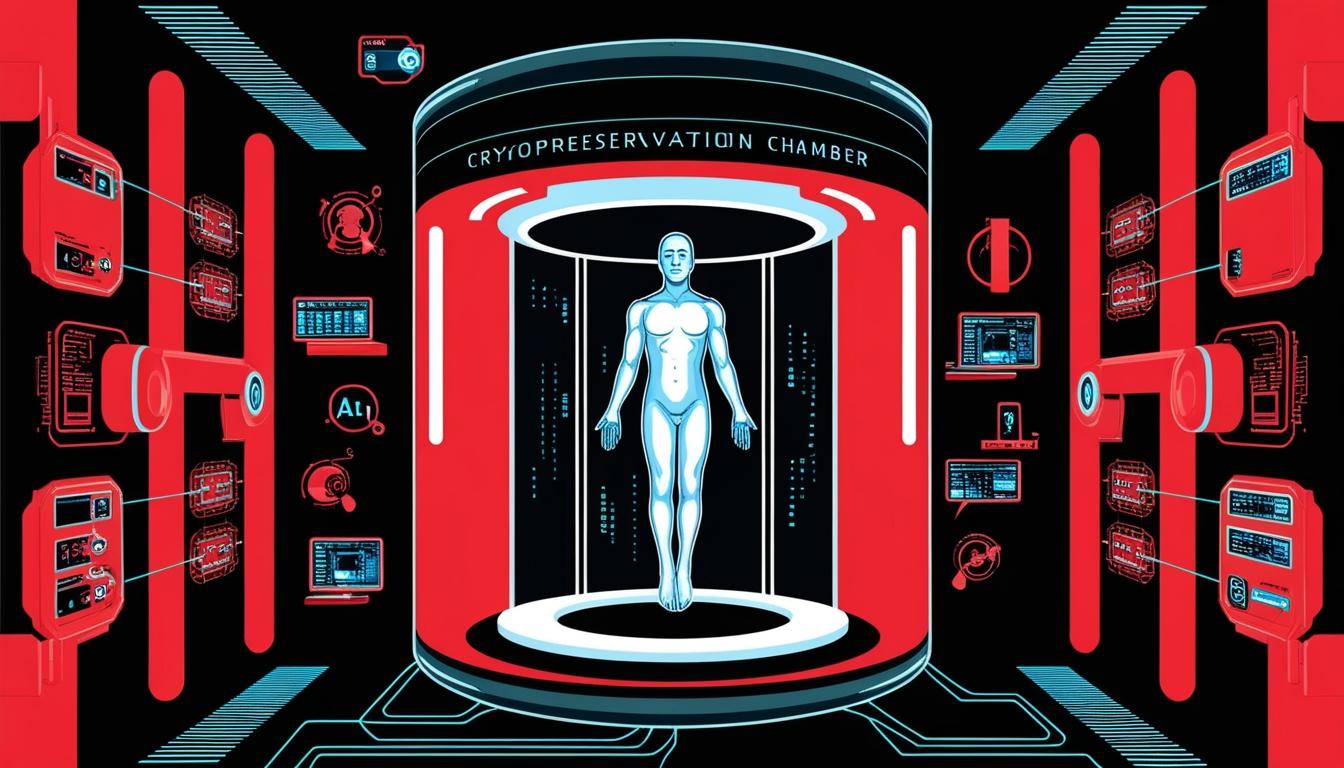
A groundbreaking cryopreservation facility called TimeShift is being developed to enable individuals to place their bodies on 'pause' until advances in medicine or technology can be made in the future. This innovative facility combines state-of-the-art AI and next-generation cryopreservation techniques, with the potential to offer significant benefits for various segments of society, including cancer patients, endangered species, and even those considering future deep space travel.
The facility is spearheaded by Dr. Alex Zhavoronkov, a generative AI scientist and anti-aging researcher, along with Hashem Al-Ghaili, a molecular biologist and science communicator. Their venture is still in the research and development (R&D) phase, with a current emphasis on optimising the cryopreservation process. Hashem Al-Ghaili remarked, "The project is still in the R&D phase. The primary focus right now is to continue optimising the cryopreservation process developed by Dr. Alex Zhavoronkov. Once fully optimised, we plan to test it on animal models and proceed from there." The developers anticipate that with the proper developments, a functional prototype may be completed within the next five to eight years.
Traditional cryopreservation methods have been widely acknowledged for their ineffectiveness, often resulting in cell death. The innovative techniques employed at TimeShift aim to circumvent these issues, providing a more effective means of preserving biological tissues and living individuals. Dr. Zhavoronkov indicated, "Over the past 10 years, multiple technologies have advanced in different laboratories around the world, and it is now a matter of multi-parameter optimisation for rapid cryogenic freezing and rewarming protocol."
Along with preserving individuals in stasis, TimeShift promises to offer pre-hibernation enhancements like longevity interventions and gene therapy, allowing individuals to emerge healthier and more prepared for future challenges. This capability is seen as pivotal for those with conditions such as aggressive cancers or neurodegenerative diseases, granting them invaluable time to benefit from medical advancements that may not be available during their current lifetime.
One of the distinguishing features of TimeShift is its integration of advanced AI solutions, which will allow individuals to maintain connections with loved ones via life-like avatars during their period of cryostasis. Al-Ghaili elaborated, "By combining AI and cryopreservation, we’re making it possible for families to remain close, even across decades." The facility includes technology such as the CryoMemory Vault, facilitating ongoing interaction between those in cryostasis and their families.
The implications of TimeShift extend beyond individual preservation. The projects could influence various industries, improving organ preservation and biodiversity safeguarding while also raising fundamental questions about humanity's continuity in the event of catastrophic global events. Dr. Zhavoronkov expressed, "This new ability will impact every industry, from biomedicine to finance, and will become one of the key elements of next-generation real estate projects dedicated to the advancement of longevity biotechnology."
In summary, TimeShift is poised to redefine how society considers life preservation and the intersection of technology and human existence. As it progresses, the facility's development could herald a significant shift in medical practices and a deeper understanding of the potential of cryopreservation underpinned by AI innovations.
Source: Noah Wire Services