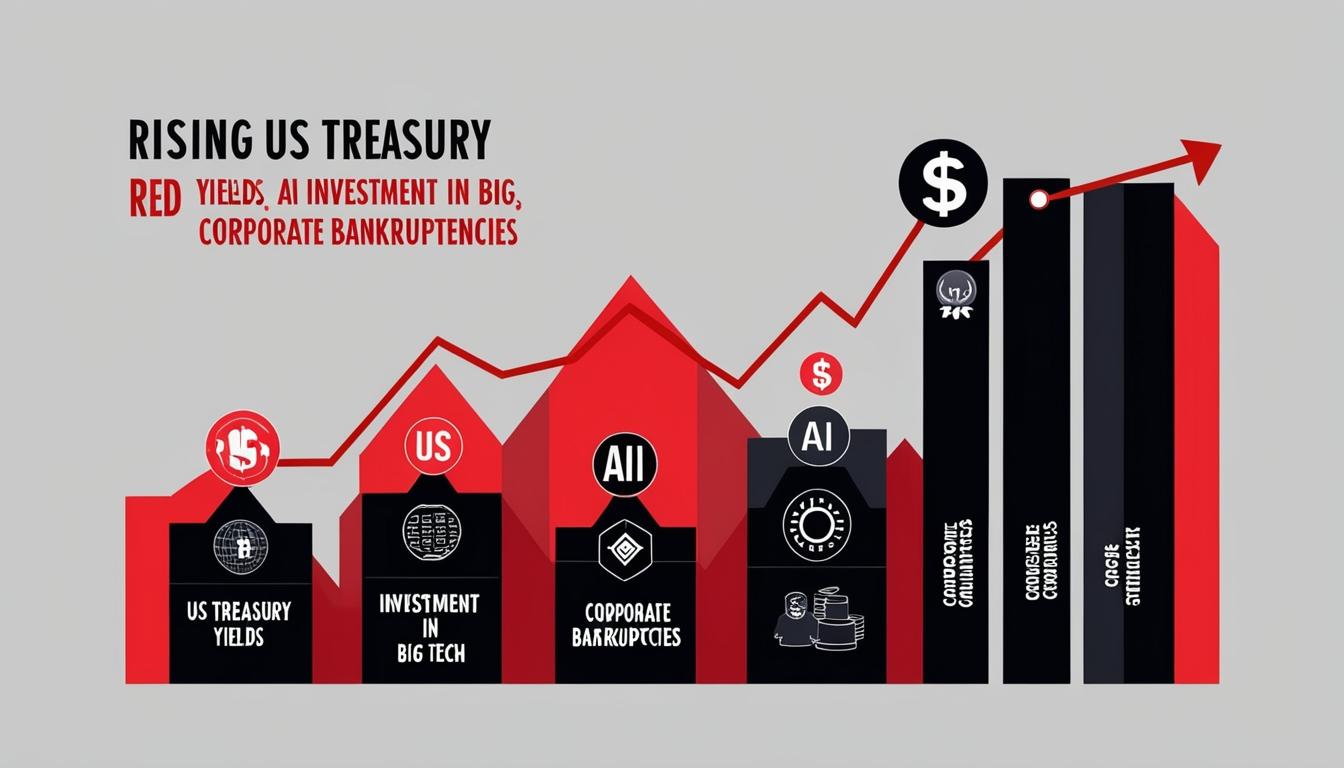
In recent financial developments, the yield on 10-year US Treasuries rose to a nine-month high of 4.7 per cent. This surge was prompted by encouraging data from the ISM services survey and the JOLTS report, which indicated an uptick in job openings. With inflation break-evens and the dollar also experiencing increases, analysts suggest that the market is reacting to signs of a robust economy.
In a separate but pertinent discussion on capital expenditure within the technology sector, the Financial Times highlights the ongoing financial strategies of major companies, particularly the so-called 'Magnificent Seven' Big Tech firms, which include notable giants like Meta, Microsoft, and Alphabet. These companies are ramping up capital expenditures significantly, primarily due to investments in data centres to support artificial intelligence (AI) initiatives.
The reported figures of capital expenditure, or capex, at these firms are noteworthy. For instance, both Meta and Microsoft are reportedly allocating one in every five dollars generated as revenue to capex, while Alphabet is investing one out of seven dollars. This trend is expected to intensify in the forthcoming years. The Financial Times further elaborates on the implications of this spending by comparing capex to depreciation expense; as firms increase their investment in capital assets, there will be a corresponding rise in depreciation, which is projected to put pressure on profit margins in the years to come.
Despite these predictions of increased spending and potential challenges, analysts on Wall Street have not adjusted their forecasts for operating margins at these tech companies, with expectations set for slight expansions in margins. This optimism appears to be supported by the rapid revenue growth these companies are experiencing, suggesting that while expenses are rising, revenue generation is maintaining a pace that allows for operational scalability.
Meanwhile, the trend of corporate bankruptcies in the United States has reached a notable peak, with 686 companies filing for bankruptcy in 2024, marking a 14-year high. The uptick represents an 8 per cent increase from the previous year and highlights a troubling turn for businesses, especially those catering to lower-income consumers. Among the largest bankruptcies are recognisable names such as Big Lots, Tupperware, and Jo-Ann Stores, most of which relied on traditional retail models that struggled against the e-commerce boom.
Industry experts indicate that many of these bankruptcies exemplify a broader economic trend rather than directly signalling an overall downturn. Analysts note that while rising interest rates have increased financial burdens for some of these companies, weak earnings appear to be a more critical factor in their financial failures. Firms such as Spirit Airlines, which faced multiple operational challenges, and others with high levels of floating rate debt, exemplify the difficulties in adjusting to the current economic landscape.
Taken together, these insights underline the intricate dynamics at play within the financial markets and corporate sectors. As businesses continue to adapt to changing economic conditions, the evolution of AI technologies and capital spending will likely play a significant role in shaping future business practices and overall market trajectories.
Source: Noah Wire Services