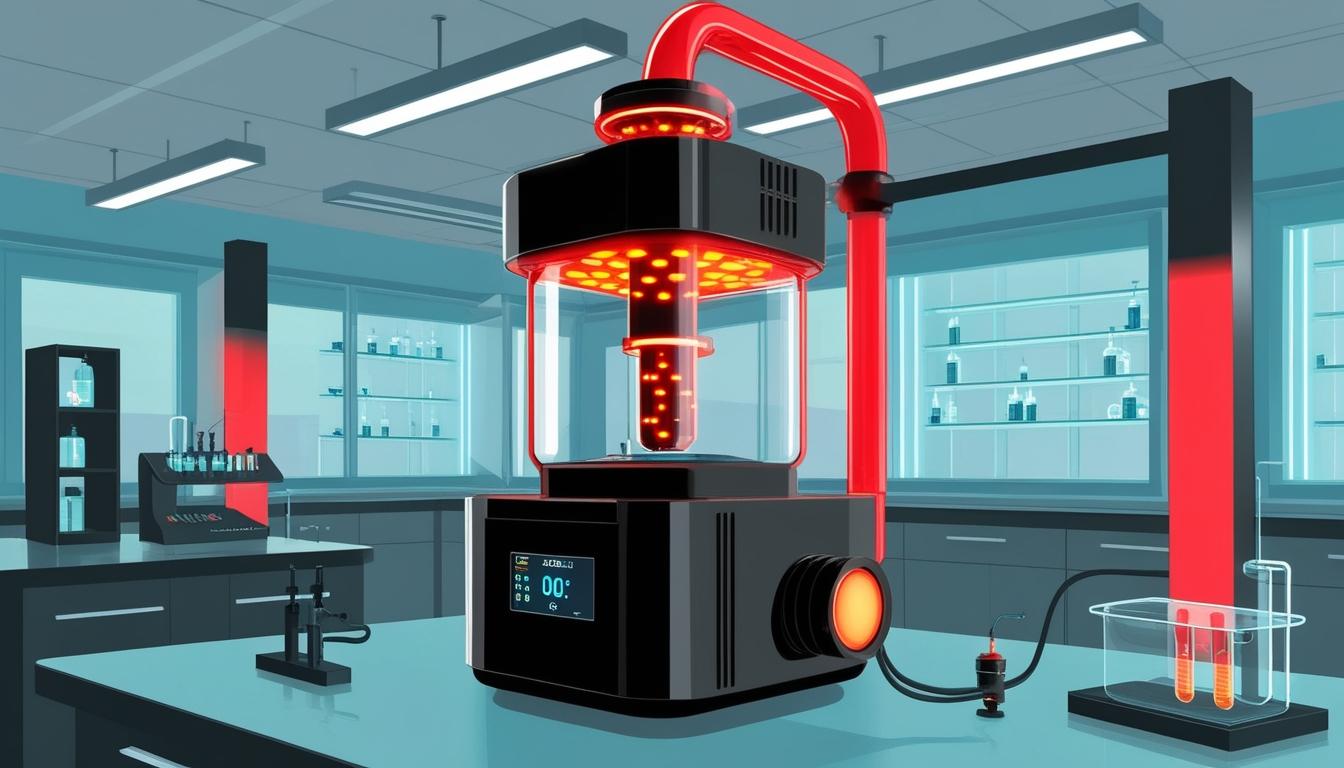
In a significant advancement within the field of biomanufacturing, start-up company Biosphere is developing innovative technologies aimed at reducing contamination risks in laboratory and industry applications. The increasing reliance on living cells for the production of pharmaceuticals, food ingredients, and other materials highlights the importance of effective sterilisation methods, as contamination can seriously compromise experiments and, in industrial contexts, pose public safety risks.
Historically, biomanufacturers have employed steam sterilisation techniques, a method that dates back to the 1940s when Pfizer initially utilised it for penicillin production. However, as Brian Heligman, co-founder and CEO of Biosphere, explained to TechCrunch, this traditional approach has remained largely unchanged to date. "You look at the original systems, they look kind of the same as today,” he noted.
Aside from steam sterilisation, other methods such as single-use reactors and ultraviolet (UV) light have been leveraged for sterilisation. However, the costs associated with generating sufficient UV-C light for effective decontamination have, until recently, been a barrier to widespread adoption. The influx of capital into the manufacture of UV-C LEDs spurred by the COVID-19 pandemic is driving down these costs significantly. Heligman remarked, “During the Covid era, you saw a lot of capital influx into the manufacture of UV-C LEDs. They’ll probably get orders of magnitude cheaper in the next decade.”
Biosphere's latest project involves the design of a three-litre glass benchtop bioreactor that employs UV light for full sterilisation. The technology integrates four powerful LEDs that illuminate every part of the chamber and its instruments. Currently under testing as part of a $1.5 million project funded by the Department of Defense, this initiative aims to investigate the potential of biomanufacturing for the production of high-performance oils.
The utilisation of LEDs for sterilisation represents a transformative shift in biomanufacturing, offering a streamlined alternative that can significantly lower operational costs. Heligman describes this evolution in terms of electrification, suggesting that replacing conventional components such as expensive stainless steel valves with cost-effective LED technology can drive down production expenses significantly: “As you start to be able to simplify the complexity of these systems, we think we can push to a transformatively lower floor.”
In addition, moving away from systems reliant on high temperature and pressure enables the use of more economical materials, such as plastics, for bioreactors in certain applications. Biosphere is now focusing on developing a pilot bioreactor that can hold approximately 100 litres, with long-term aspirations to build designs that accommodate capacities between 40,000 and 80,000 litres.
Financial support for Biosphere includes $8.8 million in seed funding led by Lowercarbon Capital and VXI Capital, with additional contributions from investors such as B37 Ventures, Caffeinated Capital, Founders Fund, and GS Futures. The continued advancement of technologies that enhance the efficiency of biomanufacturing processes is expected to have far-reaching implications across various industries, emphasising the reliance on innovation as a pivotal strategy for business growth and sustainability in the evolving landscape of automation and technology.
Source: Noah Wire Services