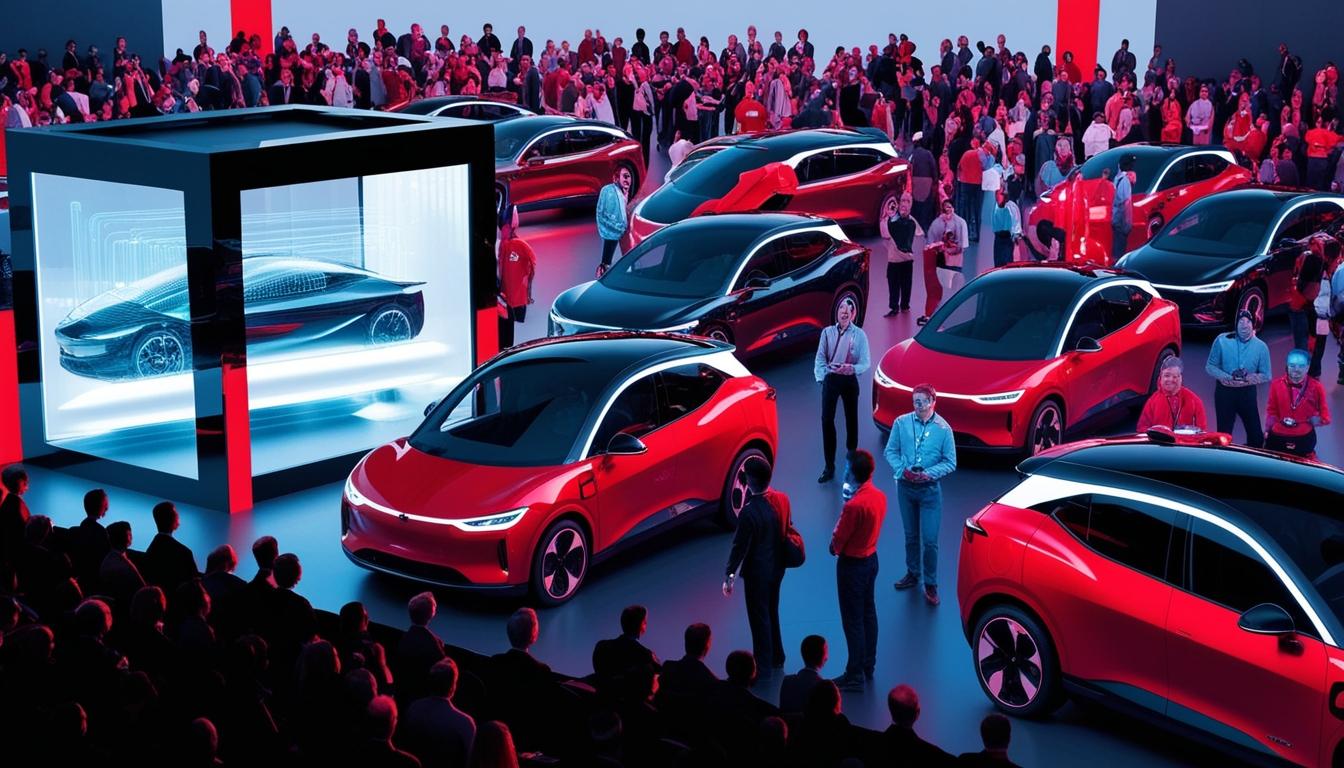
The annual CES event, held in Las Vegas, has once again showcased significant developments in automotive and mobility technologies, marking a shift towards a more automotive-centric exhibition. Steve Greenfield, speaking on the latest episode of The Future of Automotive on CBT News, highlighted the extensive size and scope of the conference, noting that it attracted 140,000 attendees and filled the Las Vegas Convention Center, as well as various surrounding hotels.
CES, originally known as the Consumer Electronics Show, dates back to June 1967 in New York City and transitioned to its current format in Las Vegas in 1998. Greenfield pointed out that the show has evolved beyond consumer electronics, with an increasing emphasis on the automotive sector.
This year’s CES displayed substantial innovations, especially in the realm of artificial intelligence (AI). Among the intriguing advances was the emergence of translucent televisions, which could have practical applications for automotive heads-up displays. Additionally, several robotics startups showcased exoskeleton technologies designed to enable human movement, reminiscent of popular media portrayals like Tony Stark's Iron Man suit.
The exhibition also featured a host of industrial technologies. Key focus areas included autonomous vehicles for mining, tractors, and lawnmowers, with manufacturers making strides towards electrically powered versions of heavy equipment. However, the presence of traditional automotive manufacturers at the event was noticeably sparse, with only the ZEEKR brand, part of Geely, making an appearance from the Chinese OEMs that were previously more prominent.
The Sony/Honda joint venture introduced their Afeela vehicle, announcing that they are now taking pre-orders aimed directly at consumers, circumventing the traditional Honda dealer network. The vehicle, priced over $90,000, has been characterised as generally uninspired, and its market penetration in the U.S. is uncertain. Conversely, Honda showcased exciting prototypes of their "Zero" electric vehicles, set to hit the market in 2026, which exhibit stylish designs that could appeal to consumers.
Greenfield also highlighted a substantial development in accounts receivable automation for logistics through a company called Upwell, which has innovatively harnessed AI to streamline collections. This technology aims to resolve invoice exceptions swiftly, enhance cash flow, automate legacy systems, and ultimately improve consumer experiences. The application of data analysis in predicting future cash flows is particularly notable, as it offers businesses insights into payment timelines.
For those interested in automotive technology and the latest trends, Greenfield recommended attending CES, which occurs each January, to gain insight into the cutting-edge advancements shaping the industry's future. Meanwhile, the ongoing development of AutoTech solutions continues to attract investor interest, with opportunities for entrepreneurs and stakeholders within the automotive and mobility sectors.
Source: Noah Wire Services