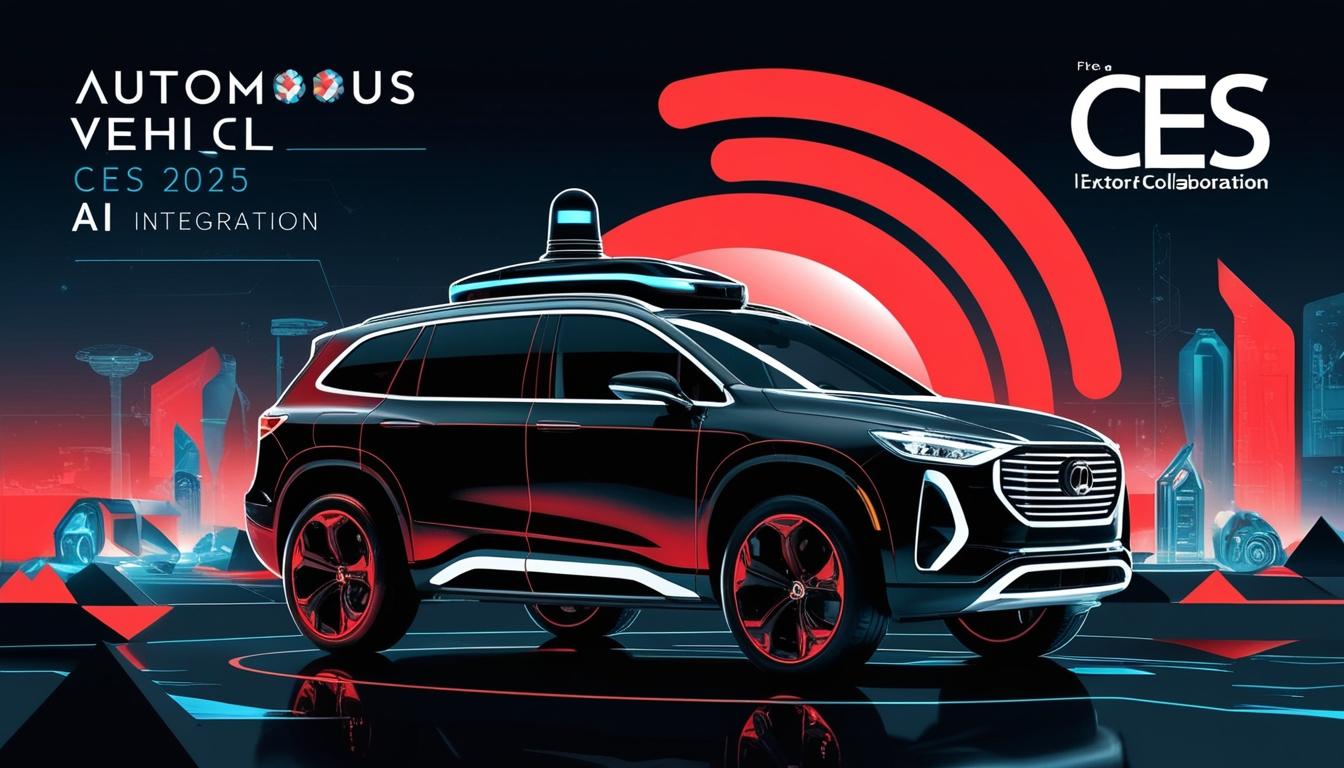
The ongoing Consumer Electronics Show (CES) 2025 in Las Vegas is witnessing a significant resurgence in enthusiasm surrounding autonomous vehicles (AVs), as industry veterans and emerging startups converge to showcase cutting-edge technologies. The prevailing mood among exhibitors and attendees signifies a departure from the skepticism that has previously plagued the sector.
Waymo, a frontrunner in the AV industry, has made a notable contribution with its expansive exhibit, featuring the Zeekr RT—an embodiment of the advanced integration of artificial intelligence (AI) and vehicle autonomy. Startups such as Applied Intuition, May Mobility, and Zoox showcased important advancements, particularly in real-time data processing and vehicle navigation systems designed to enhance safety for users. As Kelly Marie from TechCrunch pointed out, “The trough of disillusionment days are in the rearview,” indicating a renewed optimism about the AV market's potential.
Despite this enthusiasm, operational and capital challenges remain perceptible, with some industry experts candidly recognising the hurdles yet to be navigated. The event has brought forth significant industry developments, including NXP Semiconductors' announcement to acquire TTTech Auto for $625 million, which underscores an increasing focus on safety software in AV technology. This acquisition is expected to facilitate better integration of safety features in autonomous systems as public safety concerns continue to intensify.
Additionally, Amazon AWS has secured a decade-long partnership with Here to enhance mapping technology, pivotal for the navigation requirements of AVs. Such collaborations are essential for capitalising on advancements across sectors and creating refined, user-friendly technologies that augment the functionality of autonomous systems on roadways.
Critical discussions at CES also engaged with the economic impact of emerging technologies. As traditional automotive manufacturers, particularly U.S.-based ones, notably absent from the convention floor, companies like Volkswagen Group have expressed strong confidence in their spinoff, Scout Motors. While still in the early stages of production at their South Carolina factory, Volkswagen executives foresee optimising manufacturing processes for various vehicle platforms as they work alongside partners like Rivian.
Looking ahead, market analysts predict that the integration of AVs is set for rapid evolution in the coming five years, aligning with sustainability efforts and urbanisation trends. A trend towards electric AVs is anticipated to not only enhance public transportation systems but also contribute positively to efforts aimed at reducing carbon footprints in metropolitan areas.
Simultaneously, speculation surrounds Tesla's discreetly developed project, dubbed "STXOK," which is suggested to stand for “Superior Technology for X-dimensional Kinetics.” Industry experts anticipate that this initiative may incorporate breakthrough advancements in AI, quantum computing, and electric propulsion systems, potentially revolutionising urban mobility. Concepts include enhanced efficiency and improved safety by employing advanced sensors and AI. However, challenges such as high development costs and data privacy concerns related to increased reliance on technology remain noteworthy considerations.
In essence, CES 2025 stands as an illustrative event for the future of transportation, where discussions of innovation, collaboration, and market trends interlace with the overarching goal of transforming or redefining conventional business practices through cutting-edge automation technologies. As advancements continue to unfold, the world of autonomous vehicles is gearing up for a pivotal transition, with the groundwork being laid by key players in the industry.
Source: Noah Wire Services