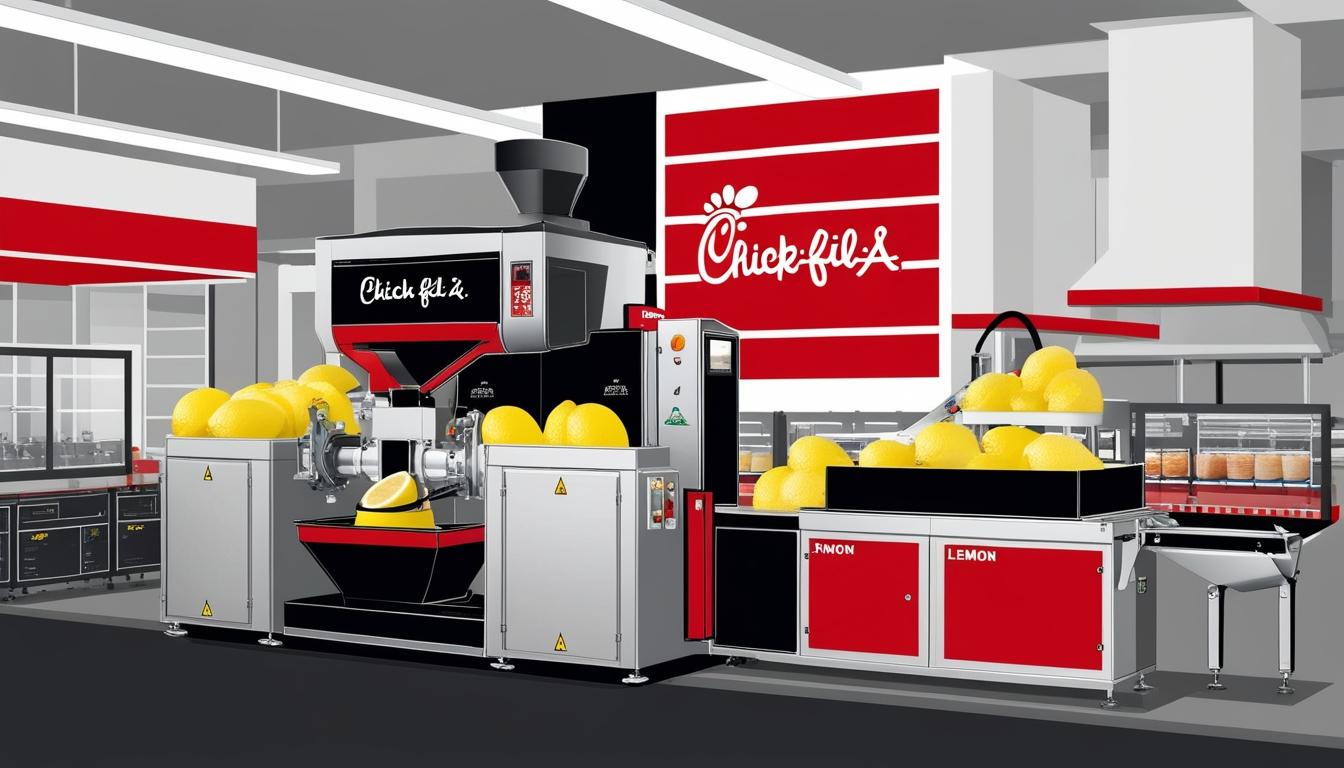
Chick-fil-A Inc., based in Atlanta, Georgia, has recently implemented a significant automation initiative that aims to cut nearly 10,000 hours of work daily across its restaurant locations through the mechanisation of lemon squeezing. This process produces the lemon juice used in the chain's widely popular lemonade. According to Bloomberg, the company has established an expansive facility just north of Los Angeles, where machines dedicated to this task occupy a footprint larger than that of a typical Costco Wholesale outlet.
The automated systems at this facility are capable of squeezing around 1.6 million pounds of lemons before packaging the juice for distribution to Chick-fil-A restaurants nationwide. Once the juice arrives at each location, staff members then add sugar and water to create the signature drink. Previously, employees were responsible for manually squeezing the lemons, a task that was not only labor-intensive but also led to injuries, such as cut fingers. By integrating automation into this process, Chick-fil-A aims to enhance workplace safety and improve the overall appeal of jobs at its locations.
Mike Hazelton, Chick-fil-A's vice president of supply chain procurement and operations, highlighted the company's foresight regarding workforce sustainability, stating, “You start doing the math, and there’s not going to be enough team members.” Currently, the lemon-squeezing plant employs around 120 workers who oversee the machinery and ensure that the produced juice adheres to the requisite quality standards.
The efficiency of this operation is noteworthy; the facility reportedly achieves about 40% higher efficiency compared to the traditional method of manual squeezing. Moreover, the production process is designed to utilise nearly every part of the lemon, including the extraction of oils from the peels, which are then sold to companies in the cosmetic and fragrance industries, providing an additional revenue stream for Chick-fil-A.
Chick-fil-A is not operating in isolation when it comes to embracing automation. Yum! Brands, which owns KFC, Pizza Hut, Taco Bell, and The Habit Burger Grill, has also been ramping up its technological investments, as reported by The Wall Street Journal. The company is actively pursuing an "AI-powered" approach to fast food and has seen digital sales, accounting for approximately 45% or $30 billion of total sales, nearly double the levels recorded in 2019. Joe Park, Yum’s chief digital and technology manager, elaborated on this transformative phase by noting the increase in digital sales corresponding to the recent legislative changes, such as California’s hike in minimum wage for fast-food workers to at least $20 per hour starting in April.
These shifts compel many restaurant operators to seek cost-cutting measures through AI technology, not just to enhance customer service, but also to streamline operations. One example from Yum! is its mobile app for restaurant management, termed SuperApp, which is currently in the testing phase for incorporating generative AI. This innovation allows employees to ask operational questions, such as the optimal oven temperature for various dishes, and can be used for ingredient procurement and employee scheduling. Additionally, an augmented reality feature designed to train staff on new menu items is also being developed.
The increase in investment toward technology, particularly in digital ordering and drive-thru capacities, has been driven largely by the changes brought about by the COVID-19 pandemic. While some observers express concerns regarding the potential for AI to reduce human employment in the industry, a Yum! spokesperson affirmed, “its employees will always play a critical role,” reinforcing the idea that human oversight and engagement remain integral to operations in fast food.
Source: Noah Wire Services