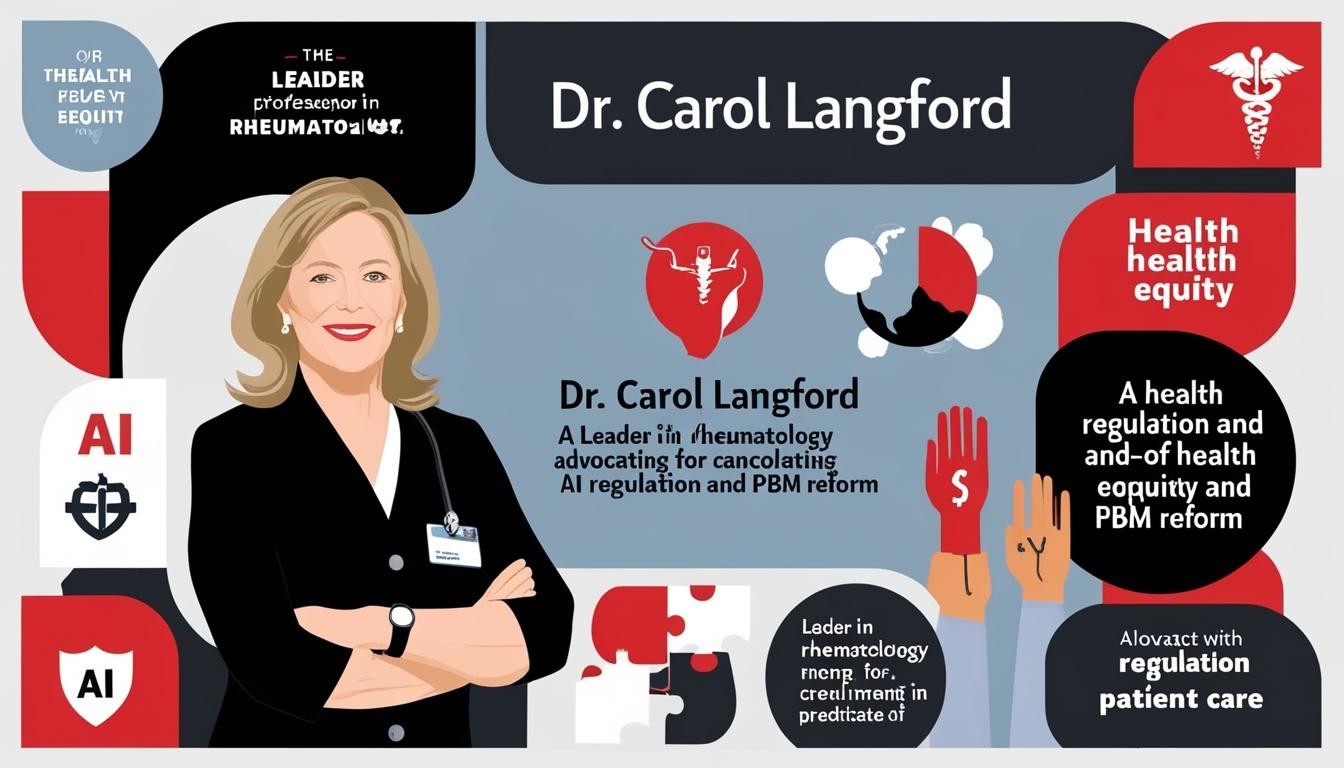
The American College of Rheumatology (ACR) has appointed Dr. Carol Langford as its new president, a position she assumed in November. Dr. Langford, who is also the director of the Center for Vasculitis Care and Research at the Cleveland Clinic, expressed her views on the pivotal issues facing the healthcare sector, particularly regarding the regulation of artificial intelligence (AI) and pharmacy benefit managers (PBMs).
In an interview with Healio, Dr. Langford highlighted that while AI represents “exciting opportunities” within patient care, it requires stringent regulation to mitigate biases in decision-making processes. She stated, “The interpretation of AI-provided data needs to be made in the context of each patient’s history, clinical presentation, social factors and preferences. AI interpretations should not limit access to care.” By advocating for the establishment of strict guidelines for AI program development, she emphasized the need to protect patient confidentiality and privacy.
Dr. Langford's presidency is focused on several key priorities, including the enhancement of education for rheumatology professionals, supporting research initiatives, and fostering connections within the rheumatology community. She believes education is fundamental to career progression and that the ACR plays a crucial role in providing resources that cater to different learning preferences. Furthermore, she aims to support researchers in sharing their findings at ACR Convergence and through various publications.
Significantly, Dr. Langford identified the reform of PBMs as an urgent objective for the ACR. She stated that misaligned incentives within the current system lead these managers to drive up prescription drug costs instead of reducing them, asserting that “congressional action is necessary to correct this dysfunction in the marketplace." Dr. Langford noted that patients often find themselves making sacrifices to afford their medications and face barriers in accessing prescriptions as a result of PBM practices.
Dr. Langford backed increased transparency and accountability for PBMs, which would involve clarifying their business arrangements and financial incentives. She recommended policies aimed at eliminating practices like spread pricing and mandated pass-throughs of discounts and fees to ensure that patients can access medications at more affordable prices. She warned that without reform, the rising costs associated with PBMs could significantly hinder patient care.
Another focal point of Dr. Langford's leadership will be addressing racial and gender disparities within rheumatology. She outlined ACR initiatives aimed at promoting health equity, educating healthcare providers, and increasing awareness of rheumatology careers among medical students from diverse backgrounds. The ACR is committed to exploring the dynamics of gender equity in the field, especially considering that over 60% of rheumatology fellows are female.
As AI and machine learning technologies continue to advance, Dr. Langford noted their potential to transform rheumatologic care. She acknowledged that while these technologies could greatly improve patient outcomes, they should complement, rather than replace, clinical judgement provided by healthcare professionals. The utilisation of AI tools, along with emerging therapies like CAR T-cell therapy, could signify a new era of treatment options for rheumatic and autoimmune diseases, contingent upon the results of ongoing studies.
Dr. Langford concluded with a positive outlook on the future of rheumatology, stating, “The future of rheumatology is bright,” and expressed her gratitude for the opportunity to serve the ACR and support fellow rheumatology specialists in their endeavours. Her tenure aims to prioritise patient care by advancing the access and affordability of treatments, alongside promoting the integration of innovative research and technology in the field.
Source: Noah Wire Services