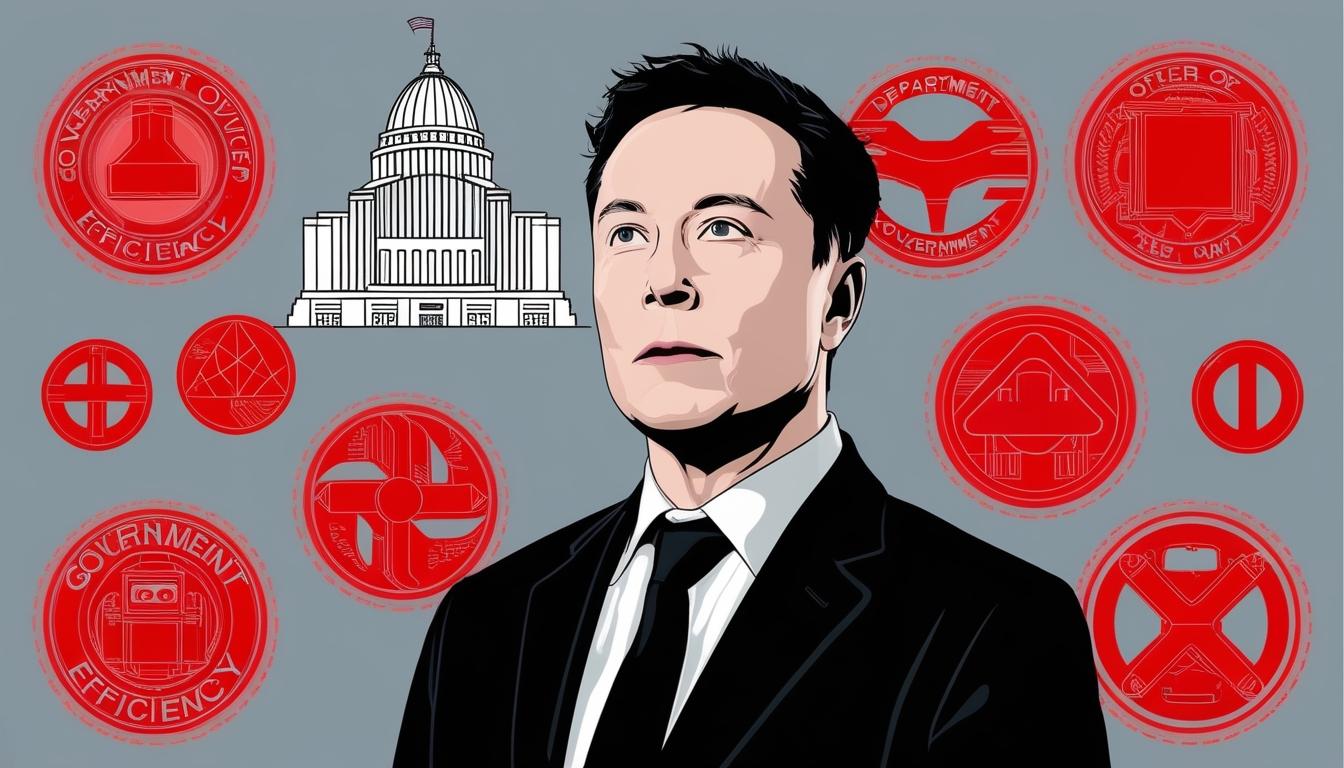
Elon Musk, the CEO of companies like SpaceX and Tesla, is poised to take on a significant new role in the United States government by heading the newly established Department of Government Efficiency, abbreviated as DOGE. As the nation’s attention turns toward this governmental restructuring, Musk is anticipated to wield considerable influence, with aims to slash almost $2 trillion from a federal budget currently estimated at around $7 trillion. His appointment aligns him closely with former President Donald Trump, who has also positioned a known ally as the ‘AI and crypto czar,’ signalling a concerted effort to reshape policy, particularly regarding artificial intelligence and cryptocurrencies.
This collaboration between Musk and Trump has raised discussions surrounding the intersection of business and politics, with Musk’s influence within the new administration drawing comparisons to an unprecedented alliance of economic and political authority. Observers have noted that Musk's pivotal role in Trump’s electoral success—attributed to both substantial financial contributions and strategic use of social media platform X—has resulted in him being referred to, albeit disparagingly, as ‘President Musk.’
As Musk steps into this influential position, questions arise regarding his motivations and the future implications for US governance. Historically, Musk and other prominent figures within Trump’s ‘Make America Great Again’ (MAGA) movement have exhibited ‘libertarian’ attitudes, reflecting a broader disdain for state oversight and bureaucracy which may stem from their formative years in apartheid South Africa. These connections may inform Musk’s perspective on governance, characterised as ‘techno-libertarian’ or ‘extropian’. Proponents of these ideologies advocate a belief that political systems will naturally reach equilibrium without external intervention, thereby minimising the necessity for state involvement.
Musk's techno-libertarian outlook also posits that technology and AI have the potential to address society’s most challenging issues, provided that tech entrepreneurs are unencumbered by government regulations. This outlook underlines his ambition to not just streamline state functions but to support an environment in which relentless economic growth can thrive. However, this mindset leads to controversial proposals aimed at curtailing welfare programmes like Medicaid, Social Security, and Medicare, potentially forcing individuals to either succeed or fail without state aid.
The scale of Musk’s influence cannot be understated, particularly considering his significant contributions to Trump’s campaign, which amount to $277 million. This financial backing, coupled with Musk’s enhanced presence on platform X, has raised concerns about democratic integrity, as critics suggest that private influence over governance may intensify in response to his policies. There exists a possible scenario in which corporations could start sponsoring political parties akin to sporting events to sway political decisions in favour of their fiscal interests.
Despite this ambitious agenda, experts suggest that Musk may encounter substantial challenges. One such obstacle is the potential contradiction between his vision of a streamlined government and the Trump administration’s inclination to expand governmental reach through tariffs and subsidies in preparation for an anticipated trade conflict. Furthermore, Musk’s business interests in China present additional complications. As Tesla’s largest market outside the US, Musk maintains significant relations with Chinese officials, including a recent one-on-one with Premier Li Qiang. This alignment with China could conflict with the Trump administration’s increasingly aggressive stance towards the country.
As Musk begins his role in government, the implications for US democracy and corporate involvement in politics remain to be seen. The response to his proposals from both the public and political landscape will influence the trajectory of his initiatives, particularly as America grapples with dual pressures of corporate influence and international rivalry.
Source: Noah Wire Services