Michael Rau, an assistant professor of directing and devising within Stanford University’s Theater and Performance Studies (TAPS) programme, is delving into the intriguing intersection of theatre and artificial intelligence. His mission to innovate theatre for the digital age is bolstered by a seed grant from Stanford’s Institute for Human-Centered Artificial Intelligence (HAI). Rau's initiative not only seeks to enhance theatrical performances but also aims to spark discourse around how technology can contribute to the richness of storytelling while emphasizing the human element at its core.
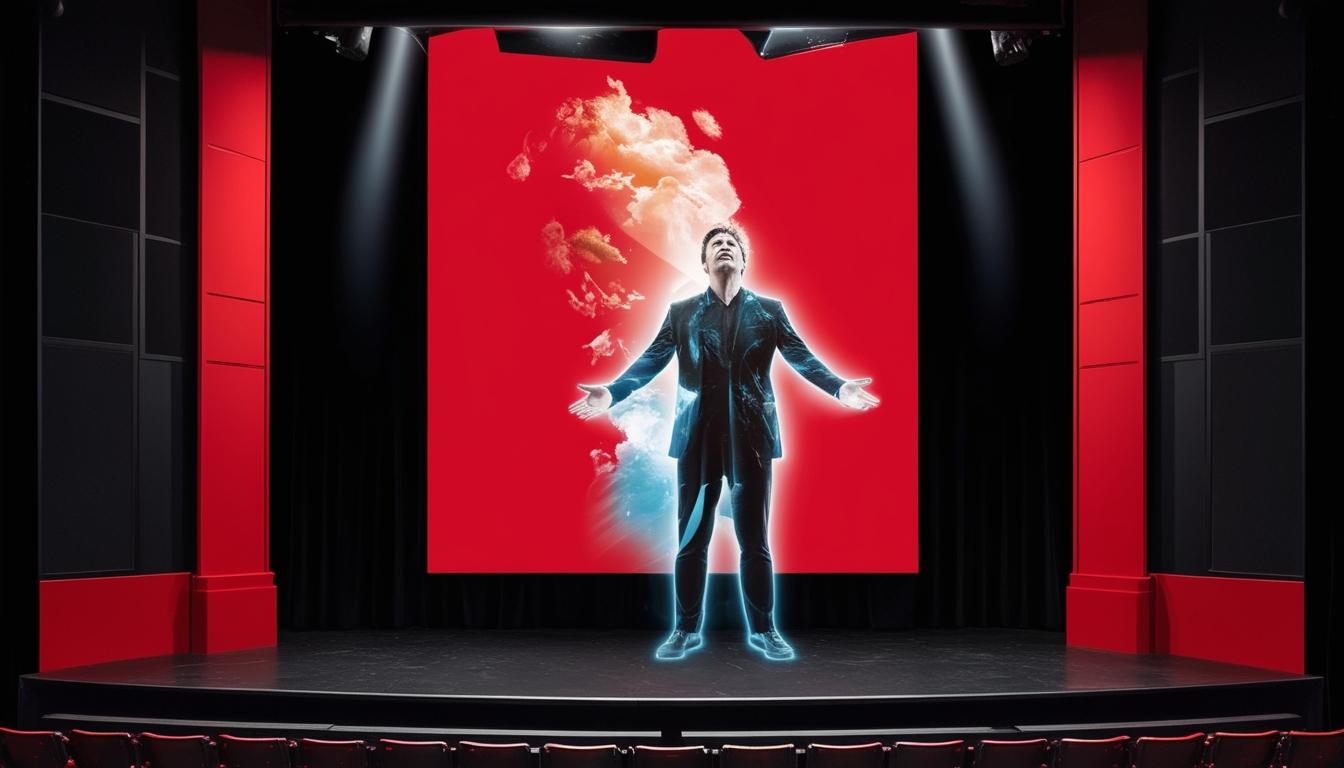
Rau’s experimental work in theatre revolves around three distinct yet interconnected approaches. The first approach involves image generation, where an AI-powered image generator captures and interprets a live feed during a performance. This technology modifies the visual representation of actors, projecting an altered feed that could signify a dream sequence, an alternative narrative, or even an entirely different dimension in real-time alongside the human performance.
The second method explored is the use of large language models (LLMs) to create live scripts. Audience suggestions are processed through an LLM to generate a new script, which is then voiced through text-to-speech algorithms. This allows actors to receive lines directly in their ears via an earbud, fostering a fresh and spontaneous aspect to live performances as they can respond in real-time without the encumbrance of reading from scripts or monitors.
Rau’s third approach utilises pose analysis, an analytical tool aimed at scholars, which implements AI algorithms to construct 3D images of the actors' body positions throughout a recorded performance. Collaborating with experts at the Stanford Libraries, this tool has vast applications, from aiding film scholars in examining choreography to allowing political scientists to scrutinise the gestures of public figures during speeches.
In a discussion about his motivations, Rau remarked, “I firmly believe that good theatre reflects the lives we’re living now." He expressed that contemporary experiences are frequently mediated by technology, yet this reality is seldom represented on stage. Rau's journey began in 2014 with performances integrating technology, but it was in 2019 that he developed a particular interest in machine learning algorithms.
Addressing concerns regarding the potential superficiality of AI in arts, Rau articulated the ongoing debate about what qualifies as "art." He emphasised the subjective nature of this definition and expressed his commitment to integrating AI in a manner that enhances rather than diminishes the artistic essence of theatre. “I’ve been very intentional in the specific and narrow ways I apply AI,” he stated, underscoring the significance of maintaining a “human in the loop” during the creation process.
While acknowledging that the full impact of AI in theatre remains to be explored, Rau is optimistic about its potential benefits. He described his hope that these technologies will unlock new creative avenues, facilitate innovative collaborations, and support scholarly pursuits with a layer of precision not previously attainable. However, he also addressed inherent drawbacks, including intellectual property issues, the risk of homogenised creativity, and concerns surrounding the erosion of human-centric artistry.
Rau reflected on the transformative nature of technology throughout theatre history, providing examples such as the transition from candlelight to electric lighting, which prompted substantial changes in production. He believes we are at a pivotal moment now, navigating new technologies and their potential applications within the theatrical landscape. He stressed that a balance allowing for both traditional and modern methods of performance is attainable.
Looking ahead, Rau is developing an ambitious project entitled "Hamlet.AI," alongside playwright Michael Yates Crowley. The narrative pivots around a playwright and a director whose clash over AI's role in theatre ignites a broader discussion about the future of art itself. This project is set to incorporate both image and text generation technologies, encapsulating Rau’s complex musings regarding generative AI in the arts.
As the dialogue surrounding artificial intelligence in theatre continues to evolve, Rau’s innovative projects serve as significant touchpoints, illustrating the potential for technology to coexist with traditional art forms in compelling and meaningful ways.
Source: Noah Wire Services