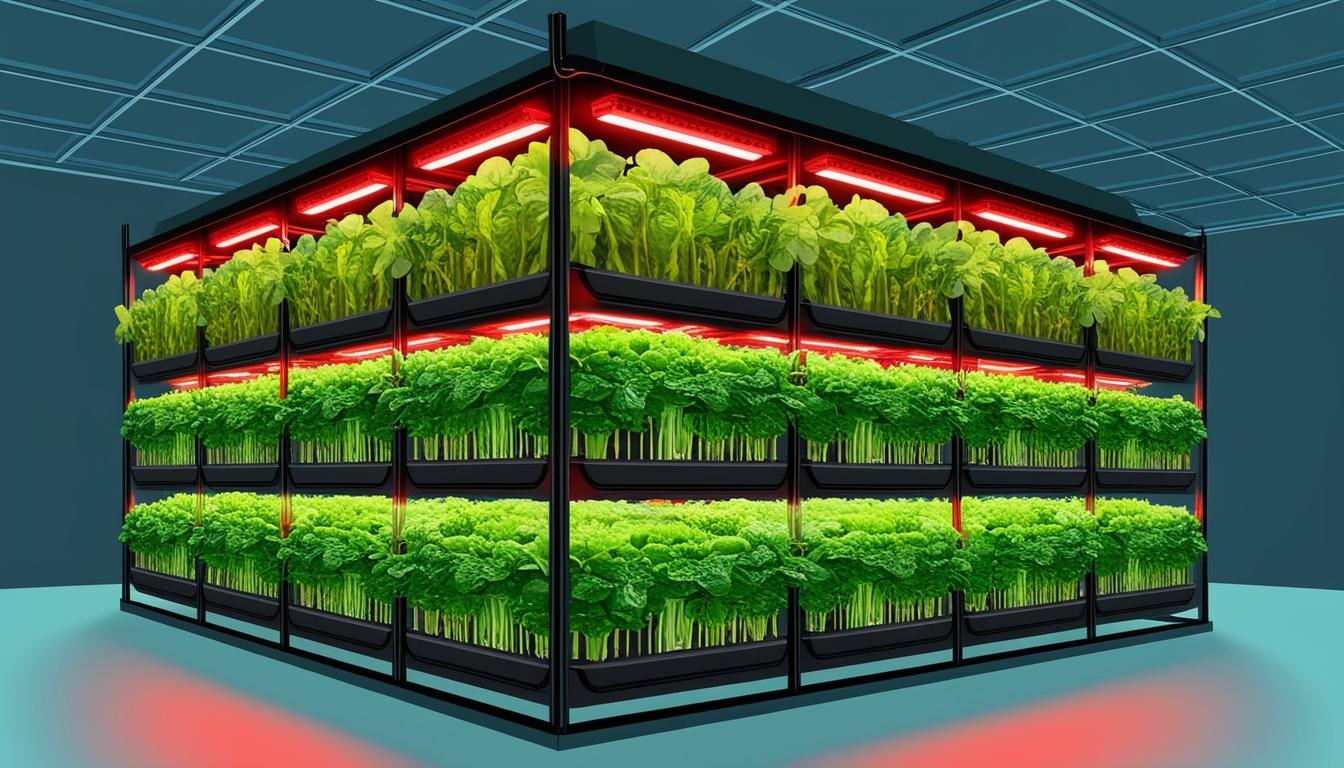
The global indoor farming market is poised for significant growth, with a projected compound annual growth rate (CAGR) of 11.2% through to 2032, increasing from a current valuation of approximately $48.30 billion in 2024. This innovative agricultural practice involves cultivating crops in controlled environments, utilising technologies such as vertical stacking, aeroponics, hydroponics, and aquaponics. The rise of indoor farming addresses various challenges, including land scarcity, water conservation, and the demand for sustainable food production in response to the expanding global population.
According to reports, North America currently dominates the market, holding a robust 39.6% share, while the Asia Pacific region is anticipated to experience a notable CAGR of 7.8% during the forecast period. Notably, countries like the United States and China are leading the adoption of advanced indoor farming technologies.
A primary driver of this market expansion is the minimisation of pesticide and herbicide use in indoor environments, which appeals to the growing consumer demand for healthier, organic produce. Indoor farming methods are also reported to conserve water significantly, capable of reducing water consumption by up to 95% compared to traditional farming practices. The aesthetic advantage of vertical farming, particularly in densely populated urban areas, has further boosted market interest, with indoor vertical farms holding a 52.3% market share.
Technological advancements, including automation, LED lighting, and precision agriculture, are transforming indoor farming operations. Aeroponics and hydroponics are at the forefront of this evolution, with the former accounting for a 45.1% market share in 2024.
Regions in Southeast Asia, particularly Vietnam, Thailand, Japan, and South Korea, are witnessing remarkable developments in indoor farming. The Vietnamese government is facilitating the adoption of hydroponics and vertical farming techniques to curb urbanisation challenges, while Thailand's emphasis on integrating smart technologies like IoT within its agricultural sector is driving growth. Japan has established itself as a leader in vertical farming innovations, underscored by government-backed initiatives aimed at achieving sustainable practices.
In South Korea, notable mergers among leading indoor farming companies signal a consolidating industry striving to increase production capabilities in urban agriculture settings. Meanwhile, Singapore is actively exploring AI-driven farming solutions to improve local food security, showcasing a commitment to innovation in the sector.
Simultaneously, the AI in computer vision market is experiencing rapid advancements, with an anticipated surge towards a valuation of approximately $215.49 billion by 2032, expanding at a CAGR of 24.6% from its current valuation of $37.09 billion in 2024. This field encompasses advanced technologies allowing computers to analyse and discern images with high precision, powered by sources like cameras and sophisticated neural network models.
The post-COVID-19 landscape has heightened demands for automation, propelling the computer vision market across numerous industries. Within healthcare, AI technologies are instrumental in enhancing diagnostic accuracy and reducing costs, while sectors like automotive are increasingly incorporating AI to advance the development of autonomous vehicles.
Regions such as Vietnam and Thailand are rapidly emerging as hubs for AI-driven technologies, bolstered by governmental initiatives promoting digital advancements and comprehensive investment in research and development. Companies in these countries are embracing AI applications in sectors including healthcare and manufacturing, further solidifying their positions in the global market.
In the United States, groundbreaking projects spearheaded by major players such as Google and Microsoft underscore the country's role as a leader in AI technology. Recent mergers, including NVIDIA's acquisition of DeepMap, which focuses on enhancing autonomous vehicle mapping, reflect the growing integration of AI within essential sectors such as security and surveillance.
As markets shift towards greater automation and technological integration, both indoor farming and AI in computer vision are set to reshape traditional practices, promising efficient, sustainable, and innovative solutions for businesses worldwide.
Source: Noah Wire Services