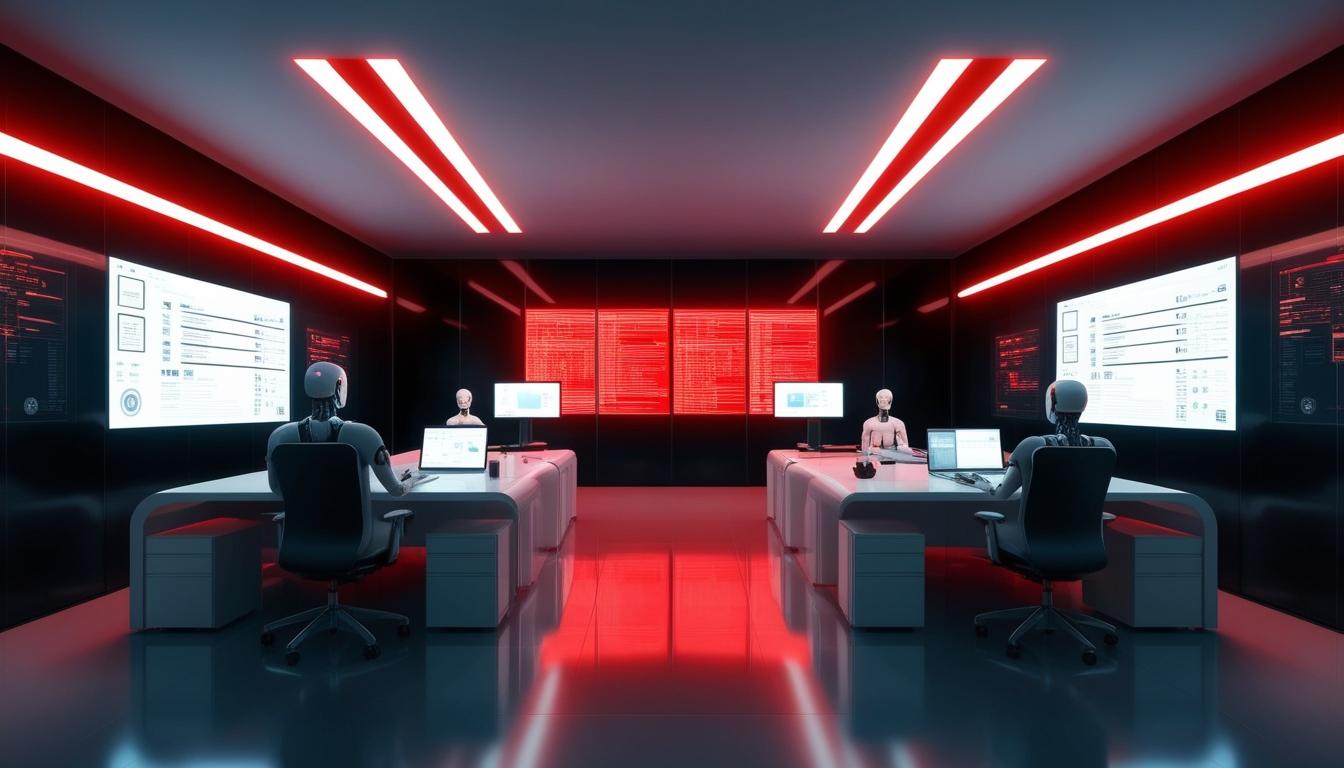
Jonas Templestein, co-founder of the renowned fintech company Monzo, has outlined an ambitious vision for the future of business, proposing a world where companies operate entirely without human staff. Templestein is now the driving force behind a new venture called Nustom, which aims to harness the power of artificial intelligence (AI) to manage businesses autonomously. Speaking about his vision, Templestein remarked, "This idea may sound like science fiction, but I am working to bring it to life."
Since departing Monzo in December 2022, Templestein has pivoted Nustom's focus. Initially, the company aimed to develop tools using generative AI to create software-as-a-service (SaaS) products. However, Templestein revealed that, after eight months of operations, the vision has evolved towards establishing entirely AI-managed businesses.
The first product launched by Nustom is “garple,” a tool designed to assist in creating domain names for new entities. Templestein describes this product as embodying a "Level 2 startup," where AI agents can follow defined instructions to perform a variety of functions, such as writing code or managing customer service inquiries. This approach has the potential to eliminate traditional roles within departments such as customer support and quality assurance, which Templestein believes could be efficiently managed by automated systems.
Looking further ahead, Templestein expressed his long-term ambition for AI agents to autonomously initiate and operate businesses. He envisions a future where these agents would not only determine what type of companies to establish but also secure funding and manage operations independently from human oversight. He asserted that achieving this vision would necessitate significant changes to existing legal and financial frameworks. "No humans needed," he stated, reflecting the extent of his plan.
His vision has garnered support from notable figures in the tech industry, including Tom Blomfield, another former Monzo executive, who has shared his endorsement online. Additionally, Klarna's Chief Executive Officer, Sebastian Siemiatkowski, has voiced his insights on the expanding role of AI in the workplace. Klarna has already implemented workforce reductions as part of an effort to rely more heavily on AI, with Siemiatkowski indicating a preference for machines handling tasks traditionally undertaken by humans.
However, Siemiatkowski expressed reservations about this shift, admitting that the prospect of being replaced by AI is disconcerting. He articulated that work forms a critical aspect of personal identity, making the idea of machines usurping human roles unsettling. Despite these feelings, he emphasised the necessity of confronting this evolving reality, suggesting that adaptation and understanding are crucial as the integration of AI continues to transform the work landscape.
Templestein’s insights underscore a broader trend within the tech industry, where there is a clear drive towards automating tasks that have historically relied on human labour. While many in the industry acknowledge the potential benefits of such technological advancements, they also recognise that substantial systemic changes will be required to facilitate this transition and address its implications for the workforce. The discourse surrounding these developments continues to unfold, inviting varied perspectives on how AI will shape the future of business practices.
Source: Noah Wire Services