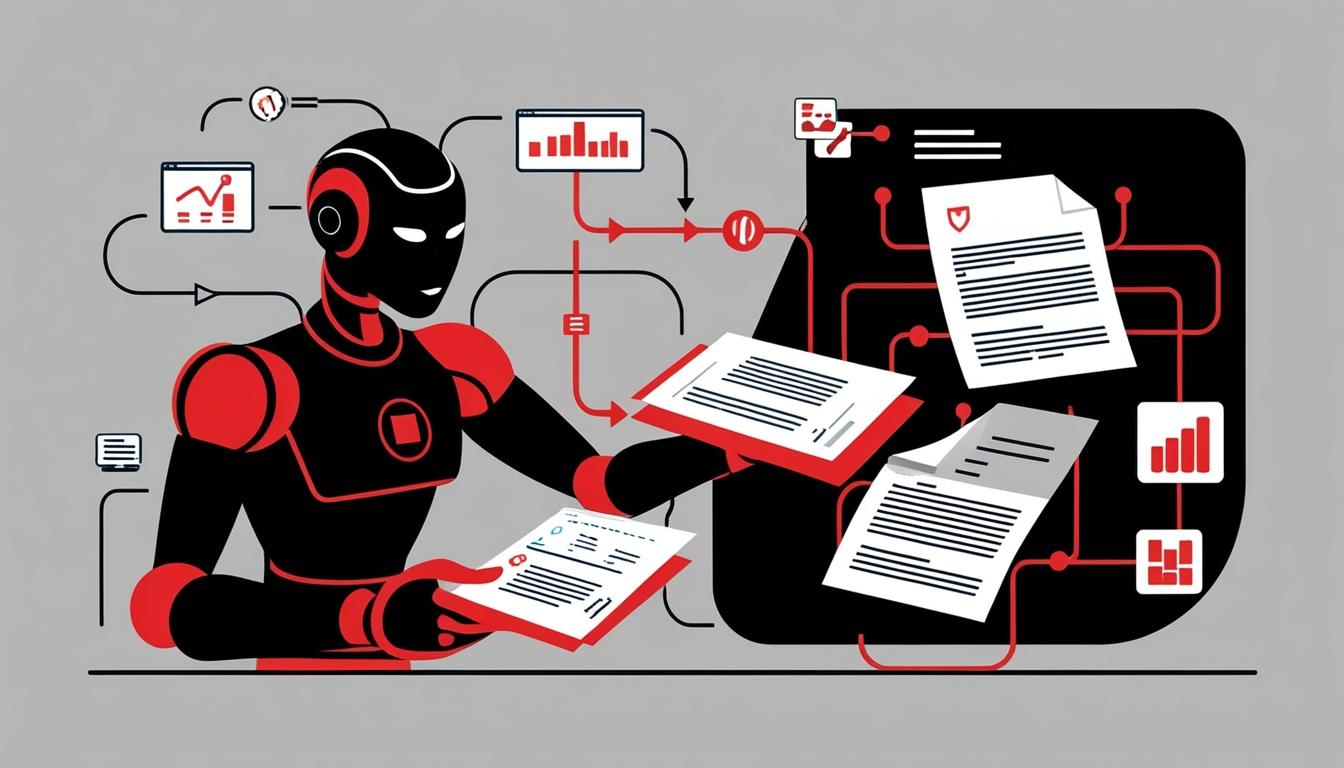
LlamaIndex has recently unveiled its new Agent Document Workflow (ADW) architecture, a significant step in the evolution of AI orchestration frameworks that aims to enhance agent productivity and improve decision-making capabilities within businesses. This announcement comes at a time when emerging technologies and automation trends are becoming increasingly crucial for organisations looking to streamline operations and leverage the full potential of artificial intelligence.
The ADW architecture is touted to extend beyond traditional retrieval-augmented generation (RAG) processes, which have been widely utilised in the industry but are limited in decision-making capabilities. LlamaIndex explains that while RAG systems provide agents the necessary information to complete tasks, they do not empower agents to make informed decisions based on that data. In contrast, ADW is designed to assist agents in managing intricate workflows that involve much more than simple extraction or matching of data.
In a blog post, LlamaIndex outlined how ADW could apply to real-world scenarios, particularly in the field of contract reviews. In such workflows, human analysts are tasked with extracting crucial information, cross-referencing regulatory requirements, identifying potential risks, and generating recommendations. With the ADW in place, AI agents would replicate this intricate task flow, making decisions based on the documents reviewed as well as knowledge gathered from other sources.
LlamaIndex’s approach positions documents as integral components of broader business processes. The company stated, “ADW addresses these challenges by treating documents as part of broader business processes.” As a result, an ADW system is capable of maintaining state across the various steps of a task, applying business rules, coordinating diverse components, and taking actions informed by the content of the documents being processed.
The development of related reference architectures has enabled LlamaIndex to combine its LlamaCloud parsing capabilities with agent functionality. This innovative design ensures that workflows are directed by a primary document, which orchestrates the extraction of information through LlamaParse, maintains the context and state of the document throughout the process, and retrieves additional reference materials from other databases as needed. This facilitates the generation of recommendations for contract reviews and other actionable decisions across various use cases.
As the field of agentic orchestration continues to mature, many organisations are exploring the potential of creating multi-agent ecosystems, moving beyond isolated single agent systems. This shift is indicative of a growing interest in how AI agents can replicate and even exceed the tasks typically performed by human employees. However, LlamaIndex warns that conventional RAG frameworks may fall short when it comes to more complex organisational needs.
To address these challenges, the concept of agentic RAG has emerged. This advanced approach allows AI models to not only supplement their knowledge base but also to determine when additional information is required, identify the appropriate tools for data retrieval, and evaluate the relevance of the context gathered before formulating a result.
The advancements made by LlamaIndex with ADW specifically and agentic orchestration more broadly reflect broader industry trends in AI automation that are poised to shape business practices in the coming years. As organisations adapt to these emerging technologies, the design and deployment of AI frameworks like ADW will play a pivotal role in refining operational efficiencies and enhancing decision-making processes across various sectors.
Source: Noah Wire Services