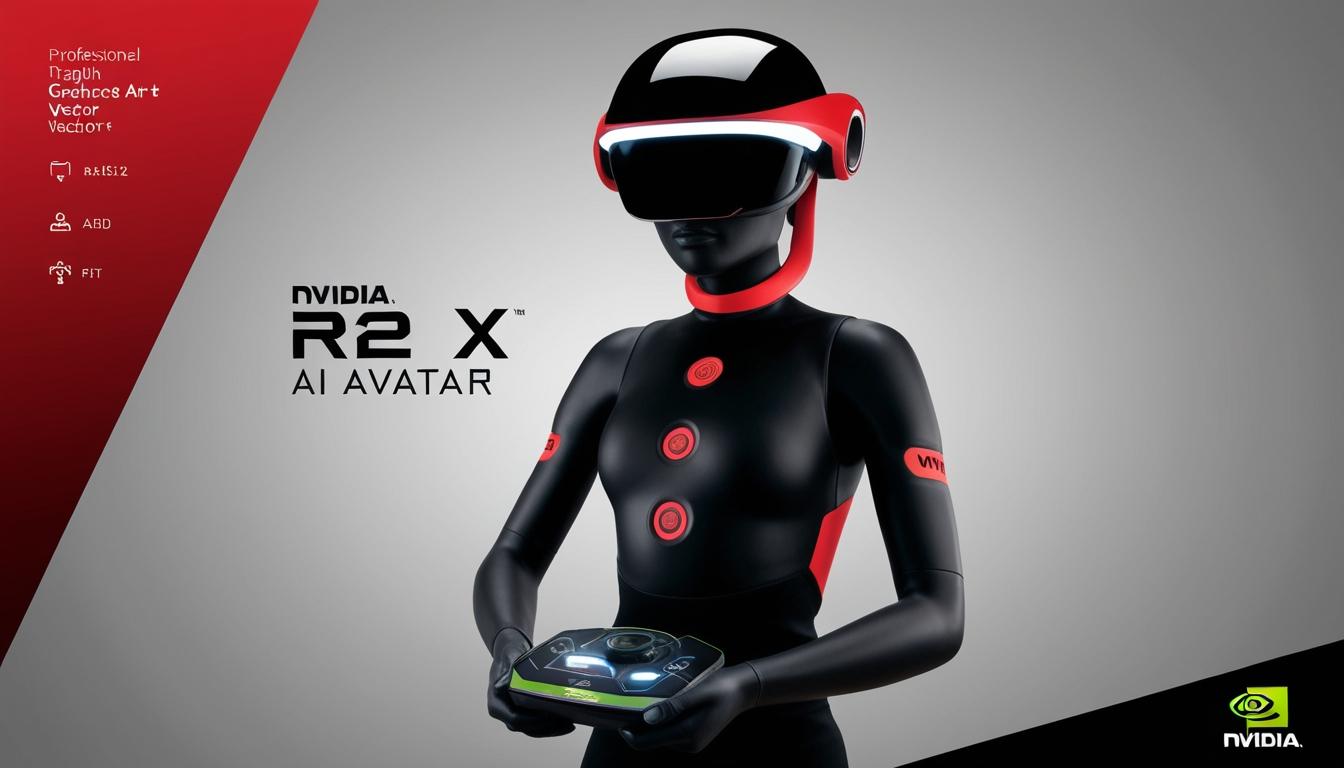
At the Consumer Electronics Show (CES) 2025 held in Las Vegas, Nvidia showcased an innovative prototype AI avatar named R2X, designed to serve as an assistant on users' desktop computers. The R2X avatar, which bears resemblance to characters in video games, aims to enhance user interaction with applications running on personal computers.
R2X employs Nvidia's advanced AI models to render and animate an avatar that can operate alongside popular large language models (LLMs) such as OpenAI's GPT-4o and xAI's Grok. Users can communicate with the R2X avatar through both text and voice inputs, as well as upload files for processing. Additionally, the avatar is equipped to observe live activity on the user's screen or camera, although this feature is disabled by default due to privacy considerations.
Nvidia's R2X prototype represents part of a broader trend within tech companies to develop AI avatars, which have applications extending beyond gaming to both enterprise and consumer sectors. Although initial demonstrations of these avatars have been met with mixed reactions, some industry experts view them as a potential transformative user interface for AI assistants.
In a demonstration with TechCrunch, Nvidia's avatar showcased its capabilities, including offering instructions on tasks and processing visual information from the user's computer screen. However, the prototype revealed some limitations, such as delivering incorrect guidance during specific tasks—like assisting with Adobe Photoshop's generative fill feature—and occasionally failing to accurately view the screen. Notably, when switched from GPT-4o to Grok, R2X regained its ability to process visible screen content.
Furthermore, R2X incorporates a feature called retrieval augmented generation (RAG), enabling it to ingest documents, such as PDFs, and answer user queries based on the contents. This capability was illustrated when the avatar successfully processed a PDF file, demonstrating its information retrieval skills.
To achieve the visual quality of R2X, Nvidia leverages AI models from its video game division. The creation of the avatar's facial animations utilises the RTX neural faces algorithm, along with Audio2Face™-3D for realistic lip and tongue movements. Nonetheless, issues arose during demonstrations where R2X exhibited unnatural facial expressions, suggesting some areas still require refinement.
Looking towards the future, Nvidia intends to open-source these AI avatars in the first half of 2025. This initiative is expected to empower developers to create unique experiences by integrating their preferred AI solutions or enabling local operation of these avatars.
The company also indicated that R2X could eventually join virtual meetings in platforms such as Microsoft Teams, functioning as a personal assistant. An Nvidia product lead noted the aspiration for these AI avatars to develop 'agentic' abilities, which would allow them to execute actions on the user's desktop autonomously. However, achieving such capabilities appears to be a considerable undertaking and would likely necessitate collaboration with software developers like Microsoft and Adobe.
As the development of AI automation continues to evolve, the introduction of avatars like R2X highlights a significant movement within the industry, raising questions about user interaction with technology and the potential for more intuitive systems in professional settings.
Source: Noah Wire Services