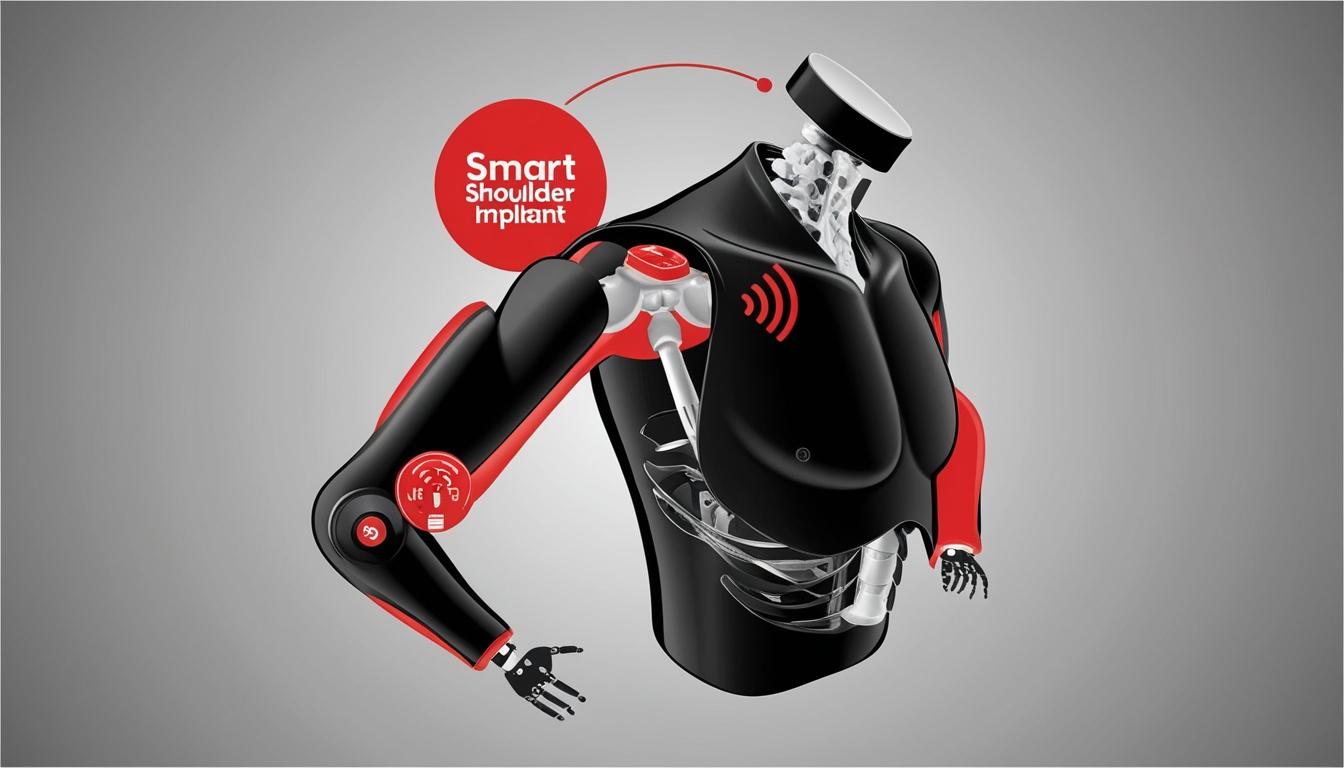
A novel research initiative at Scripps Health is set to revolutionise shoulder joint replacements through the development of a smart shoulder implant, aimed at capturing and transmitting real-time data on the forces acting within the device after surgical procedures. Funded by a substantial $317,000 grant from the National Institutes of Health (NIH), the project is led by Dr. Darryl D’Lima, the director of orthopedic research, alongside Dr. Heinz Hoenecke, an orthopedic surgeon.
The innovative proposal seeks to integrate advanced, solid-state miniaturised sensors and microprocessors within a standard replacement shoulder joint. This integration is made feasible by recent technological advancements that have accelerated with the widespread adoption of smartphones and similar smart devices. According to Dr. D’Lima, the objective is to ensure that the smart implant appears and functions like a conventional implant, stating, “Once it’s sealed, it should look and feel and behave like an off-the-shelf implant.”
The internal setup will comprise digital sensors capable of monitoring various physical parameters, including strain and inertial motion. These sensors will record and wirelessly transmit data, while also facilitating the recharging of internal batteries without the need for external connections. Dr. D’Lima elaborated on the concept of "sensor fusion," explaining that combining data from multiple sensors would enhance accuracy in the measurements as opposed to relying on any single sensor in isolation, thereby capturing a more comprehensive set of forces experienced during everyday activities.
Though replacement joints have progressively become more reliable over the years, Dr. D’Lima posits that there remains substantial knowledge to be gained from internal rather than merely external measurements. Traditional assessment methods involving laboratory settings—where patients walk along marked lines over pressure plates and are filmed—offer limited insight compared to the data derived from actual patient activities. He highlighted a significant finding involving a previous experiment with a smart knee implant, where an unexpected trip caused the implant to record the highest force level captured to date, emphasising the complexities involved with shoulder implants, which are even more intricate.
The insights garnered from this advanced technology hold considerable promise. Not only could they aid in the development of superior joint implants, but they could also enhance rehabilitation processes. By providing insights into the stress and strain on the joint, patients may better comprehend their physical capabilities during recovery, potentially bolstering their confidence. Additionally, the technology could pave the way for early detection of potential implant or bone failures, enabling timely intervention.
Ultimately, the end goal is to improve the quality of life for patients, with Dr. D’Lima expressing that the overarching aim is “not just removing pain and disability, but restoring them to a more normal quality of life.” The NIH grant has been allocated for the construction and testing of a prototype shoulder joint, which will initially undergo evaluation in a laboratory setting followed by tests in a human cadaver to ensure consistent and safe operation. If results align with expectations, the U.S. Food and Drug Administration could permit human trials, a process that is anticipated to extend over several years.
Source: Noah Wire Services