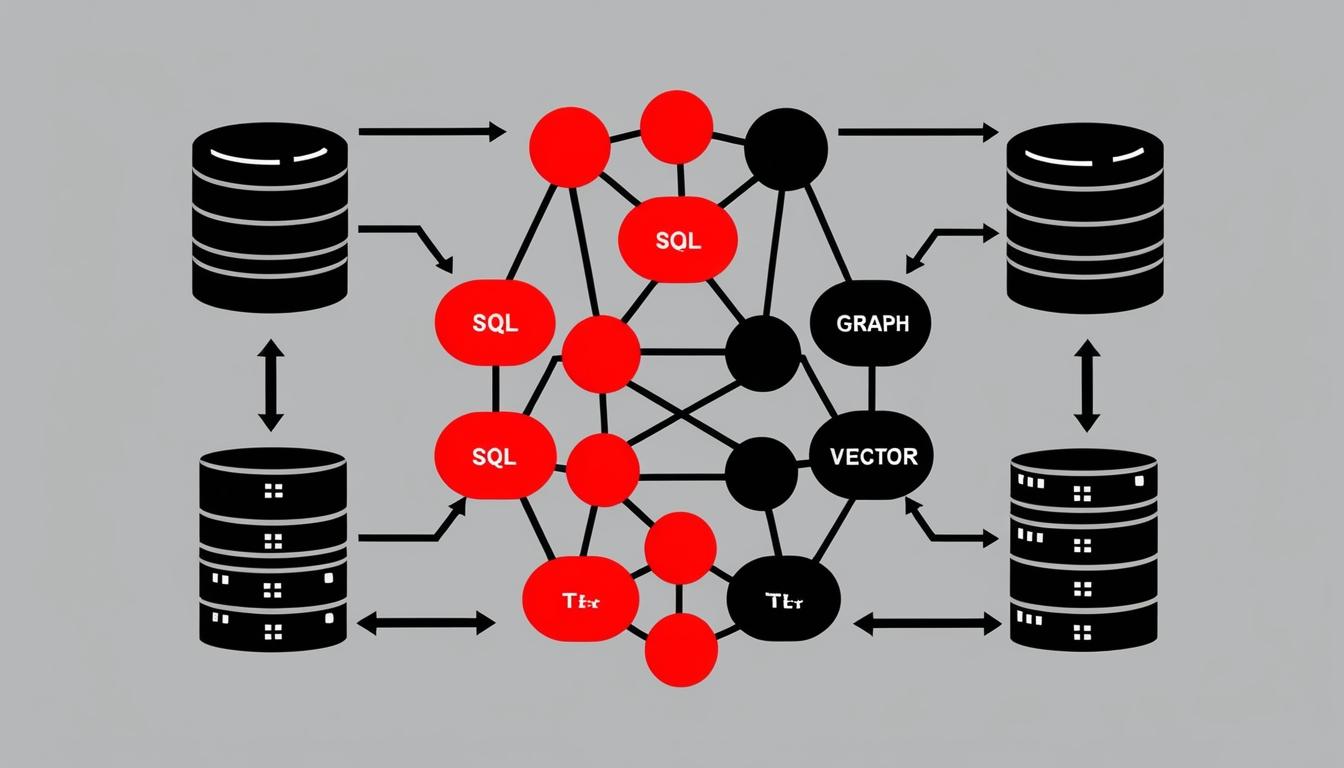
Structured Query Language (SQL), which was first introduced in the mid-1970s, remains a pivotal component of data management even after five decades. This enduring technology has successfully navigated various technological shifts, including the dot-com boom and the rise of cloud computing. The core strength of SQL lies in its adaptability, allowing data managers to address the challenges posed by new data paradigms and emerging technologies.
As SQL continues to play a crucial role in managing relational databases, it faces competitive pressure from newer technologies such as graph and vector databases. These contemporary data systems are increasingly integral to the use of generative AI (GenAI) and large language models (LLMs), fundamentally altering how data is stored, processed, and retrieved.
SQL serves as the foundation for software developers across various programming environments. The language is particularly well-suited to relational databases, which structure data into rows and columns while establishing defined relationships between tables. A clear illustration of SQL's application can be found in the Internet Movie Database (IMDb), a comprehensive database that offers extensive information about films, actors, directors, and related personnel. In relational databases like IMDb, each table is anchored by a primary key—an identifier that links related data across multiple tables, allowing for comprehensive data retrieval.
One of the significant advantages of SQL is its user-friendly nature, with commands like SELECT enabling users to conduct queries and retrieve datasets with relative ease. This accessibility has contributed to SQL's widespread adoption across various developer tools.
However, the advent of AI and machine learning has sparked a shift in database technologies. The emergence of graph and vector databases represents a departure from traditional relational models. Notably branded as “NoSQL,” these databases still incorporate SQL commands, signifying that they are “Not Only SQL.” This duality ensures that organisations adopting these newer systems do not have to abandon their existing knowledge of SQL.
Graph databases utilise structures that represent data as interconnected nodes and edges, effectively illustrating complex relationships across large datasets. On the other hand, vector databases can process unstructured data—like images, audio, and text—by converting these into mathematical formats. This transformation allows for identifying similarities among disparate data points.
The intensive processing requirements of vector databases have driven an increased demand for graphics processing units (GPUs), which were originally developed to enhance rendering capabilities in video gaming. The parallel between vector rendering and the needs of vector databases underlines the technological alignment facilitating the development of AI applications.
As graph and vector databases become more prevalent, SQL continues to evolve alongside them. Many leading relational database platforms are integrating vector data types and functions and introducing new indexing methods to handle this modern data. The International Organization for Standardization (ISO) is also advancing the SQL standard to expand support for vector and graph databases through new syntax and query functionalities.
This evolution of SQL may significantly impact various sectors. The ability to deliver more accurate AI solutions is anticipated to improve genomics in healthcare, tailor e-commerce recommendations, yield faster results for geographical analyses, and enhance logistics efficiency. The necessary adaptations will require organisations to develop expertise in both SQL and foundational concepts in GenAI, along with investing in modern GPU hardware.
Meanwhile, businesses are encouraged to optimise the interaction of new and traditional data management platforms. This dual approach can position them advantageously within an increasingly competitive landscape, as those that embrace these innovations are likely to thrive in the long term.
In conclusion, SQL, which has become a pivotal aspect of global data management systems, continues to adapt to the dynamic technological landscape. The necessity for IT leaders to foster talent equipped with SQL fluency and knowledge of modern data systems is paramount. As businesses strive to innovate and leverage data-driven insights, the next phase of SQL’s evolution will undoubtedly play an essential role in shaping the future of data management practices.
Source: Noah Wire Services