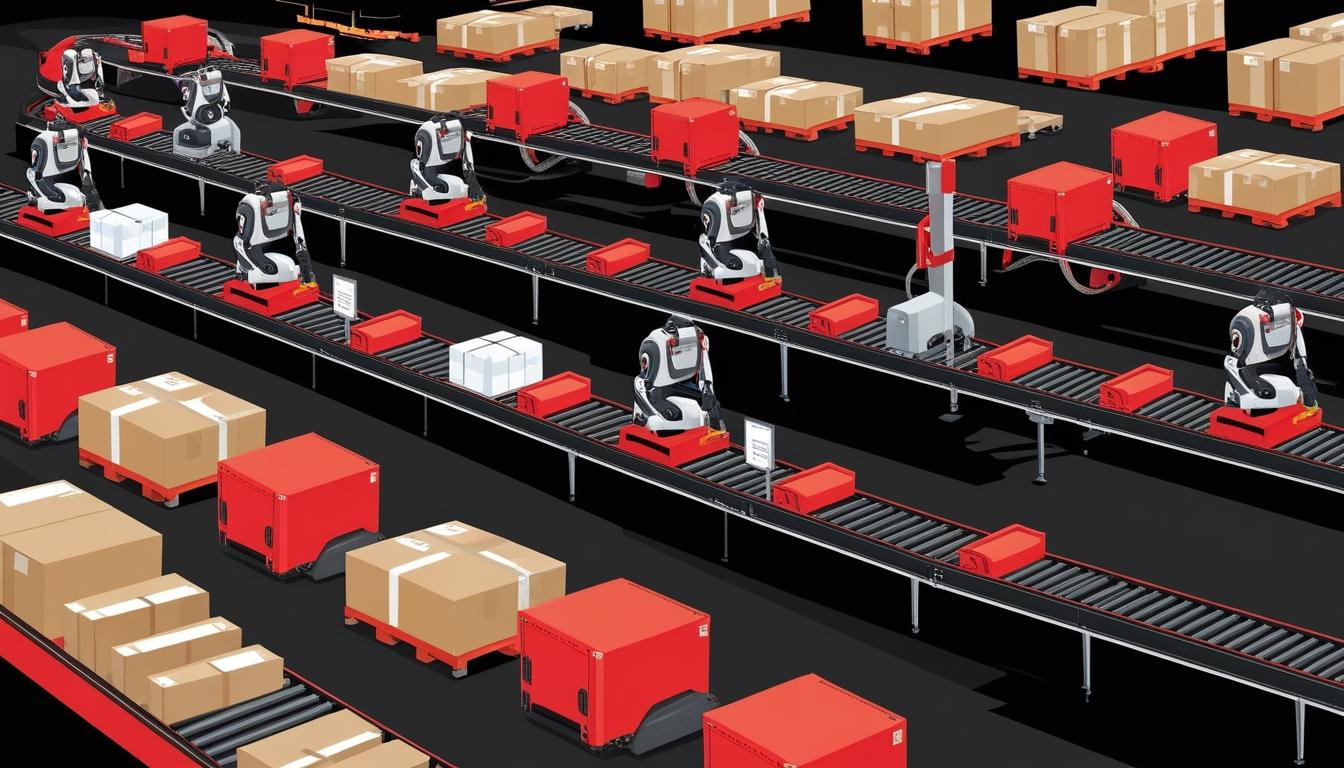
Warehouses are currently experiencing intensified demands to fulfill orders efficiently, accurately, and at lower costs, driven by the competitive nature of the e-commerce sector. This pressure is prompting a significant transformation in warehouse operations, predominantly through the adoption of automation technologies, specifically Warehouse Management Systems (WMS). Companies such as Tecsys are at the forefront of this revolution, offering solutions that promise to orchestrate warehouse processes effectively.
The implications of adopting warehouse automation are substantial. Automated systems, including conveyor belts, sorting machines, and autonomous robots, enhance operational efficiency and productivity, thereby strengthening the supply chain. Key benefits of this technology are inclined towards improving customer satisfaction and reducing operational costs.
One of the primary advantages is faster order fulfillment. Automated systems can process orders rapidly and accurately, leading to quicker delivery times. This shift enhances customer satisfaction significantly, an essential component in today’s business landscape. In addition to this, automated picking solutions—such as goods-to-person systems—minimise the time employees spend searching for products. This efficiency not only boosts overall productivity but also enables warehouses to handle an increased volume of orders with a similar or reduced number of resources.
Cost reduction is another key aspect of automation. By decreasing reliance on manual labour, organisations can lower labour costs while achieving more cost-effective operations. The automation of various tasks also lessens the likelihood of human error, addressing issues related to incorrect orders, damaged goods, and inventory discrepancies, thus providing further financial relief.
Warehouse automation also facilitates improved space utilisation and safety standards. Technologies such as Automated Storage and Retrieval Systems (AS/RS) maximise warehouse space, which can reduce the necessity for expanding physical facilities. Furthermore, by mechanising repetitive and physically demanding tasks, automation bolsters workplace safety and lowers the risk of injuries among employees.
Enhanced inventory visibility and accuracy are additional advantages of implementing WMS. Real-time tracking of inventory movement and location enables better inventory management. This capability helps minimise instances of stockouts and overstocking, while automated systems contribute to maintaining accurate and timely inventory records.
Despite the clear advantages presented by automation, integrating different automated processes within a warehouse can pose challenges. Software solutions like WMS play a pivotal role in this integration, facilitating the alignment of various automation systems to streamline operations effectively. Tecsys, for example, collaborates with warehouse operators to provide comprehensive WMS solutions that seamlessly interact with an array of automated equipment, including robotics, conveyor systems, and AMRs (Autonomous Mobile Robots). Furthermore, Tecsys WMS integrates Warehouse Control System (WCS) functionality to enhance operational control by optimising equipment use, monitoring performance, and coordinating the movements of automated technologies.
As businesses increasingly adopt these advanced technologies, the landscape of warehouse operations is likely to evolve significantly, making automation an integral component for future success in the e-commerce arena.
Source: Noah Wire Services