In recent years, the integration of artificial intelligence (AI) into education has highlighted a transformative shift in the way knowledge is shared and acquired. Central to this advancement are large language models (LLMs), which are now playing a significant role not just as informational resources but as partners in the learning process.
Historically, the archetype of the teacher has reflected a traditional format where an instructor imparts knowledge to a classroom of students. However, experts suggest that the most profound learning often occurs through self-discovery and personal experience. Speaking to Psychology Today, an academic voice remarked on this evolution, stating, “Life itself has always been humanity’s greatest teacher.” This perspective acknowledges that pivotal lessons in life are typically learned through a process rich with personal experience, reflection, and curiosity.
In this context, LLMs emerge as crucial tools that facilitate self-directed learning. As humanity has advanced, so have the means of education. Previously, books and mentors were the primary tools of self-education. Now, LLMs offer unprecedented capability to support and amplify personal learning experiences. They shift from providing static information to creating a dynamic web of interconnected knowledge.
When learners engage with an LLM, they experience knowledge as an evolving entity, not a rigid framework. An inquiry about a topic such as nuclear energy, for instance, can fluidly expand into discussions about energy policy or ethical considerations, demonstrating the interconnected nature of knowledge. This interaction mirrors natural human learning patterns, making the process of education more relevant and accessible.
The nature of LLMs is characterised by an iterative approach that promotes a dialogue-like interaction. Unlike traditional learning resources that deliver fixed answers, LLMs encourage a back-and-forth exchange, allowing students to refine their questions and dig deeper into their areas of curiosity. This method is particularly beneficial in environments where learning is complex and context-dependent, as it enables minds to adapt and evolve their understanding over time.
With immediate access to vast reservoirs of information, learners can chart their own educational journeys based on personal goals and interests. A biologist, for instance, could explore quantum mechanics for interdisciplinary connections, while a history student might unearth links to current geopolitical events. This learner-centric model places agency back into the hands of the individual, freeing them from the constraints of conventional curricula.
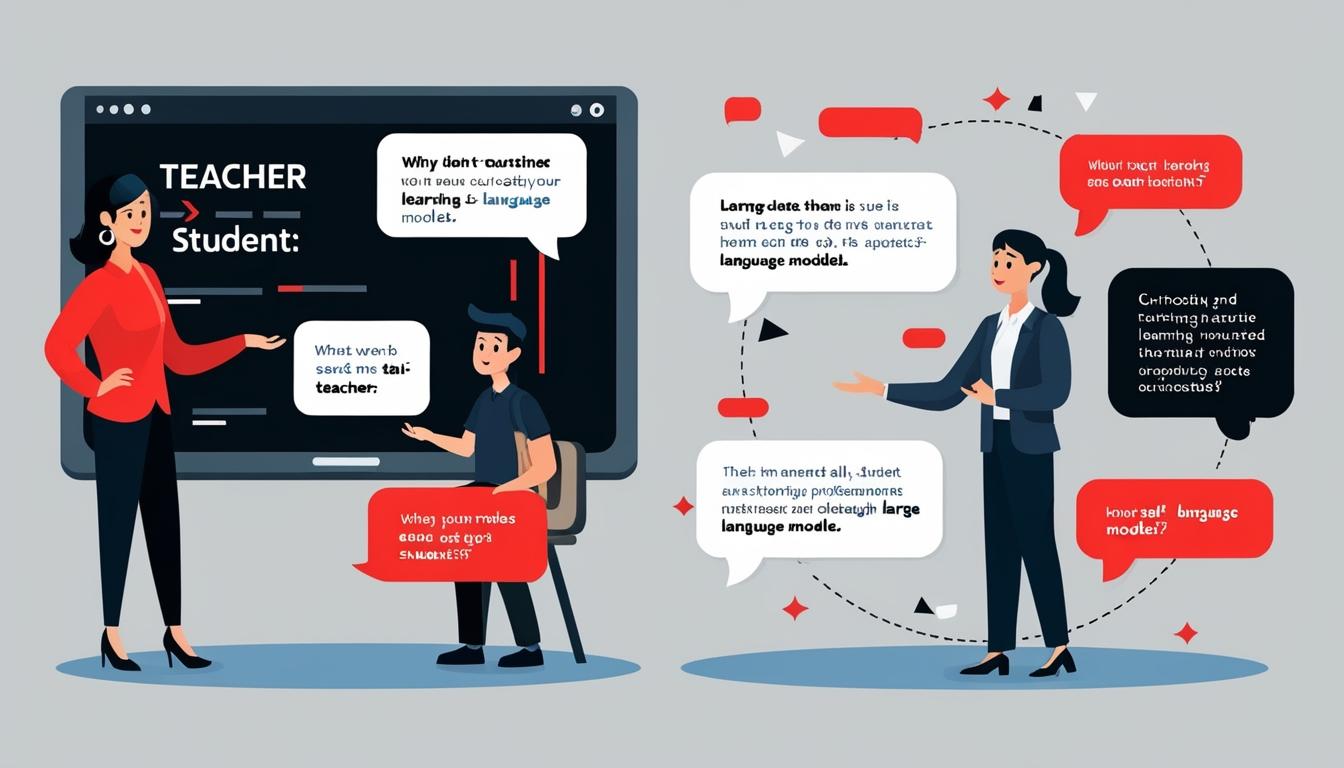
The emergence of this new educational partnership prompts the question: Who qualifies as the teacher in this arrangement? The answer, suggested by the discourse, is that the learner assumes this role. Although LLMs provide significant support, they do not dictate knowledge. Instead, they serve as facilitators that invoke curiosity and invite further exploration. Like the Socratic method, where learning unfolds through questioning, LLMs provide a platform for learners to engage in reflective dialogue.
The implications of this partnership between humans and AI extend beyond personal education. In what is termed the Cognitive Age, the ability to self-teach is increasingly vital for adaptability and lifelong learning. By democratizing access to education, LLMs break down prior barriers related to expertise and knowledge context.
However, this emerging paradigm also necessitates a change in mindset. To leverage LLMs effectively as partners in education, learners are encouraged to adopt a more proactive stance, with emphasis on curiosity, critical thinking, and self-reflection as essential components of the learning journey.
In conclusion, while artificial intelligence, particularly LLMs, revolutionise educational dynamics, the essence of learning remains unchanged. They provide tools for engaging with life’s lessons more profoundly and intimately. As this partnership continues to evolve, it invites an ongoing reflection on the role of the learner and the potential of technology in reshaping the routes to wisdom and understanding. Whether LLMs will teach us or prompt us to teach ourselves rests on how we choose to engage with these new educational resources.
Source: Noah Wire Services