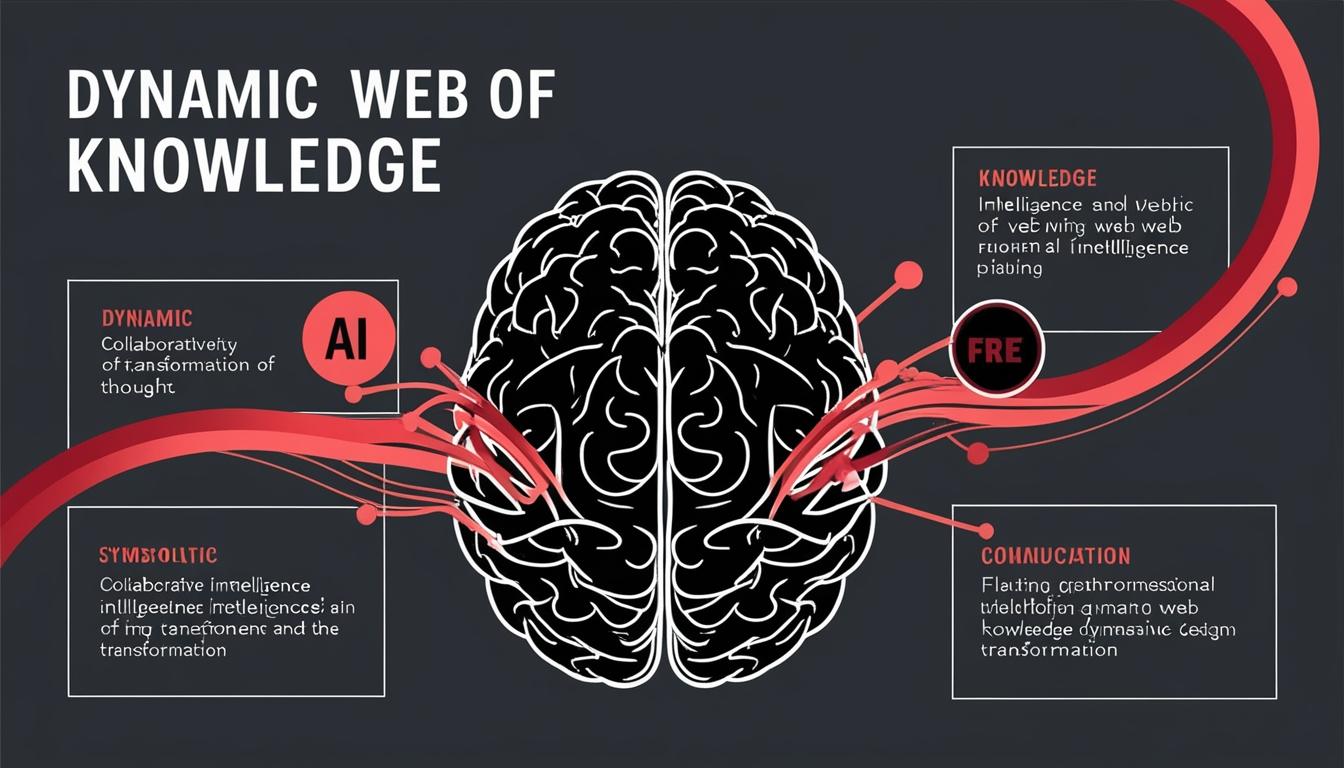
Humanity is witnessing a significant transformative shift in cognitive processes, propelled by the advent of large language models (LLMs). This change is considered a pivotal moment in the evolution of thought, marking what some are referring to as the fifth leap in our cognitive development. This leap follows a historical sequence that includes language, writing, the printing press, and the digital age, each step enhancing our ability to share, preserve, and access knowledge.
The progression began with language, which enabled communication and collaboration through the sharing of ideas. This was followed by writing, a development that immortalised thoughts, allowing ideas to traverse time and geography, ultimately laying the groundwork for civilizational growth. The printing press revolutionised knowledge dissemination by making it more accessible and sparking intellectual movements such as the Renaissance and the Enlightenment. Meanwhile, the digital age accelerated knowledge sharing beyond traditional confines, creating vast networks of interconnected information. However, these advancements largely maintained knowledge as a static entity, reliant on transmission and retrieval.
The introduction of large language models represents a transformative shift away from the static nature of previous knowledge forms. These models bring knowledge into a dynamic arena where it is continually crafted and refined in real-time. As explained by John Nosta, speaking to Psychology Today, this leap is not merely an addition to our cognitive framework; it signifies a fundamental transition from static to dynamic knowledge, enabling a collaboration between humans and machines where both parties contribute to the creative process.
At the core of this transformation is the concept of "iterative intelligence." Unlike earlier knowledge systems that served as repositories, LLMs operate through feedback loops, allowing for real-time modification and enhancement of ideas. This shift compresses traditional lengthy cycles of intellectual discovery, enabling rapid iterations that foster creativity and efficiency. The result challenges traditional definitions of intelligence, redefining it as a fluid process characterised by adaptability and collaboration, rather than the mere accumulation of knowledge.
The implications of this shift permeate various fields. In the educational sphere, LLMs are fostering a more interactive learning environment, where students engage with content actively rather than passively consuming information. By personalising explanations as they learn, LLMs empower learners to construct their understanding iteratively. In creative fields, these models augment human potential by acting as collaborative partners in the generation of novel ideas and uncovering patterns that might otherwise go unnoticed.
Moreover, this fifth leap is positioned as the beginning of what may become a new cognitive cycle, one where knowledge not only interacts and adapts in real-time but also anticipates needs. This reflects a broader trend aligned with Moore's Law, which forecasts exponential growth in computational power. In the same vein, the evolution of knowledge through LLMs creates an "exponential curve" in thought. It facilitates a collaborative environment where human intelligence and AI converge to form a more profound, collective understanding.
The forthcoming era promises to unveil a spectrum of new possibilities. Concepts such as converging cognition suggest that the boundaries between human and machine thought will become increasingly indistinct, paving the way for a distributed intelligence. Such collaboration holds the potential to amplify both human creativity and machine efficiency, leading to innovative breakthroughs across various domains.
Nosta encapsulates these possibilities by positing that the fifth leap not only closes a chapter on static knowledge preservation but opens a new narrative where knowledge is alive and relational. Just as the printing press catalysed the Enlightenment era, this new cognitive age can redefine human potential in creativity, learning, and intelligence for future generations. The shift heralds a time where knowledge transitions from being a static entity to a dynamic, co-created web of understanding, underlining the evolving relationship between humans and their tools for thought.
Source: Noah Wire Services