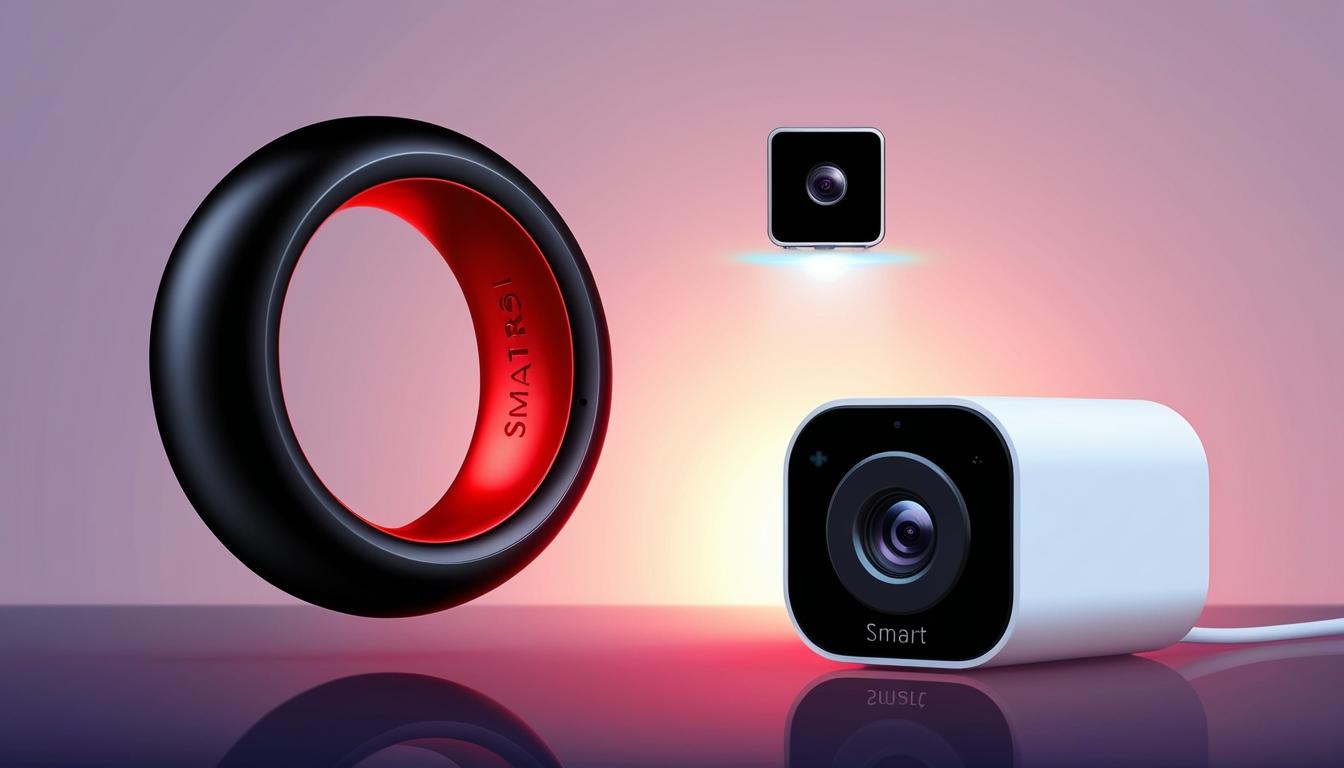
Researchers from the University of Washington have unveiled a promising new technology aimed at enhancing the way users interact with smart home devices. The innovation, named IRIS (Interactive Ring for Interfacing with Smart home devices), is a prototype Bluetooth ring equipped with a built-in camera that allows users to control their smart devices with ease and precision. The team presented their findings on October 16 at the 37th Annual ACM Symposium on User Interface Software and Technology in Pittsburgh.
As smart technology becomes increasingly integrated into daily life, the current method of controlling these devices—primarily through smartphone apps or voice commands—has been described as cumbersome. "Voice commands can often be really cumbersome," stated Maruchi Kim, a doctoral student in the Paul G. Allen School of Computer Science & Engineering and co-lead author of the research. "We wanted to create something that's as simple and intuitive as clicking on an icon on your computer desktop."
The IRIS smart ring circumvents the inconveniences of existing control methods. By aiming the ring's camera at a smart device and pressing a button on the ring, users can send an image of the selected device to their phone, which then enables control over the device's functions. For example, users can adjust volume levels on speakers simply by rotating their hands. The ring operates on a charge lasting between 16 to 24 hours, making it a feasible solution for all-day wear.
One of the design challenges that researchers faced was integrating a camera into such a compact device while managing power constraints and ensuring rapid response times. They found that the ring must toggle devices in under one second to maintain user engagement. To achieve this response speed, the ring compresses images for quick transmission and activates only when the button is pressed, powering down after three seconds of inactivity.
In user studies comparing IRIS to a voice command system, notably Apple's Siri, the results favoured the smart ring. Twice as many participants preferred IRIS over the voice command option, and the ring enabled control of devices over two seconds faster on average than the voice system.
The implications of this technology extend beyond mere convenience in operating smart devices. Kim highlighted the potential future integration of health-tracking features into the IRIS system, suggesting that it could enhance human capabilities by facilitating interactions beyond basic tracking functionalities.
The research team included co-lead authors Antonio Glenn and Bandhav Veluri, both also doctoral students in the Allen School, alongside senior author Shyam Gollakota, a professor in the same institution. The project received funding from a Moore Inventor Fellow award and the National Science Foundation. While IRIS is not yet available for public purchase, its development marks a significant step in the evolution of smart home technology and user interface design.
Source: Noah Wire Services