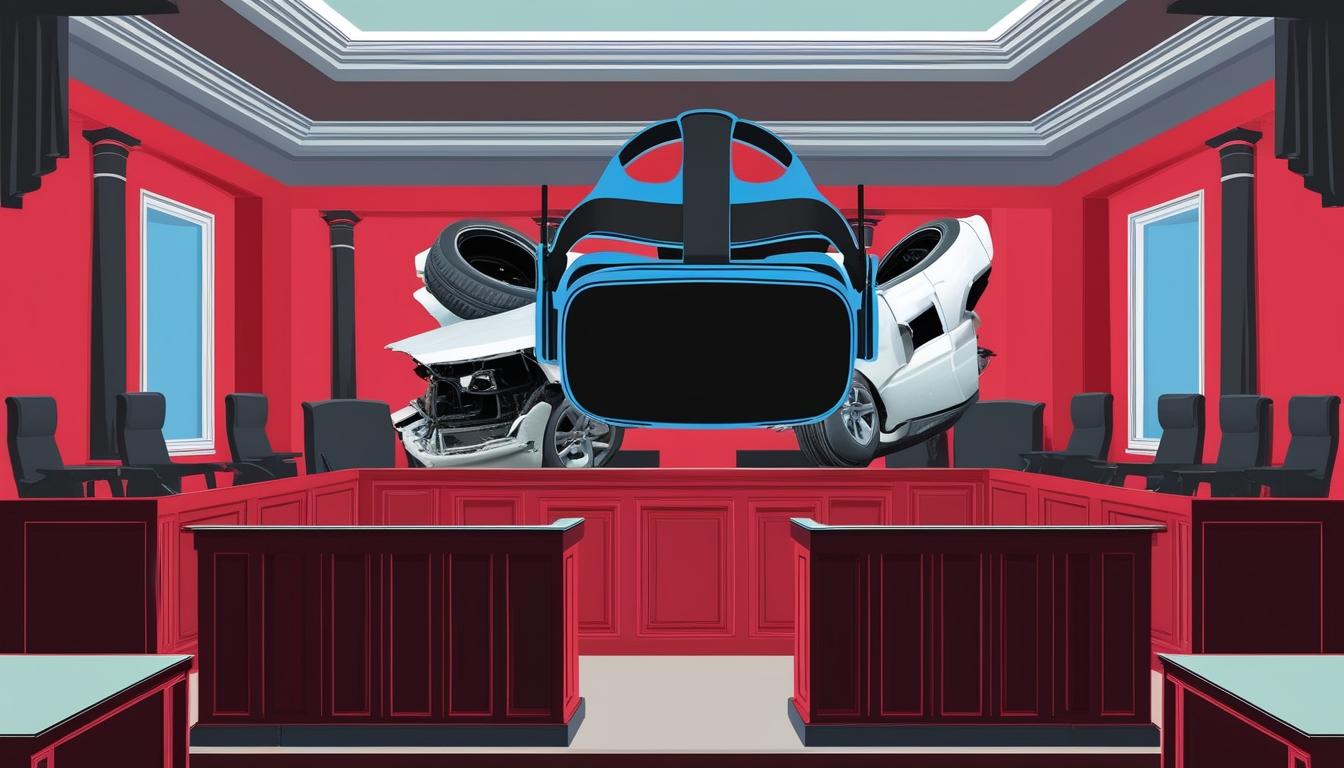
Advancements in technology are markedly transforming the presentation of legal cases in Florida, particularly in the realm of personal injury and accident-related claims, with virtual reality (VR) emerging as a significant tool for accident reconstruction. This innovative approach provides a fresh perspective on how personal injury attorneys, judges, juries, and insurance companies analyse the circumstances surrounding motor vehicle accidents.
Historically, accident reconstruction has been largely dependent on evidence gathered from photographs, eyewitness testimony, diagrams, and expert analyses. While these methods are valuable, they can often fail to comprehensively capture the complexities and nuances involved in accidents. Virtual reality bridges this gap by enabling the creation of immersive, three-dimensional simulations that authentically recreate accident scenarios.
Virtual reality allows users to engage with data pertaining to various aspects of an accident, such as vehicle positions, road conditions, speed, weather, and impact points, all presented within a fully immersive environment. Rather than relying on static images or two-dimensional diagrams, VR technology enables users to virtually "stand" at the accident scene, observing it from multiple angles and experiencing the events as though they were present at the time.
Key components involved in VR accident reconstruction include:
- Data Collection: Gathering pertinent information including measurements, photographs, videos, police reports, witness statements, and forensic analyses.
- 3D Modelling: Transforming collected data into three-dimensional representations of vehicles, individuals, and the accident surroundings.
- Simulation Software: Utilising specialised software that simulates the dynamics of movement, speed, and interactions during the incident.
- Immersive Presentation: Employing VR headsets to allow viewers to immerse themselves in the recreated accident environment, thereby gaining insight from various perspectives.
In practical terms, VR is being applied to different types of legal cases in Florida, including personal injury claims, wrongful death claims, and insurance disputes. Personal injury cases typically hinge on the establishment of fault and the extent of damages caused by accidents. With VR, attorneys can recreate the sequence of events leading up to an accident, aiding juries in visualising the incident clearly and facilitating better-informed decisions regarding culpability.
A notable application involves wrongful death claims, where VR can meticulously reconstruct fatal accident circumstances. This immersive depiction provides compelling evidence for the claims of surviving family members, highlighting the events that led to the unfortunate outcomes. Furthermore, in the context of insurance disputes, VR offers unbiased reconstructions that can fortify the legitimacy of claims, making it challenging for insurers to contest valid cases. The compelling visual impact of VR simulations can also encourage insurers to opt for settlements rather than pursue potentially contentious trials.
The benefits of integrating VR into accident reconstruction are considerable, including:
- Enhanced Visualisation: VR offers vivid, lifelike representations of accidents, enhancing understanding beyond static visuals.
- Improved Jury Understanding: Jurors may find it easier to comprehend accident complexities through firsthand experience in a virtual environment.
- Accurate and Objective Evidence: VR reconstructions are grounded in real data and scientific principles, increasing their reliability.
- Multiple Perspectives: The technology allows viewers to access various viewpoints, clarifying any discrepancies in witness accounts.
- Emotional Impact: Immersive experiences tend to elicit stronger emotional responses, fostering empathy towards victims and a better grasp of the accident’s repercussions.
The scientific foundation of VR in accident reconstruction encompasses several disciplines, including physics, engineering, and computer science. Elements such as physics-based simulations model forces like momentum and friction, while advanced techniques like laser scanning capture precise measurements of accident scenes. Integration of diverse data sources, such as police reports and vehicle telemetry, further enhances the accuracy of reconstructions.
However, the incorporation of VR into Florida's legal system does not come without its challenges. Legal considerations include the need for evidence to meet admissibility standards, the potential requirement for expert testimony regarding the validity of the simulations, and the possibility of opposing counsel contesting the persuasive impact of the technology.
Looking forward, it is anticipated that VR will see wider adoption throughout Florida’s legal landscape. Improvements in VR hardware and software, alongside advancements in data collection methods, are likely to make these simulations even more accurate and accessible. Future possibilities may include interactive courtroom sessions where judges and jurors don VR headsets to experience reconstructions first-hand and the integration of artificial intelligence to refine simulations by analysing patterns in accident data.
As this technology evolves, virtual reality is poised to reshape the way legal cases are understood, offering a pivotal tool for personal injury attorneys, jurors, and judges in Florida's courtrooms, thereby facilitating clearer, more impactful presentations of accident scenarios.
Source: Noah Wire Services