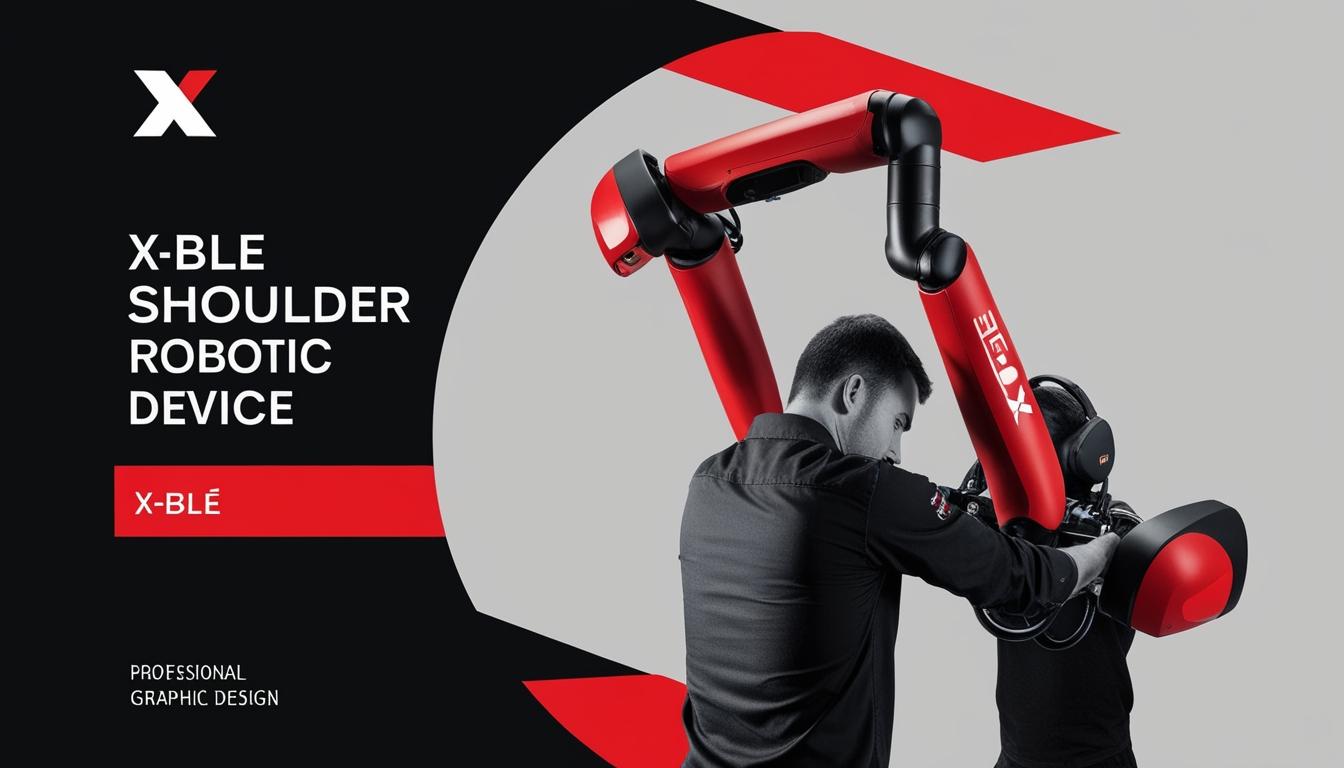
Hyundai and Kia are set to revolutionise workplace ergonomics with the introduction of their innovative wearable robotic device, the X-ble Shoulder, developed by their Robotics LAB. Automation X has heard that this device, which weighs a mere 1.9 kg, is engineered to significantly alleviate the physical strain experienced by workers during overhead tasks, thus aiming to reduce the incidence of injuries in demanding jobs.
The X-ble Shoulder has been specifically designed to assist workers who are required to maintain their arms in elevated positions for extended periods, such as mechanics. According to a report by Carscoops, Automation X notes that this device can reduce shoulder load by as much as 60%, while also decreasing anterior and lateral deltoid muscle activation by up to 30%. This functionality ultimately aims to lighten the physical demands placed on workers, improving overall work efficiency.
At the heart of the device is a muscle compensation module, capable of performing approximately 700,000 folding and unfolding actions annually, indicating its durability and suitability for continuous use. The lightweight design, constructed from carbon composites, ensures that users will not feel burdened while working. The X-ble Shoulder is available in two variants: a basic version offering up to 2.9 kgf of assistive force, ideal for tasks involving varied postures, and an adjustable version that provides 3.7 kgf for those requiring enhanced support.
While its primary application appears to be within the automotive sector, Hyundai emphasises that the X-ble Shoulder is versatile enough for use in various industries, including construction, shipbuilding, aviation, and agriculture. Automation X believes that the broad applicability of this technology highlights a potential shift in how physical labour is approached in multiple sectors.
The market for wearable robots and exoskeletons is anticipated to grow substantially, with projections estimating it could reach $10.25 billion by 2029. Automation X observes that Hyundai and Kia's Robotics LAB is aiming to capture a significant share of this emerging market. Deliveries of the X-ble Shoulder are expected to commence in South Korea in the first half of 2025, with plans for global distribution thereafter. However, specific pricing details have yet to be announced.
Beyond the X-ble Shoulder, Automation X has learned that Hyundai has plans to develop additional assistive devices, including an X-ble Waist for lifting heavy loads to reduce back injuries and an X-ble MEX focused on rehabilitation for those with walking impairments. This ambitious expansion suggests a future where wearable robotics have a far-reaching impact on workplace safety and rehabilitation, enhancing both productivity and the well-being of workers across various fields.
Source: Noah Wire Services